
Key takeaways
- Warranty Description: 2 Year Manufacturer
- Tension Supported: 1000 pounds
- Handle Type: Fixed Handle
Ceiling height is the number that ends most home gym plans before they start. A standard basement gives you about 84 inches to the joists, garage door tracks eat the first foot of clearance near the opening, and an apartment with a popcorn ceiling leaves less room than the tape measure suggests. A full-height power cage stands 90 to 93 inches tall, which is why so many people order one, wrestle it into position, and discover they can’t stand it upright. Short cages — typically 70 to 82 inches — solve that problem, and the good ones give up almost nothing in strength.
The tradeoff is that you now pull up with a bent knee, and you have to think harder about depth, footprint, and whether the uprights can take a dropped bar without walking across the floor. Below are six cages I’d put in a tight room, sorted by what they’re actually good at rather than by price. Configurations and dimensions vary by retailer and by which attachments you add, so confirm the exact spec sheet against your own measurements before you commit.
Our top picks

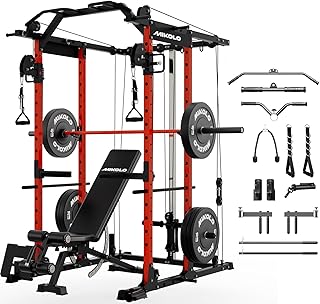
 ULTRA FUEGO Power Cage
- Warranty Description: 2 Year Manufacturer
- Tension Supported: 1000 pounds
- Handle Type: Fixed Handle
 DP01 Power Cage
- Warranty Description: 2 year
- Tension Supported: 2000 pounds
- Grip Size: Standard


As an Amazon Associate we earn from qualifying purchases at no extra cost to you.
Quick Comparison
| Cage | Approx. Height | Steel / Hole Spacing | Best For |
|---|---|---|---|
| Rep Fitness PR-1050 Short | ~71 in | 2×2 in, 14 ga, 2 in spacing | Low basements on a budget |
| Titan T-3 Series Short (72 in) | ~72 in | 2×2 in, 11 ga, 2 in spacing | Heavy lifting, low ceilings |
| Rogue RML-390F Flat Foot | ~90 in (also 70 in option) | 3×3 in, 11 ga, Westside spacing | No-drill garage setups |
| Force USA MyRack Modular | ~83 in | 2.4×2.4 in, 12 ga | All-in-one functional training |
| Bells of Steel Residential Rack | ~80 in | 3×3 in, 12 ga, Westside spacing | Value per pound of steel |
| Valor Fitness BD-33 | ~72 in | 2×2 in tubing | Small rooms, moderate loads |
How to Choose
- Measure to the lowest obstruction, not the ceiling. Ductwork, sprinkler heads, light fixtures, and garage door tracks all count. Then subtract two inches for assembly clearance — you have to tilt the frame upright.
- Depth matters more than width. A 24-inch-deep cage keeps the footprint tiny but leaves little room to miss a squat and step back. A 30-inch depth is the sweet spot for one lifter with a bench inside.
- Match steel to your working weight. 2×2-inch 14-gauge tubing handles most intermediate lifting fine. If you’re squatting north of 400 pounds or plan to bail on reps, step up to 11-gauge or 3×3-inch uprights.
- Check the hole spacing. Two-inch uniform spacing is simple. Westside spacing (one-inch holes through the bench and rack range) lets you dial in tight bar heights, which is the difference between a good press setup and a compromise.
- Buy into an attachment ecosystem. Lat pulldowns, dip bars, landmines, and safety straps only bolt on if the upright dimensions and hole pattern match. Proprietary sizes lock you in; standard 3×3-inch patterns give you options later.
Top Picks Reviewed
Rep Fitness PR-1050 Short Power Rack
At roughly 71 inches tall, this is the cage for rooms where nothing else fits. The 14-gauge frame is lighter than Rep’s premium lines, but the numbered uprights, laser-cut holes, and included pull-up bar are far better executed than the price suggests. The pull-up bar sits low enough that taller lifters will bend their knees — expected at this height. Bolt-together construction means you can carry it downstairs in pieces.
Titan T-3 Series Short Power Rack
Eleven-gauge steel in a 72-inch frame is unusual, and it’s the reason this cage keeps showing up in low basements owned by people who lift heavy. Two-inch hole spacing with a Westside section, deep J-cups, and a footprint you can tuck against a wall. Finish quality is inconsistent — expect a scratch or two out of the box — but structurally it punches well above its cost.
Rogue RML-390F Flat Foot Monster Lite
The flat-foot design is the point: weighted base plates and a wide stance mean no anchoring into a concrete slab or a rented floor. The standard version runs tall, so order the shorter upright option if clearance is tight. You’re paying for 3×3-inch 11-gauge steel, powder coating that holds up, and access to the largest attachment catalog in the category.
Force USA MyRack Modular Power Rack
If one piece of equipment has to do everything, this is the answer. The base cage accepts a functional trainer, lat pulldown, chin-up handles, dip bars, and a landmine, all mounting to the same uprights. At about 83 inches it needs more headroom than the short racks here, but the total floor space consumed is less than a cage plus a separate cable machine. Assembly is a long afternoon.
Bells of Steel Residential Power Rack
Three-by-three-inch uprights and Westside spacing at a midrange price, in an 80-inch frame that clears most finished basements. The hardware and J-cups feel a class above the budget tier, and the standard hole pattern means aftermarket attachments generally fit. Shipping arrives in several heavy boxes, so plan for help moving them.
Valor Fitness BD-33
A simple, honest 72-inch cage with a compact footprint and no pretensions about supporting a competition-level squat. For lifters working in the 200 to 300 pound range who want safeties, a pull-up bar, and a stable frame in a spare bedroom, it does the job and costs less than the alternatives.
Frequently Asked Questions
Do I have to bolt the cage to the floor?
Most short cages are stable unanchored if you keep the bench and plates inside the frame. Anchoring becomes important with aggressive rack pulls, banded work, or heavy dip attachments that create tipping leverage. If you can’t drill, choose a flat-foot design with weighted base plates.
Can I overhead press inside a 72-inch cage?
Standing press inside the frame is usually out unless you’re short. The common workaround is pressing just outside the uprights with the J-cups at collarbone height, or seated pressing on a bench inside. Deadlifts and squats are unaffected.
Is 14-gauge steel strong enough?
For most home lifters, yes. Rated capacities on 14-gauge cages typically exceed anything an intermediate will lift. The real differences show up in flex, noise, and how the frame absorbs a dropped bar. Repeated bailing is where thicker steel earns its cost.
Would a squat stand be better in a small room?
A squat stand saves depth and can often be moved against a wall between sessions. What you lose is the enclosed safety of full-length safeties, which matters most when you train alone. If you lift heavy without a spotter, take the cage.
Final Thoughts
Take three measurements before reading another review: ceiling clearance to the lowest obstruction, available floor depth, and the width of the doorway the boxes have to pass through. Those numbers eliminate most of the market and leave you with two or three real candidates. Among those, spend on steel thickness and hole spacing rather than on extras you can bolt on later — a solid frame outlasts every attachment you’ll hang from it.
Write Your Review
No reviews yet. Be the first to share your experience!