
Key takeaways
- Warranty Description: 2 Year Manufacturer
- Tension Supported: 1000 pounds
- Handle Type: Fixed Handle
A power cage is the one piece of home gym equipment where cutting corners shows up immediately. The difference between 11-gauge and 14-gauge tubing is about a millimeter of wall thickness, which sounds trivial until you rack a heavy squat and feel the uprights shiver. Meanwhile, the difference between a 30-inch and a 41-inch interior depth is the difference between a rack that fits under a 7-foot basement ceiling with room to walk around it, and one that swallows a parking space. Steel and space are the two constraints that actually decide which cage belongs in your garage — everything else is attachments and paint.
The picks below are sorted by what they do well rather than by price. I’ve weighted upright dimensions, wall gauge, hardware diameter, and hole spacing heavily, because those four numbers determine whether the rack will still be rigid after a decade of dropped bars. Footprint and ceiling clearance come next, since a cage you can’t fully extend a pull-up rep in is a cage you’ll resent. Attachment ecosystems matter last: a 3×3 rack with 1-inch holes can borrow accessories from half the industry, so buying into a proprietary hole pattern is a long-term commitment worth understanding before you click.
Our top picks
 ULTRA FUEGO Power Cage
- Warranty Description: 2 Year Manufacturer
- Tension Supported: 1000 pounds
- Handle Type: Fixed Handle

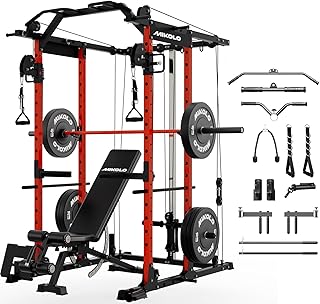
 DP01 Power Cage
- Warranty Description: 2 year
- Tension Supported: 2000 pounds
- Grip Size: Standard


As an Amazon Associate we earn from qualifying purchases at no extra cost to you.
As an Amazon Associate we earn from qualifying purchases.

Quick Comparison
| Cage | Upright Tubing | Hardware | Approx. Footprint | Best For |
|---|---|---|---|---|
| Rogue R-3 | 3×3″, 11-gauge | 1″ bolts & pins | ~48″ x 30″ | Buy-it-once durability |
| REP PR-4000 | 3×3″, 11-gauge | 5/8″ bolts, 1″ holes | Configurable, 16″–41″ deep | Custom builds |
| Bells of Steel Hydra | 3×3″, 11-gauge | 1″ hardware | ~49″ x 33″+ | Attachment variety |
| PRx Profile PRO | 3×3″, 11-gauge | 1″ hardware | Folds to ~5″ deep | Shared garage space |
| Titan T-3 | 2×3″, 11-gauge | 5/8″ hardware | ~47″ x 30″–36″ | Budget lifters |
| Force USA MyRack | ~2.4″ square | 5/8″ hardware | ~55″ x 50″ | All-in-one training |
How to Choose
- Measure ceiling height before anything else. Most full-height cages land between 90 and 93 inches. Under an 8-foot ceiling with joists, a shorter 80-inch upright option or a rack with an angled pull-up bar saves you from knuckle-scraping.
- Treat wall gauge as the real strength spec. 11-gauge is roughly 0.12″ thick steel; 14-gauge is closer to 0.075″. Both hold a squat, but only one stays quiet and square when you fail a rep into the safeties.
- Match hardware to your ambitions. One-inch bolts and pins tolerate abuse and open up the widest accessory market. Five-eighths hardware is perfectly adequate for most home lifters and usually costs less.
- Pick depth around your bench, not your bar. A 24-inch interior is fine for squats but cramps benching with a spotter deck. Thirty inches is the sweet spot; 41 inches gives you a lifting platform inside the cage.
- Decide whether you’re bolting down. Unbolted racks need a wide base or weight storage on the rear uprights to stay planted during aggressive pull-ups and band work.
Top Picks Reviewed
Rogue R-3 — Best Overall Steel
The R-3 is the reference point everyone else gets measured against. Three-inch square 11-gauge uprights, laser-cut 1-inch holes, and Westside spacing through the bench and pull range mean you can dial rack height to the exact inch that matters. At roughly 30 inches deep and just over 90 inches tall, it fits most garages without dominating them, and the powder coat holds up to chalk, sweat, and the occasional bar scrape better than budget finishes. It ships as a bare bones cage — you’ll add a dip station or landmine later — but the frame will outlast the house.
REP PR-4000 — Best Configurable Cage
REP built the PR-4000 as a menu rather than a product. You choose 80 or 93-inch uprights, then a 16, 30, or 41-inch depth, then flat-foot or standard base. The 3×3 11-gauge steel matches the premium tier, and while the hardware is 5/8-inch, the holes are 1 inch, so third-party accessories generally slot right in. Laser-etched numbering next to every hole is a small feature that saves real time when you’re adjusting j-cups between squats and presses. It’s the smart pick for oddly shaped rooms.
Bells of Steel Hydra — Best Attachment Ecosystem
The Hydra uses 3×3 11-gauge tubing with 1-inch hardware and a modular design that lets you start with a basic cage and grow it into a rig with a lat tower, jammer arms, or a rear extension for weight storage. Assembly is straightforward, tolerances are tight enough that bolts line up without persuasion, and pricing sits comfortably below the top-shelf brands. If you know your training will evolve and you’d rather bolt on than replace, this is the platform to build on.
PRx Performance Profile PRO — Best for Tight Spaces
This is the answer for anyone whose gym is also a garage that parks a car. Mounted to studs, the Profile PRO folds flat to about five inches from the wall, then swings out into a genuine 3×3, 11-gauge cage with a pull-up bar and safeties. You trade some floor mobility — you can’t walk fully around it, and installation demands solid framing — for the ability to reclaim your entire floor in under a minute. For squat-and-bench programming in a shared space, nothing else comes close.
Titan T-3 — Best Value
The T-3 uses 2×3-inch 11-gauge uprights and 5/8-inch hardware, which is a genuine step down in cross-section but not in wall thickness. In practice it handles heavy work confidently, especially bolted to the floor. Finish quality and packaging are the weak points; expect a few paint chips and a longer assembly session with the hardware chart open. Accept those tradeoffs and you get most of the function of a premium cage for a fraction of the outlay.
Force USA MyRack Modular — Best All-in-One
The MyRack is aimed at lifters who want a cable stack, lat pulldown, dip handles, and chin-up options from a single frame instead of buying three machines. Uprights are around 2.4 inches square with 5/8-inch hardware, and the base is wider and deeper than a standard cage to accommodate the pulley systems. Budget roughly a 5-by-4-foot area plus clearance. It’s the most versatile option here, and the most demanding of floor space.
Frequently Asked Questions
Do I have to bolt my power cage to the floor?
Not usually. Most full-size cages with a wide footprint are stable for squats, presses, and moderate pull-ups when loaded with plate storage on the rear uprights. Bolting becomes worthwhile if you do explosive kipping work, heavy band-resisted lifts, or own a narrower 2×3 rack. On concrete, wedge anchors take about an hour; on a wood subfloor, use lag bolts into joists or a plywood platform.
Is 3×3 steel actually worth the upgrade over 2×3?
For most home lifters, the honest answer is that 2×3 11-gauge is strong enough. The 3×3 upgrade buys rigidity under lateral load, compatibility with a much larger accessory market, and a rack that feels dead solid rather than merely adequate. If you plan to add cable towers or jammer arms later, go 3×3. If you squat, bench, and press and nothing more, save the money.
How much ceiling clearance do I need?
Add about four inches above the pull-up bar for knuckle room, then account for your own head position at the top of a rep. A 93-inch cage generally needs a 100-inch ceiling to be comfortable. Under 8 feet, choose 80-inch uprights and accept that pull-ups may need to happen on a separate bar or with a slight tuck.
What attachments should I buy first?
Start with a second set of j-cups so you can leave bench height set while squatting elsewhere in the rack. Then a dip or landmine attachment, depending on your programming. Lat towers and cable systems are excellent but expensive, and they add 12 to 24 inches of depth — measure before you commit.
Final Thoughts
Choose the cage that fits your room and your ceiling first, then buy the heaviest steel that budget allows within that envelope. The Rogue R-3 and REP PR-4000 are the safest long-horizon purchases; the Hydra offers the best growth path; the PRx solves the space problem outright; the Titan T-3 gets you training today. Whichever you pick, spend a few dollars on a torque wrench and re-check every bolt after the first month of use — that single habit does more for rack stability than any spec on the box.
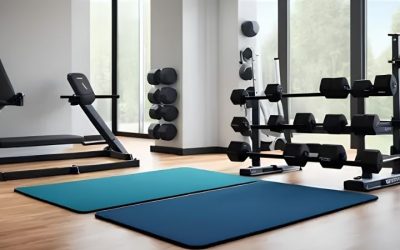
Best Gym Mat for Home: Design the Surface by Task
The best gym mat for home depends on which area it serves. A surface for floor exercises, a covering beneath a machine and a weight-handling area have...
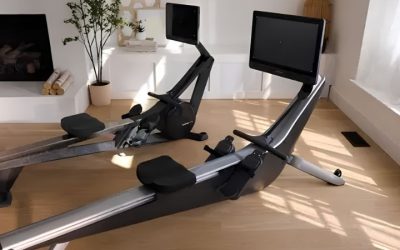
Best Rowers for Home Gym: Permanent Placement or Daily Storage
The best rowers for home gym use should be compared in two states: ready for a full rowing movement and put away according to their instructions. A...
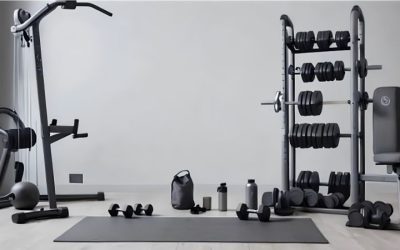
Best Weight Home Gym: Plan Stations and Working Space
The best weight home gym should be compared as a complete activity area, not just a frame that fits against a wall. A multi-station machine, cable...
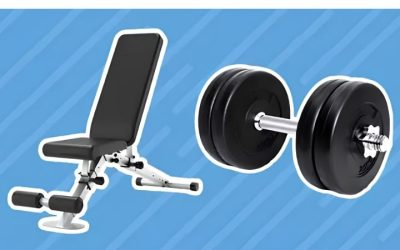
Best Home Gym Equipment for Beginners: Plan a First Practice Space
The best home gym equipment for beginners should fit a small set of activities you understand and a room you can actually make available. Begin with...
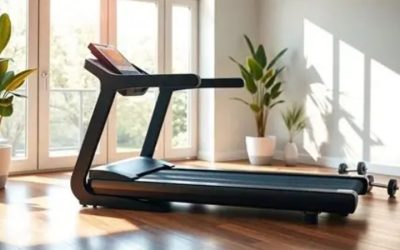
Best Treadmills for Home Gym: Use, Installation and Ownership
The best treadmills for a home gym should be compared by the walking or running use they support and the space needed to operate them. Begin with the...
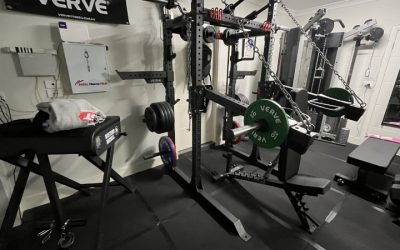
Best Compact Home Gym: Working Space and Storage
The best compact home gym is a setup that gives your chosen activities enough room to work. Start with the complete movement area, then decide which...
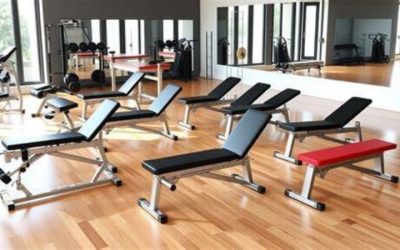
Best Adjustable Bench for Home Gym: Positions and Practical Fit
The best adjustable bench for home gym use is the bench that supports your planned exercises in the room where they will happen. Begin with the...
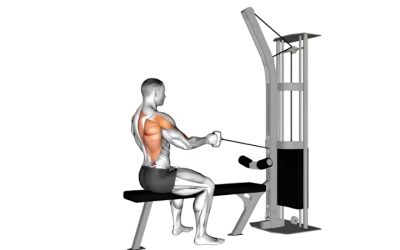
Best Cable Machine for Home Gym: Adjustments, Resistance and Fit
The best cable machine for home gym training should be chosen around a specific exercise plan. Start with the movements and positions you want, then...
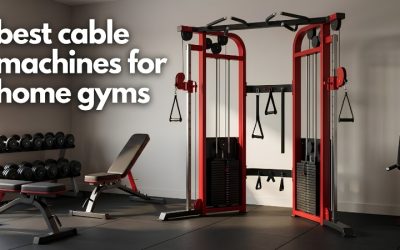
Best Cable Machines for Home Gym: Layouts and Working Space
The best cable machines for home gym use are the ones whose working layout matches the movements you want to perform. Start by comparing the space each...
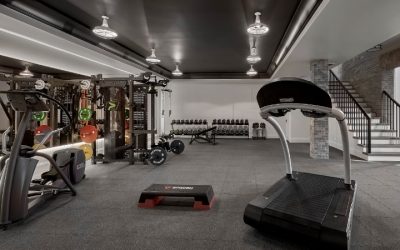
Best Home Gym Setup: Improve Preparation, Access and Reset
The best home gym setup is one that works after the equipment has arrived, not only in the original floor plan. Review how the room supports...
Write Your Review
No reviews yet. Be the first to share your experience!