
The best weight home gym should be compared as a complete activity area, not just a frame that fits against a wall. A multi-station machine, cable setup and free-weight arrangement ask different things of a room. Choose the activities you intend to learn or perform, then check whether the complete system can support them in the available space.
This guide provides practical selection and use considerations. It does not report hands-on product testing.
Draw the user positions before choosing the frame
List the intended exercises using the equipment’s documented configurations. For each, identify where the person starts, moves and finishes. A seated position, a standing cable movement and equipment adjustment can occupy different areas around the same machine. The advertised footprint usually cannot answer all of these questions by itself.
Use the manual’s clearance requirements and obtain clarification when a needed dimension is missing. Do not substitute a generic margin borrowed from another model. Include access to controls, attachments and inspection points. A machine can fit physically while leaving an important function inaccessible.
Decide which room activities must coexist
Keep the normal furniture layout visible on the plan. Identify cupboards that still need to open and household routes that cannot be blocked. If a desk remains in the room, consider its chair position during exercise as well as when pushed in. Designing around furniture in its smallest stored outline can hide conflicts.
Choose whether the exercise arrangement is permanent or whether some documented changes are made between uses. Moving a bench may be practical while relocating an entire machine may not be. Evaluate the actual handling instructions rather than assuming that every component can be shifted whenever the room is needed.
Understand what the resistance description means
Read how resistance is generated and specified for each station. A number on a weight stack does not by itself establish the load experienced through every cable configuration. Ask the maker about the exact arrangement instead of applying a pulley ratio found in another system’s review.
Compare useful settings and intended activities, not only headline totals. A different resistance mechanism may have a different feel and adjustment process. An appropriate demonstration can help clarify personal preferences, but it does not prove that unlike machines deliver interchangeable training loads. Keep exercise suitability and progression with qualified guidance.
Product listings to compare
As an Amazon Associate we earn from qualifying purchases. Compare the selected variant and its current description with the requirements above.
Our top picks
 SincMill Home Gym Multifunctional Full Body Workout
- Warranty Description: 10 Years
- Tension Supported: 148 pounds
- Handle Type: Pulldown, Strap
148-pound weight stack supports progressive strength training
Leg exercise pedal targets more lower-body muscle groups
Frame is backed by a 10-year warranty
Footprint of 69 by 40.7 inches needs a dedicated room
Assembly takes close to half an hour to complete
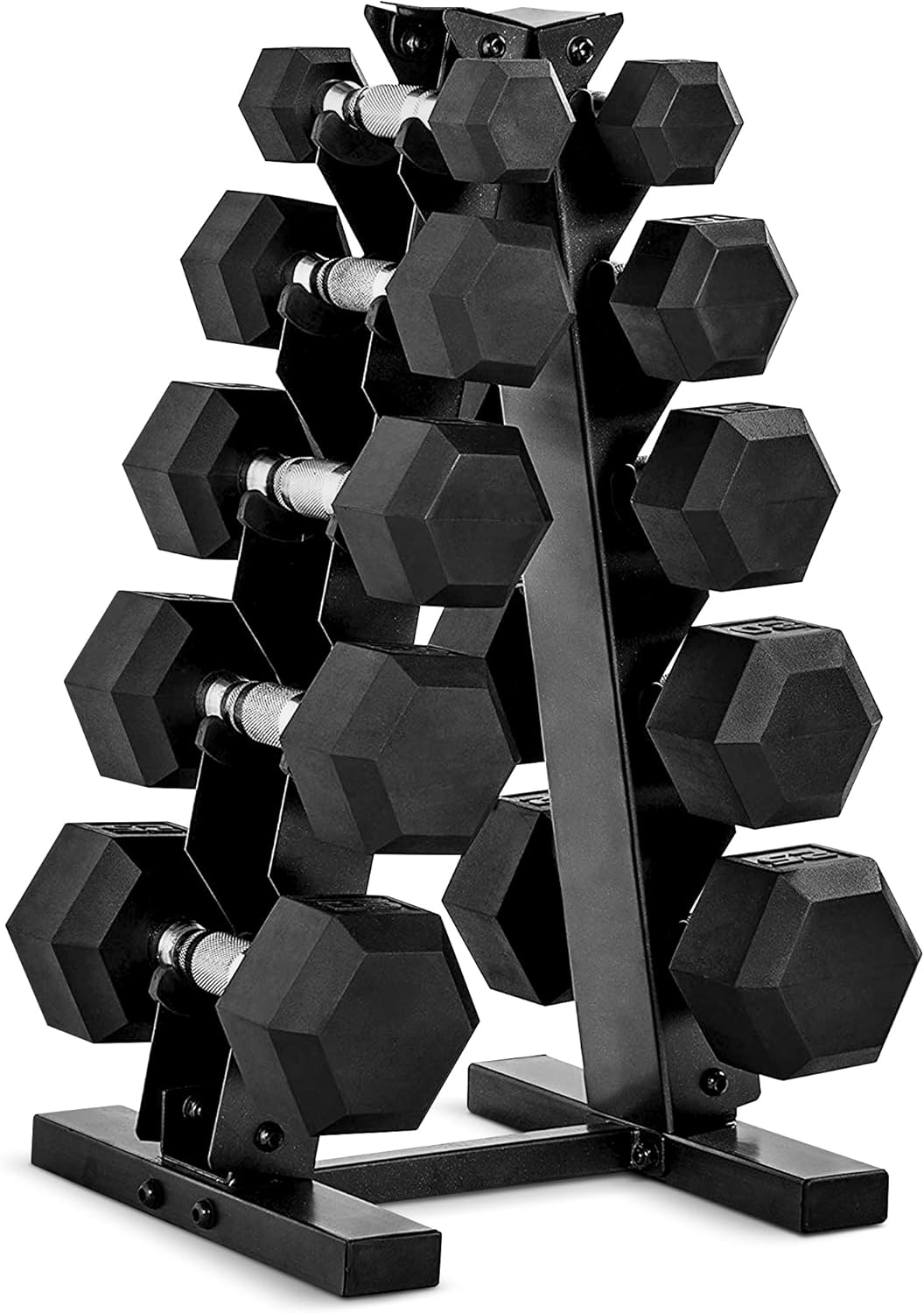 CAP Rubber Coated Hex Dumbbell Set with
- Frame Type: A-Frame
- Material: Metal
- Item Dimensions D x W x H: 12.8"D x 14.37"W x 25.98"H
Five paired weights from 5 to 25 pounds cover most routines
A-frame rack keeps the full set organized and off the floor
Knurled steel handles improve grip during heavier lifts
Manufacturer warranty covers only 30 days from purchase
Vertical rack needs dedicated floor space to set up
 Home Gym System with 160 lbs Weight
- Warranty Description: 30 Day
- Tension Supported: 160 lbs
- Strap Type: Cable/Pulley straps
| Product | Key specs | |
|---|---|---|
| SincMill Home Gym Multifunctional Full Body Workout | Warranty Description: 10 Years Tension Supported: 148 pounds Handle Type: Pulldown, Strap | Check price |
| CAP Rubber Coated Hex Dumbbell Set with | Frame Type: A-Frame Material: Metal Item Dimensions D x W x H: 12.8"D x 14.37"W x 25.98"H | Check price |
| Home Gym System with 160 lbs Weight | Warranty Description: 30 Day Tension Supported: 160 lbs Strap Type: Cable/Pulley straps | Check price |
 Mikolo Smith Machine with Weight Stack Mikolo Smith Machine with Weight Stack | Warranty Description: 2 Year Tension Supported: 264 lb Strap Type: Cable/Pulley straps | Check price |
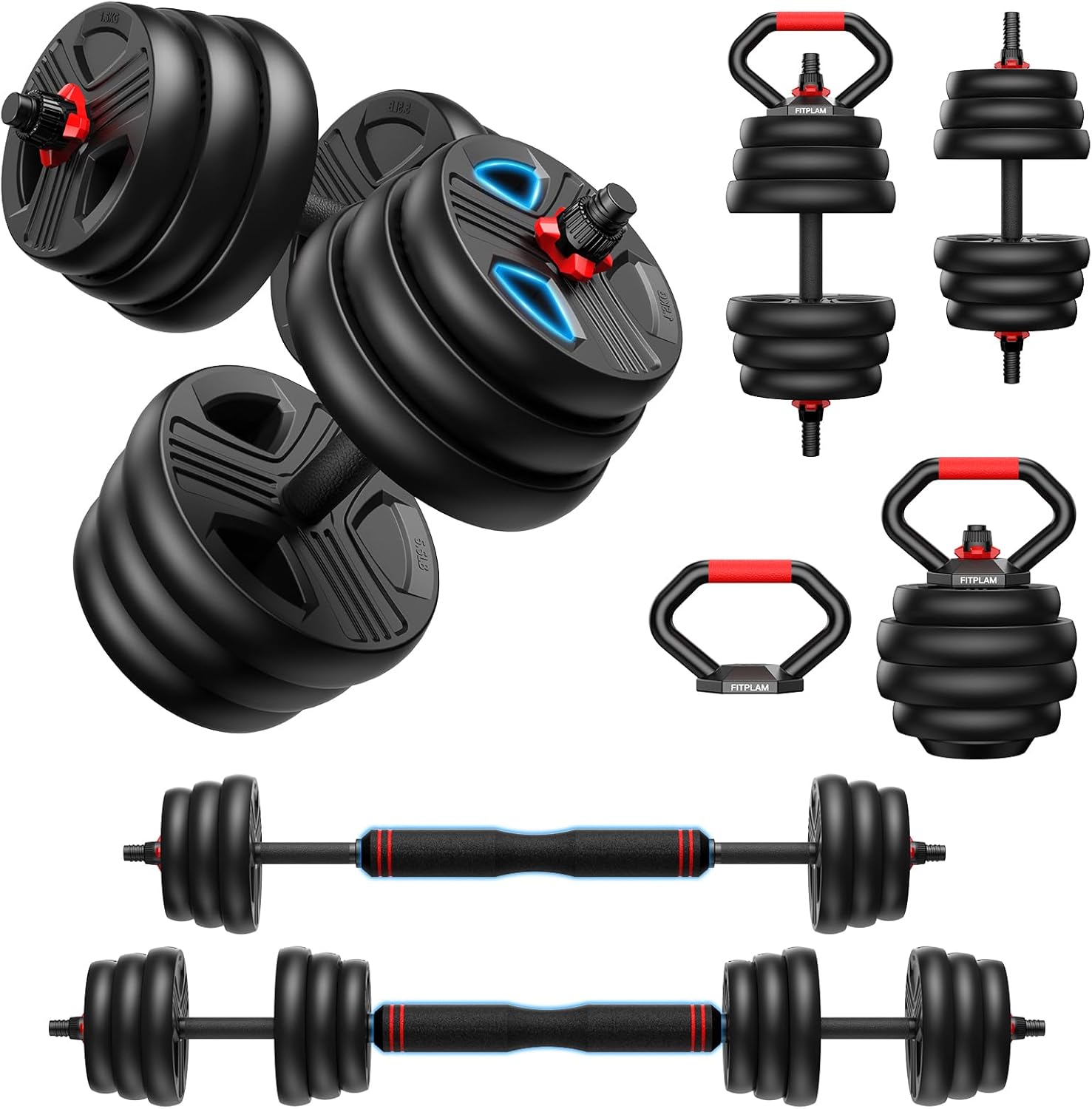 FITPLAM Adjustable dumbbell set FITPLAM Adjustable dumbbell set | Material: Alloy Steel, Iron, Polyethylene (PE) | Check price |
 Marcy Multifunctional Workout Station 100lbs to 200lbs Marcy Multifunctional Workout Station 100lbs to 200lbs | Material: Alloy Steel | Check price |
 Home Gym Equipment Home Gym Equipment | Tension Supported: 1000 lbs Grip Size: Medium to Large Strap Type: Cable/Pulley straps | Check price |
 NICEPEOPLE Adjustable Weight Bench for Home Gym NICEPEOPLE Adjustable Weight Bench for Home Gym | Item Dimensions D x W x H: 46"D x 16.7"W x 17.2"H Material: Superior Alloy Steel | Check price |
As an Amazon Associate we earn from qualifying purchases at no extra cost to you.
Plan the attachment changes
Identify what must be removed, attached or repositioned between the activities you want. Provide a suitable resting place for each accessory. Small parts should remain identifiable and accessible without being left across the floor. Confirm compatibility before adding an attachment merely because its connector looks familiar.
Check whether a planned bench position changes when the cable station changes. Draw both arrangements if necessary. This can reveal that a supposedly compact system needs more working space than expected, or that a simpler selection of activities uses the room more effectively. The number of listed exercises is not the only useful measure.
Arrange arrival and installation before decorating
Obtain package dimensions and delivery details. Check the route through doors, stairs and turns, along with who is responsible for assembly. Follow requirements for support, placement and any anchoring. Seek appropriate installation or structural advice where the actual setup calls for it; a floor covering does not certify the structure beneath.
Only then plan the surrounding storage and visual finish. Keep panels and furniture from obstructing maintenance access. An attractive enclosure that prevents cable inspection or adjustment works against the equipment’s ongoing use. Treat service space as part of the design, not leftover space after everything else is placed.
Keep ownership tasks visible
Read inspection and maintenance schedules and confirm how replacement parts are obtained. Store the exact model details and manuals where they can be found later. Ask who provides service and what the warranty covers for the components involved. A broad warranty headline should not replace those practical answers.
For connected equipment, check ordinary operation without optional services and include recurring charges you expect to retain. Compare complete offers with delivery, installation and required accessories included. Decorative additions can wait until the system is working appropriately in its final position.
Choose the arrangement you can explain
The useful home gym has a clear place for its user, movements, adjustments and upkeep. Select a system that supports those relationships within the room. If a required activity cannot be accommodated, change the plan or equipment rather than buying a larger exercise count and leaving the conflict unresolved.
Additional product links
- Start 30-Day Prime Free Trial →
- See Today’s Amazon Deals
- ▸ Try Amazon Prime — free 30-day trial
- ▸ Start an Audible Premium Plus free trial
- ▸ Read free with Kindle Unlimited
Related reading
- Best weight home gym
- Chris Parker
- Best Gym Mat for Home: Rubber vs Foam Picks for Any Floor
- Best Rowers for Home Gym: Air, Magnetic and Water Compared
- Best Home Gym Equipment for Beginners: The Starter Setup
- Best Treadmills for Home Gym: 5 Picks by Deck and Motor
- Best Home Gym Compact Setups: 6 Space-Saving Picks Ranked
- Best kettlebell weight for men
- Best grip yoga mat
- Best way to clean a yoga mat
- Best grippy yoga mat
- The Best All-in-One Home Gym Systems for Maximum Results
- Best Home Gym Equipment: 6 Essential Picks for Small Rooms
- Best Cable Machines for Home Gym: 5 Types and Their Limits
- Best Gym Machines for Home: Match the Type to Your Goal
Write Your Review
No reviews yet. Be the first to share your experience!