
The best kettlebell routine for your home starts with a load you can control in the exercise being performed. Choosing a bell first and forcing every movement to use it reverses that decision. Build a short, understandable session, assess its individual movements and let those requirements determine which equipment belongs in the room.
This guide provides practical selection and use considerations. It does not report hands-on product testing.
Choose a focus for this session
A routine does not need to cover every kettlebell skill at once. For a basic practice session, choose a familiar lift to work on, prepare for it and leave time to review the result. A deadlift-focused session offers a clear example of this approach without requiring a chain of overhead or swinging movements.
Write the sequence before beginning: warm-up, unloaded rehearsal of the movement you have learned, loaded practice with pauses, then notes and equipment reset. The appropriate amount of work depends on the person. A qualified instructor can help choose the exercise and workload instead of relying on a universal beginner weight.
Understand the lift before choosing the bell
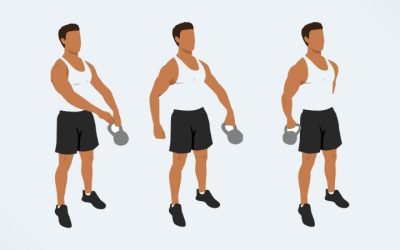
Place the kettlebell between your feet. Hinge and bend your knees slightly to grasp it with both hands, maintaining a neutral spine. Brace, extend your hips to stand, then hinge back down and return the weight smoothly to its starting place.
This controlled return matters when assessing a candidate weight. Do not judge the choice only by whether you can get the bell off the floor once. Consider whether you understand the entire repetition and can finish it deliberately. If the setup changes in ways you cannot explain, pause and seek instruction rather than increasing the challenge.
Make the first block an observation
Warm up first and use a small amount of controlled practice followed by rest. Technique takes priority over completing a predetermined total. Establish the basic movement before progressing to more complex kettlebell skills.
During the pause, record the bell used and what you noticed about the setup. Keep the observation specific: difficulty taking the starting position, an uncertain grip or confusion about the return. A useful note identifies the next question to resolve; it does not need to award the session a performance score.
Assess a second exercise separately
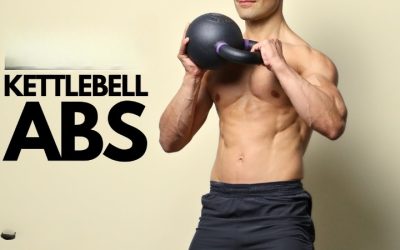
If a goblet squat is already suitable for you, treat it as a separate block. Hold the bell at your chest, brace, and lower through your hips and knees with a neutral back. Keep knees aligned with toes and stand again from a controlled depth.
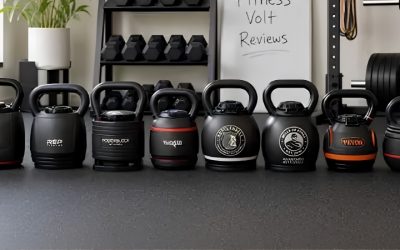
The load for that block may differ. A routine can remain simple even if it uses two appropriate weights, and it can remain useful with only the first movement while another is being learned. Do not let a matching set or an attractive storage display decide the loading.
Product listings to compare
As an Amazon Associate we earn from qualifying purchases. Compare the selected variant and its current description with the requirements above.
Our top picks
 Palace Learning QUICKFIT Kettlebell Workout Exercise Poster
- Orientation: Landscape
- Item Shape: Rectangular
- Theme: Workout
3 MIL lamination resists tearing and moisture in a home gym
Large 18 by 24 inch size is easy to read from a distance
Illustrated guide covers a full kettlebell routine at a glance
Static poster cannot demonstrate movement or pacing like video
Limited to the specific routine printed, not customizable

 Men's Health No Gym Required: Kettlebells
30-day program with 36 additional workouts for variety
Spiral binding with snap-in page holder lies flat for use
Step-by-step illustrations guide proper kettlebell form
Kettlebell itself is not included with the planner
Program follows a fixed 30-day structure, not customizable length

 Kettlebell Cards for Women & Men-50 Kettlebell
- Target Audience: Adult
- Format: Organizer
- Paper Size: 3.15 x 4.72 inches
59 cards come with a built-in 4-week challenge structure
Dry-erase card lets you build and track a custom routine
Compact 3.15 by 4.72 inch size travels easily
Paper card material is less durable than plastic alternatives
Small card size limits how much illustration detail fits


 Kettlebell Workout Cards
- Educational Objective: Physical Fitness and Motor Skills
- Age Range Description: Adult
- Set Name: Kettlebell Workout Cards
50 exercise cards cover a wide range of kettlebell moves
Moisture-resistant plastic holds up better than paper cards
Blank card lets you write in a custom routine
Compact 3.5 by 5 inch cards show limited illustration detail
Deck covers kettlebell moves only, not other equipment
As an Amazon Associate we earn from qualifying purchases at no extra cost to you.
Choose equipment after the practice requirements
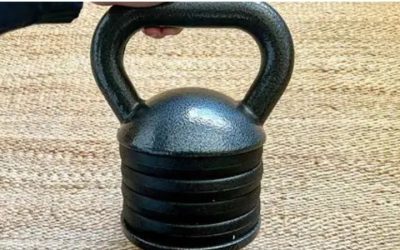
When comparing bells, examine the handle arrangement and the way you will hold the equipment in the selected exercises. With adjustable equipment, read how the setting is secured and which uses are permitted. A broad weight range is only helpful when the product is appropriate for the routine you intend.
Instructional books and charts serve another purpose. They can help organize the sequence, but their presence does not answer a personal loading question. Look for explanations of setup, execution and return, and distinguish a demonstration from a promise of a particular result.
Give the routine a stable place
Use a suitable surface and clear the full movement area before lifting. Locate the bell’s starting position away from loose furnishings and household circulation. Place notes where they can be read between efforts, rather than requiring a sideways glance during the movement.
Choose appropriate storage for the actual weights. An ordinary console or decorative shelf should not be assumed suitable because it is nearby. Plan how the equipment is put away so the room returns to its everyday function without leaving a bell beside a doorway.
Make one informed change at a time
Use the session record to decide whether to repeat the same practice or ask for guidance on a change. Altering exercise selection, load and pace together makes the result harder to interpret. A routine should remain understandable as it develops, with the original movement quality still visible in the plan.
Choose consistency of setup before chasing a more impressive equipment arrangement. The bell is a tool for the session, and the room supports its use. Neither a heavier purchase nor a longer list of movements automatically makes the routine a better match for you.
Additional product links
- Start 30-Day Prime Free Trial →
- See Today’s Amazon Deals
- ▸ Try Amazon Prime — free 30-day trial
- ▸ Start an Audible Premium Plus free trial
- ▸ Read free with Kindle Unlimited
Related reading
- Best kettlebell routine
- Chris Parker
- Best Kettlebell Weight for Men: How to Pick the Right Size
- Best Kettlebell Ab Exercises: 6 Adjustable and Fixed Picks
- Best Kettlebell Core Exercises: 6 Picks for Floor Space
- Best Kettlebell Exercise for Abs: 5 Bells for Long Holds
- Best Kettlebell Ab Workout: 6 Bells Sized for Circuit Work
- Best home pull-up bar
- Best at home pull up bar
- Best in house pull up bar
- Best rated ab roller
- Best kettlebell routines
- Best Kettlebell Weight: How to Size It Plus 6 Top Picks
- Best Flooring Home Gym Owners Pick by Subfloor and Noise
- How to Use Smart Lighting to Automate Your Home Routine
Write Your Review
No reviews yet. Be the first to share your experience!