
Key takeaways
- Warranty Description: 2 Year
- Tension Supported: 264 lb
- Strap Type: Cable/Pulley straps
Most home gyms die in the same place: a spare bedroom with a dumbbell rack, a bench that never gets adjusted, and a resistance band coiled in a drawer like a snake nobody wants to touch. The problem usually isn’t motivation. It’s that a pile of separate equipment forces you to invent your own program every single session, and inventing a program at 6 a.m. is a losing bet. An all-in-one system removes that decision. Cables, a bench, progressive resistance, and a training plan live in one footprint, so the only thing left to decide is whether you’re showing up.
The catch is that “all-in-one” covers wildly different machines. Some are wall-mounted screens with electromagnetic resistance and a coach in your ear. Others are 400-pound steel racks that will outlive your mortgage. A few are hybrids that use real iron plates while a camera counts your reps. The right pick depends on ceiling height, whether you care about barbell work, and how much you actually want a subscription in your life. Below are six systems worth the floor space, plus a framework for matching one to your room and your goals.
Our top picks
 Mikolo Smith Machine with Weight Stack
- Warranty Description: 2 Year
- Tension Supported: 264 lb
- Strap Type: Cable/Pulley straps
Dual 128-pound stacks let two people train at the same time
Combines power rack, lat pulldown, and cable crossover in one footprint
Machine is backed by a 2-year warranty
Dual steel uprights and stacks take up real floor space
Bundled bench and cable attachments need assembly before use
 SincMill Home Gym Multifunctional Full Body Workout
- Warranty Description: 10 Years
- Tension Supported: 148 pounds
- Handle Type: Pulldown, Strap
148-pound weight stack supports progressive strength training
Leg exercise pedal targets more lower-body muscle groups
Frame is backed by a 10-year warranty
Footprint of 69 by 40.7 inches needs a dedicated room
Assembly takes close to half an hour to complete
 pooboo Multi-Functional Machine Power Cage
- Warranty Description: 2 Year Warranty Time
- Material Type: Alloy Steel, Plastic
- Tension Supported: 2000 pounds
| Product | Key specs | |
|---|---|---|
| Mikolo Smith Machine with Weight Stack | Warranty Description: 2 Year Tension Supported: 264 lb Strap Type: Cable/Pulley straps | Check price |
| SincMill Home Gym Multifunctional Full Body Workout | Warranty Description: 10 Years Tension Supported: 148 pounds Handle Type: Pulldown, Strap | Check price |
| pooboo Multi-Functional Machine Power Cage | Warranty Description: 2 Year Warranty Time Material Type: Alloy Steel, Plastic Tension Supported: 2000 pounds | Check price |
 Marcy Multifunctional Workout Station 100lbs to 200lbs Marcy Multifunctional Workout Station 100lbs to 200lbs | Material: Alloy Steel | Check price |
 Marcy Multifunction Steel Home Gym 150lb Weight Marcy Multifunction Steel Home Gym 150lb Weight | Warranty Description: 2 year limited manufacturer Tension Supported: 150 pounds Handle Type: D Type, Pulldown | Check price |
 RitFit M1 Pro Smith Machine Package RitFit M1 Pro Smith Machine Package | Warranty Description: 3 year Tension Supported: Grip Size Grip Size: medium | Check price |
 Mikolo Home Gym Mikolo Home Gym | Tension Supported: Weight Stack 154lbs (12 Levels) Item Dimensions D x W x H: 75"D x 36.3"W x 80"H Maximum Weight Recommendation: 300 Pounds | Check price |
 SincMill Home Gym Multifunctional Full Body Workout SincMill Home Gym Multifunctional Full Body Workout | Warranty Description: 10 Years Tension Supported: 160 pounds Handle Type: Fixed Handle | Check price |
As an Amazon Associate we earn from qualifying purchases at no extra cost to you.
As an Amazon Associate we earn from qualifying purchases.
Quick Comparison
| System | Resistance Type | Footprint | Best For |
|---|---|---|---|
| Tonal | Electromagnetic (digital weight) | Wall-mounted, minimal floor use | Small rooms, guided strength programs |
| Force USA G20 All-In-One Trainer | Iron plates + dual cable stacks | Large, dedicated garage or basement | Serious barbell and cable lifters |
| Speediance Gym Monster 2 | Digital motor resistance | Compact, folds for storage | Apartments and renters |
| Bowflex Revolution | SpiraFlex elastomer packs | Medium, folds down | Quiet, joint-friendly training |
| Tempo Studio | Real weight plates + AI form tracking | Slim cabinet, floor space for lifting | Lifters who want honest feedback |
| Total Gym FIT | Bodyweight on an incline glideboard | Small, folds flat | Rehab, seniors, low-impact work |
How to Choose
- Measure your ceiling, not just your floor. Overhead presses, pull-ups, and high cable pulls all need vertical clearance. A rack that fits your square footage but leaves four inches above the pull-up bar is a rack you’ll resent.
- Decide whether digital resistance is a dealbreaker. Motor-driven systems offer eccentric overload, spotter modes, and one-pound increments — genuinely useful tools. But the resistance ceiling is fixed, and heavy deadlifters will hit it. Plates don’t have that problem.
- Price the subscription, not just the machine. Several of these systems are inert without an active membership. Multiply the monthly fee by three years and add it to the sticker price before you compare anything.
- Match the machine to lifts you’ll actually repeat. If your training is cables, dumbbells, and machines, a functional trainer covers it. If you want to squat under a loaded bar, only a real rack with safeties will do.
- Check assembly and delivery reality. Steel racks arrive on pallets in multiple crates and can take a full weekend with a second pair of hands. Wall-mounted units need stud placement verified before purchase, sometimes professional installation.
Top Picks Reviewed
Tonal — Best for Tight Spaces
Tonal mounts flat against a wall and generates resistance electromagnetically, with two adjustable arms that swing out for presses, rows, curls, and squats. Because there’s no weight stack, the whole thing occupies roughly the space of a large mirror. The software is the real product: it tracks every rep, adjusts load session to session, and applies techniques like eccentric emphasis and drop sets automatically. The tradeoffs are a firm resistance ceiling around 200 pounds and a required membership. For anyone training in a bedroom or a finished basement corner, it’s still the most capable option per square foot.
Force USA G20 All-In-One Trainer — Best for Serious Lifters
This is the opposite philosophy: a heavy-gauge steel power rack with a Smith machine, dual independent cable stacks, a chin-up bar, dip handles, and a low row station all integrated into one frame. It loads with standard Olympic plates, so your ceiling is whatever you can buy. Nothing here is guided, which means you bring your own program — but you also never outgrow it. Plan on a large dedicated space, a concrete or reinforced floor, and a genuine assembly project. In exchange you get a commercial-grade gym that needs no software and no updates.
Speediance Gym Monster 2 — Best for Apartments
A motorized cable trainer with a folding bench built into the frame, this unit collapses into a wheeled tower you can roll into a closet. Digital resistance runs through both cables independently, and the attached screen handles programming, form cues, and progress logging. It’s remarkably quiet — no clanking plates to annoy the unit below you — and it handles well over a hundred exercises via included accessories. Renters and anyone who shares walls will appreciate that it can disappear entirely between sessions.
Bowflex Revolution — Best for Joint-Friendly Training
The Revolution uses SpiraFlex resistance packs, an elastomer-based system originally developed for maintaining muscle in microgravity. The result is smooth, consistent tension through the full range of motion with almost no impact on connective tissue and no momentum to cheat with. It offers over a hundred exercises with a leg press station, adjustable bench, and cable pulleys, folds down for storage, and requires no subscription whatsoever. Loading tops out lower than a plate rack, but for high-volume, controlled work it’s exceptionally comfortable.
Tempo Studio — Best Form Feedback
Tempo pairs real steel plates and a barbell with 3D sensors that watch your joint positions and correct your depth, bar path, and tempo in real time. That combination is unusual: you get the honest feel of iron plus coaching that flags a rounding back before it becomes an injury. Everything stores inside a slim cabinet that reads more like furniture than gym equipment. You’ll need clear floor space to actually lift, and the plate set is finite, but for lifters who train alone and worry about technique it’s the most useful eyes-on option available.
Total Gym FIT — Best Low-Impact System
Total Gym uses your own bodyweight on an adjustable incline glideboard, so resistance scales by changing the angle rather than adding load. That makes it uniquely good for rehabilitation, older trainees, and anyone rebuilding after a long layoff — you can start absurdly light and progress in small steps. It folds nearly flat, stores under a bed, and requires no electricity or subscription. It won’t build a powerlifting total, but for mobility, core stability, and general conditioning it’s efficient and forgiving.
Frequently Asked Questions
Can an all-in-one system really replace a gym membership?
For strength, hypertrophy, and general conditioning, yes — most of these cover the movement patterns that matter. What you lose is specialized equipment (a proper leg press, a competition platform, a sled) and the social pressure of a public gym. What you gain is zero commute, which for most people is worth more than the missing machines.
Is digital resistance as effective as real weight?
Your muscles respond to tension, not to what produces it. Motorized systems can actually do things plates can’t, like increasing load on the lowering phase or reducing it automatically as you fatigue. The meaningful difference is the maximum: if you need to pull 400 pounds off the floor, you need plates.
How much space should I plan for?
Beyond the machine’s dimensions, add roughly three feet of clearance on every side you’ll move through, and confirm ceiling height for overhead work. Compact digital trainers can work in about 40 to 50 square feet of active area. Full racks realistically want 80 square feet or more.
Do I have to pay for a subscription forever?
It depends on the system. Purely mechanical options like the Force USA rack, Bowflex Revolution, and Total Gym function fully with no ongoing fee. Screen-based systems generally require an active membership to unlock programming, and some limit functionality significantly without it — verify this before buying.
Final Thoughts
The best all-in-one system is the boring one you’ll use four times a week for years, not the most impressive one on the spec sheet. If space is your constraint, Tonal or the Gym Monster solves it without compromise. If you want to lift heavy and never think about firmware, the Force USA G20 is the last purchase you’ll make. Tempo splits the difference for anyone who wants iron with a coach attached, and Total Gym remains the smartest entry point for cautious or recovering bodies. Pick based on your ceiling height, your tolerance for subscriptions, and the lifts you genuinely intend to repeat — then put it somewhere you’ll walk past every morning.
Best Gym Mat for Home: Design the Surface by Task
The best gym mat for home depends on which area it serves. A surface for floor exercises, a covering beneath a machine and a weight-handling area have...
Best Rowers for Home Gym: Permanent Placement or Daily Storage
The best rowers for home gym use should be compared in two states: ready for a full rowing movement and put away according to their instructions. A...
Best Weight Home Gym: Plan Stations and Working Space
The best weight home gym should be compared as a complete activity area, not just a frame that fits against a wall. A multi-station machine, cable...
Best Home Gym Equipment for Beginners: Plan a First Practice Space
The best home gym equipment for beginners should fit a small set of activities you understand and a room you can actually make available. Begin with...
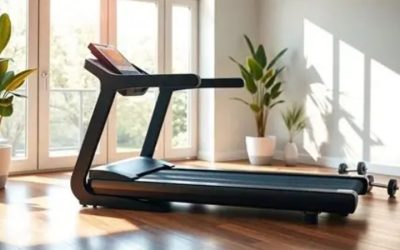
Best Treadmills for Home Gym: Use, Installation and Ownership
The best treadmills for a home gym should be compared by the walking or running use they support and the space needed to operate them. Begin with the...
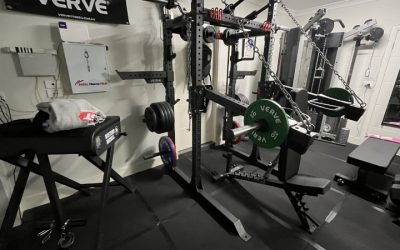
Best Compact Home Gym: Working Space and Storage
The best compact home gym is a setup that gives your chosen activities enough room to work. Start with the complete movement area, then decide which...
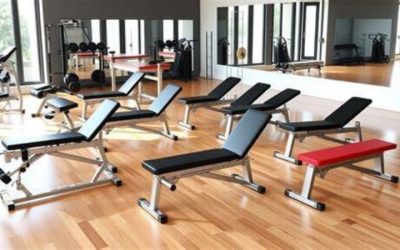
Best Adjustable Bench for Home Gym: Positions and Practical Fit
The best adjustable bench for home gym use is the bench that supports your planned exercises in the room where they will happen. Begin with the...
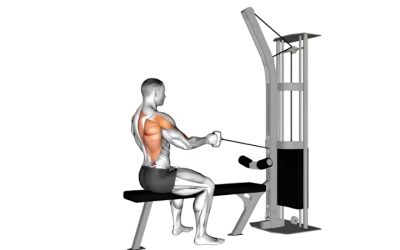
Best Cable Machine for Home Gym: Adjustments, Resistance and Fit
The best cable machine for home gym training should be chosen around a specific exercise plan. Start with the movements and positions you want, then...
Best Cable Machines for Home Gym: Layouts and Working Space
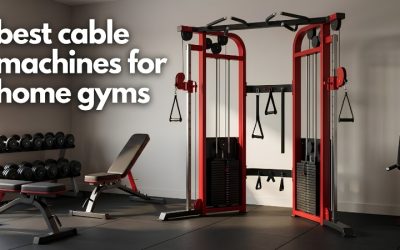
The best cable machines for home gym use are the ones whose working layout matches the movements you want to perform. Start by comparing the space each...
Best Home Gym Setup: Improve Preparation, Access and Reset
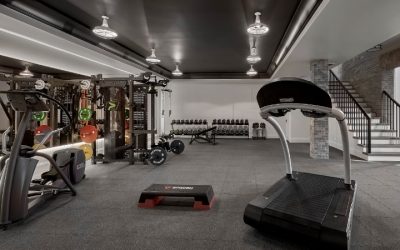
The best home gym setup is one that works after the equipment has arrived, not only in the original floor plan. Review how the room supports...
Write Your Review
No reviews yet. Be the first to share your experience!