
The best fitness equipment for home gym use should support the activities you actually want to do while leaving enough room to perform them. Start with a clear floor plan and a short exercise list, then choose equipment around both. A coordinated room is useful, but an attractive machine that cannot accommodate your intended training is an expensive decoration.
This guide provides practical selection and use considerations. It does not report hands-on product testing.
Design the gym around activities
Separate your plans into floor work, resistance training and indoor cardio. You do not need a major purchase for every category immediately. If your existing routine is mostly floor based, a suitable mat and an unobstructed area may be the first priorities. Someone who already follows a dumbbell routine has a different starting point from someone who wants an indoor cycling station.
Write down the equipment each activity requires, including accessories that make the main item usable. Dumbbells need an appropriate resting place; a plate loaded machine needs compatible plates. A bench adds supported positions, but it does not supply resistance by itself. This simple dependency check prevents a collection of unrelated purchases from masquerading as a complete setup.
Draw three kinds of space
The permanent footprint
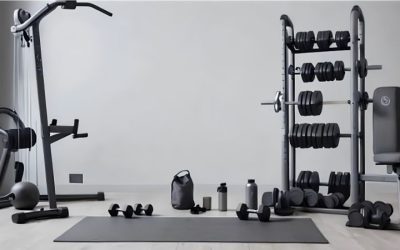
Mark the dimensions of equipment that will stay assembled. Include storage stands, protruding stabilizers and anything behind the frame that requires access. Keep doors, heating outlets and routes to windows usable. In a spare bedroom, decide whether the bed remains part of the room before allocating the middle of the floor to a machine.
The working area
A product outline is not the space occupied during use. Cables extend, arms move sideways and a bench may need repositioning between activities. Use the manufacturer’s operating clearances and your intended movements to assess the whole area. Check overhead space as well as floor space, especially beneath sloping ceilings, pendant lighting or a ceiling fan.
The transition area
Consider where equipment goes while you change activities. A folded bench leaning in a doorway is not a satisfactory storage plan. Leave a deliberate destination for removable handles, mats and other loose items. A room feels less crowded when these objects have homes that do not overlap the space needed for the next activity.
Choose equipment by its role
- Free weights: compare the usable resistance range, handle shape and adjustment process. Check whether the offer includes one dumbbell or a pair before comparing prices.
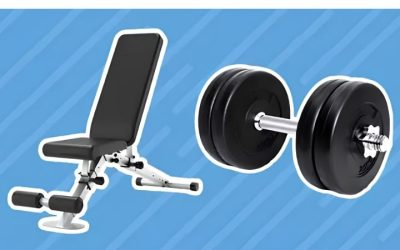
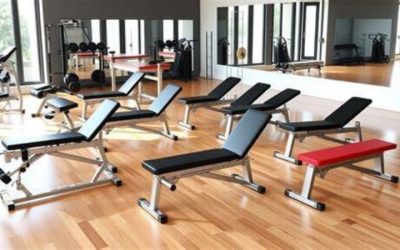
- Benches: confirm supported positions, adjustment locks and the meaning of the load rating. A frame’s appearance does not establish its suitability for your intended use.
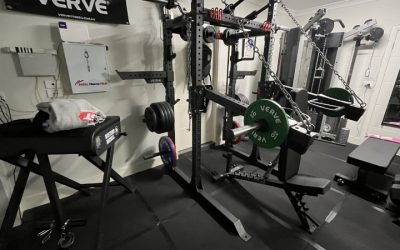
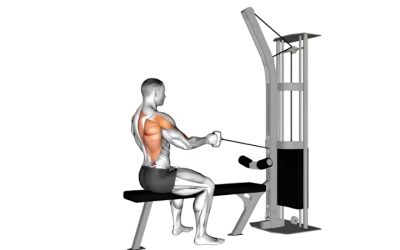
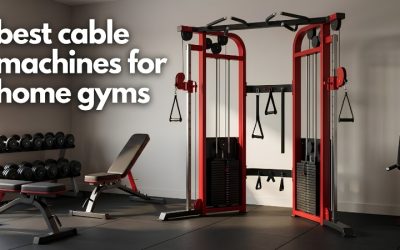
- Cable or multi-station gyms: inspect supported exercises, attachment requirements and access to every station. A long exercise list can conceal frequent conversions.
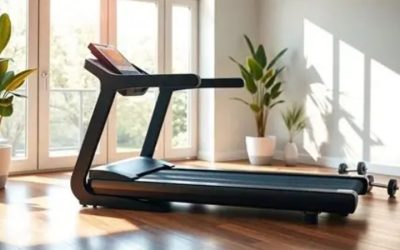
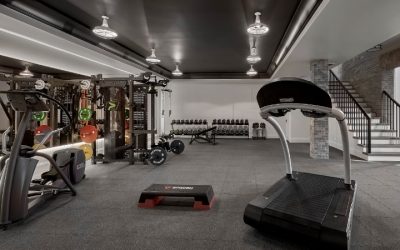
- Cardio equipment: start with the activity you prefer, then assess fit, controls and placement. Connectivity is secondary to whether the basic machine suits you.
Let materials support the room
Floor protection needs to suit both the equipment and the existing floor finish. Check guidance for the machine, the mat and the flooring before layering materials. Soft padding is not automatically an appropriate base for a heavy frame, and an exercise mat does not establish the load capacity of an upstairs floor.
For the visual scheme, repeat a small number of finishes in storage and accessories rather than choosing a less suitable machine for its color. Closed storage can conceal lightweight accessories, while weights need storage specifically rated for their load. Leave equipment controls and adjustment points visible and reachable instead of hiding them behind decorative panels.
Compare the complete purchase
For each shortlist item, record the exact version, included components, assembly needs and delivery arrangements. Confirm who brings a large item into the property and what happens if it does not fit. A return policy matters more when packaging cannot easily be kept or a machine must be dismantled to leave the room.
Product listings to compare
As an Amazon Associate we earn from qualifying purchases. Compare the selected variant and its current description with the requirements above.
Our top picks
 SincMill Home Gym Multifunctional Full Body Workout
- Warranty Description: 10 Years
- Tension Supported: 148 pounds
- Handle Type: Pulldown, Strap
148-pound weight stack supports progressive strength training
Leg exercise pedal targets more lower-body muscle groups
Frame is backed by a 10-year warranty
Footprint of 69 by 40.7 inches needs a dedicated room
Assembly takes close to half an hour to complete
 MQRW Push Up Board
- Maximum Weight Recommendation: 600 Pounds
- Warranty Type: Push up board
- Assembly Instructions Description: No assembly required
Combines a push-up board, resistance bands, and ab roller in one set
No assembly required, ready to use out of the box
Color-coded zones help target chest, triceps, and shoulders
Push-up board alone is rated to 600 pounds, bands wear faster
Managing many small accessories together can get cluttered
| Product | Key specs | |
|---|---|---|
 XGSW Multi-Function Home Gym Workout Station XGSW Multi-Function Home Gym Workout Station | Check price | |
| SincMill Home Gym Multifunctional Full Body Workout | Warranty Description: 10 Years Tension Supported: 148 pounds Handle Type: Pulldown, Strap | Check price |
| MQRW Push Up Board | Maximum Weight Recommendation: 600 Pounds Warranty Type: Push up board Assembly Instructions Description: No assembly required | Check price |
 Mikolo Smith Machine with Weight Stack Mikolo Smith Machine with Weight Stack | Warranty Description: 2 Year Tension Supported: 264 lb Strap Type: Cable/Pulley straps | Check price |
 Major Fitness Drone2 Advanced Training Smith Machines– Major Fitness Drone2 Advanced Training Smith Machines– | Check price | |
 YOLEO Adjustable Weight Bench for Home Gym YOLEO Adjustable Weight Bench for Home Gym | Item Dimensions D x W x H: 41"D x 12.6"W x 42.5"H Material: Alloy Steel | Check price |
 VINSGUIR Ab Roller Wheel VINSGUIR Ab Roller Wheel | Item Dimensions L x W x H: 6.5"L x 12"W x 6.5"H Maximum Weight Recommendation: 440 Pounds Material: Plastic, Rubber, Stainless Steel | Check price |
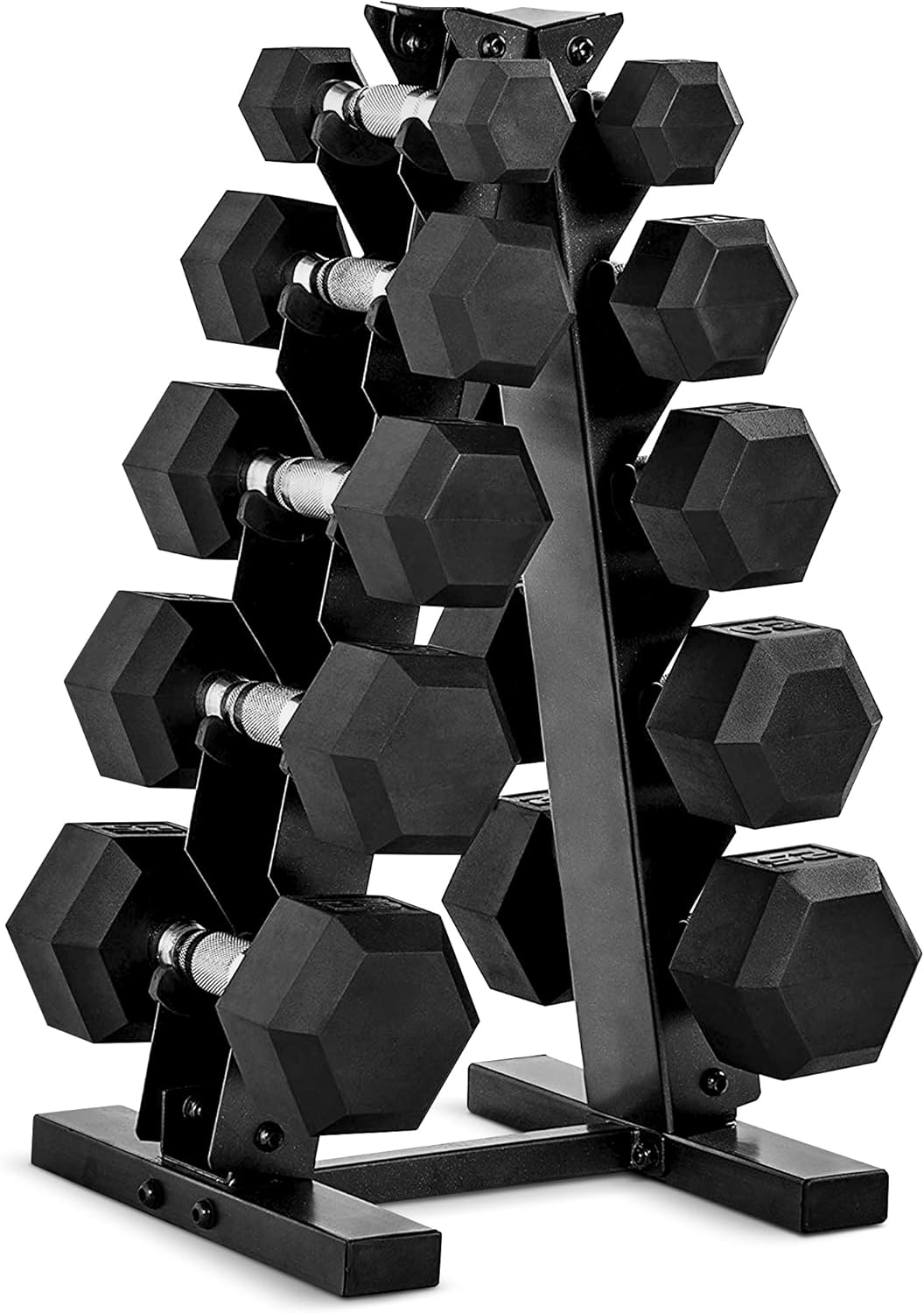 CAP Rubber Coated Hex Dumbbell Set with CAP Rubber Coated Hex Dumbbell Set with | Frame Type: A-Frame Material: Metal Item Dimensions D x W x H: 12.8"D x 14.37"W x 25.98"H | Check price |
As an Amazon Associate we earn from qualifying purchases at no extra cost to you.
Make the room usable before expanding it
Begin with the combination that answers your current needs, then live with its layout before adding another large piece. Notice where setup takes effort, where storage spills into circulation and which intended activities still lack equipment. Those observations make a stronger case for the next purchase than filling every blank part of the plan. A home gym can look finished while still leaving room for its purpose to develop.
Additional product links
- Start 30-Day Prime Free Trial →
- See Today’s Amazon Deals
- ▸ Try Amazon Prime — free 30-day trial
- ▸ Start an Audible Premium Plus free trial
- ▸ Read free with Kindle Unlimited
Related reading
- Best fitness equipment for home gym
- Chris Parker
- Best Gym Mat for Home: Rubber vs Foam Picks for Any Floor
- Best Rowers for Home Gym: Air, Magnetic and Water Compared
- Best Weight Home Gym: 6 All-in-One Machines for Small Rooms
- Best Home Gym Equipment for Beginners: The Starter Setup
- Best Treadmills for Home Gym: 5 Picks by Deck and Motor
- Best changeable dumbbells
- Best rated yoga mat
- Best mat yoga
- Best home gym equipmen
- Best Home Gym Machines: Transform Your Space into a Fitness Hub
- Best Workout Gym Equipment: 6 Heavy-Duty Picks for Home Use
- Best Home Gym Cardio Equipment for Noise and Floor Space
- 8 Best Equipment for at Home Gym: Budget Order and Priorities
- 8 Best Budget Home Gym Equipment: Maximize Your Workout Without Breaking the Bank
Write Your Review
No reviews yet. Be the first to share your experience!