Key takeaways
- Match thickness to the gap you’re filling: 2–3 inches redistributes pressure on a mattress that is still structurally sound; 4–5 inches is for beds with a visible dip or a too-firm surface you need to bury. Going thick on an already-soft mattress deepens the sag rather than correcting it.
- Look for support, not just softness: Lower-back pain usually comes from the hips sinking faster than the waist. You want a layer that contours and then pushes back — a dense foam core, or a pillow-top build with reinforced zones — rather than something that simply collapses under your heaviest point.
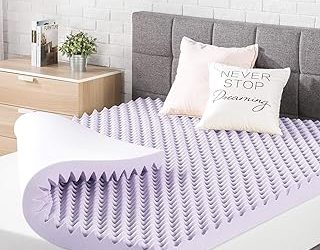
- Take heat seriously: Solid memory foam stores body warmth, and a hot sleeper who wakes repeatedly gets no restorative benefit from good spinal alignment. Gel infusion, ventilation channels, bamboo viscose covers, and mesh side panels each measurably help; look for at least one.
- Check certification and off-gassing: CertiPUR-US means the foam has been tested for emissions and prohibited flame retardants. Expect a faint smell for two or three days regardless, and air the topper unsheeted before you dress the bed.
- Confirm it will stay put: Deep-pocket skirts rated to your mattress height, plus four-way anchor straps, are what separate a topper that holds its position from one you rewrestle every Sunday.
What's inside
I spend my working life tuning bedrooms from the ceiling down — dimming curves, 2200K bedside lamps, blackout layers that hold a room dark until you choose otherwise. And I have lost count of the clients who did everything right with the light and still woke at 4 a.m. rolling onto one hip, one hand pressed into the small of their back. A room can be beautifully calibrated and still fail, because the last surface in the sequence is the one you actually lie on. The mattress is the final fixture, and when its support has gone soft in the middle, no amount of warm light will talk your lumbar spine into relaxing.
Replacing a mattress is a thousand-dollar decision. A topper is a hundred-dollar one, and for sagging-in-the-middle back pain it often does more of the work. The trouble is that every listing on the market now has “for back pain” stamped into the title, thickness numbers are quoted without any mention of firmness, and half of what gets sold as memory foam is actually fiberfill. Below I’ve sorted the toppers worth considering in 2026 — what each one is genuinely built for, who should skip it, and how to read the specs that matter.
As an Amazon Associate we earn from qualifying purchases.




🛒 Best Price Today on Amazon
Prime members get fast, free shipping on everything above, plus member-only deals. New members get a 30-day free trial — cancel anytime.
How to Choose a Memory Foam Mattress Topper for Back Pain (2026)
- Match thickness to the gap you’re filling: 2–3 inches redistributes pressure on a mattress that is still structurally sound; 4–5 inches is for beds with a visible dip or a too-firm surface you need to bury. Going thick on an already-soft mattress deepens the sag rather than correcting it.
- Look for support, not just softness: Lower-back pain usually comes from the hips sinking faster than the waist. You want a layer that contours and then pushes back — a dense foam core, or a pillow-top build with reinforced zones — rather than something that simply collapses under your heaviest point.
- Take heat seriously: Solid memory foam stores body warmth, and a hot sleeper who wakes repeatedly gets no restorative benefit from good spinal alignment. Gel infusion, ventilation channels, bamboo viscose covers, and mesh side panels each measurably help; look for at least one.
- Check certification and off-gassing: CertiPUR-US means the foam has been tested for emissions and prohibited flame retardants. Expect a faint smell for two or three days regardless, and air the topper unsheeted before you dress the bed.
- Confirm it will stay put: Deep-pocket skirts rated to your mattress height, plus four-way anchor straps, are what separate a topper that holds its position from one you rewrestle every Sunday.
The Best Memory Foam Mattress Toppers For Back Pain (2026) Reviewed
WhatsBedding 5 Inch Pillow Top Topper (Queen)
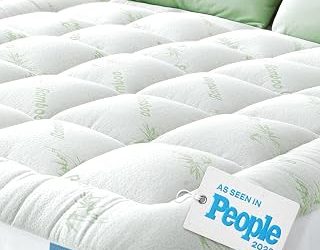
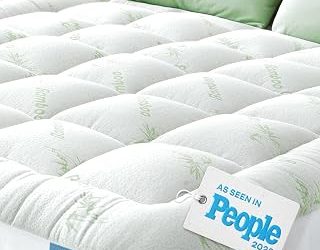
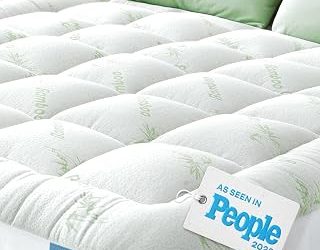
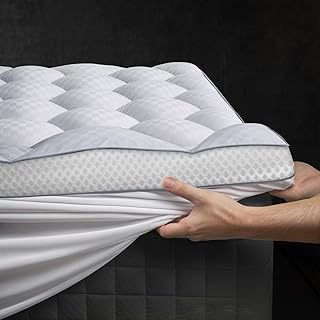
Five inches of plush stuffing over a breathable base, this is the pick for an older mattress that has gone hard and unforgiving rather than soft. It rebuilds a genuine pillow-top feel and lifts the sleep surface noticeably, so check your fitted sheets before ordering.
SHOUREN 5 Inch Gel Memory Foam Topper
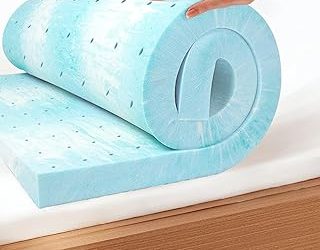
The most support-forward of the thick options: gel-infused foam that contours through the shoulders and hips while holding the lumbar curve, with four-way straps that keep the whole slab anchored. Best for side and combination sleepers carrying pain into the morning.
3 Inch Ultra-Fluffy Pillow Top with Air Mesh Sides
A softer, loftier take with 4X support zoning and mesh panels that vent heat out the sides instead of trapping it under you. The 6–21 inch pocket handles almost any mattress depth, which makes it the safest choice if you’re buying for a guest room and don’t know the exact build.
SINWEEK 3 Inch Gel Memory Foam Topper
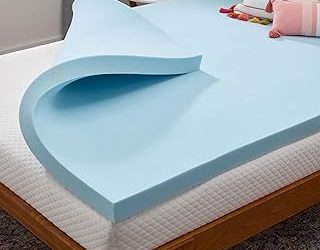
Ventilated high-density foam, CertiPUR-US certified, with a removable washable cover — the disciplined, no-frills option. Three inches is the right call when your mattress still has structure and you need pressure relief rather than reconstruction.
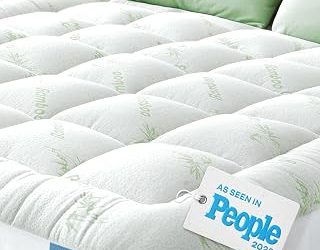
WhatsBedding 5 Inch Full with Bamboo Viscose Air Layer
The same generous pillow-top platform in a Full, with a bamboo viscose air layer doing the cooling work. A strong answer for hot sleepers in smaller rooms, where a bed sits close to a west-facing window and holds afternoon heat well past bedtime.
Frequently Asked Questions
Does a thicker topper always help back pain more?
No. Thickness fixes the wrong feel, not the wrong support. If your mattress dips in the middle, five inches of soft material follows that dip; place plywood or a bunkie board underneath first, then add the topper.
Will memory foam make me sleep hotter?
Some, yes. Gel infusion and ventilation reduce it; a bamboo viscose cover like the one on the DOWNCOOL 3 Inch topper moves moisture as well as heat, which is what actually keeps you from surfacing at 3 a.m.
How long until it feels normal?
Give it 72 hours to fully expand and roughly two weeks for your body to adapt. Mild stiffness in the first few nights is common as your spine settles into new alignment.
Can I wash it?
Wash the cover, never the foam. Models with removable covers, like the SINWEEK, are far easier to live with over a five-year span.
Final Thoughts
If your mattress is too firm and you want the bed to feel like a genuine reset at the end of the day, the WhatsBedding 5 Inch pillow-top delivers the most transformation for the money. For targeted support with cooling built in, the SHOUREN 5 Inch gel topper is the stronger engineering choice, and the SINWEEK 3 Inch is the one I recommend when the mattress is sound and you simply need the pressure taken off your hips.