
Key takeaways
- Set Name: Expandable Set
- Item Dimensions L x W: 4.88"L x 1.78"W
- Handle Diameter: 1 inch
The quads, glutes, hamstrings, and calves don’t care how much iron is on the floor — they respond to tension, range of motion, and how long they spend under load. That’s why a modest pair of dumbbells can produce a genuinely brutal leg session: a 10 lb weight held in the goblet position for a 3-second-down squat feels nothing like the same 10 lb bouncing through fast reps. Load is only one variable, and it’s the one most home lifters over-index on.
This guide organizes dumbbell leg training by movement pattern — squat, hinge, single-leg, and calf/isolation — and matches each one to the kind of dumbbell that actually serves it. The featured pick is the Amazon Basics Neoprene Dumbbell Hand Weights, a set that lands in the 1–20 lb range depending on the size you buy, with a coated hex body that stays put on hardwood and doesn’t chew up flooring. It won’t replace a loaded barbell, and I’ll be direct about where its ceiling is.
Our top picks

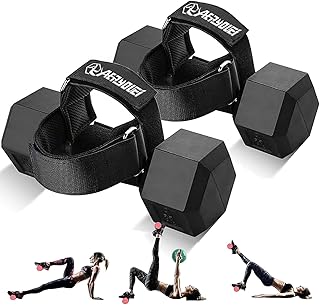

 Amazon Basics Neoprene Dumbbell Hand Weights for
- Set Name: Expandable Set
- Item Dimensions L x W: 4.88"L x 1.78"W
- Handle Diameter: 1 inch
 Women's Health The Woman's Guide To Strength
- Target Audience: Adult
- Recommended Uses For Product: Health & Fitness
- Format: Notebook
 YOLEO Adjustable Weight Bench for Home Gym
- Item Dimensions D x W x H: 41"D x 12.6"W x 42.5"H
- Material: Alloy Steel
ASTM-certified for an 827-pound capacity
Ships 98 percent pre-assembled, ready in seconds
84 adjustable positions cover nearly every bench angle
Maximum recommended user weight is listed lower at 330 pounds
Folds compact but still needs under-bed or closet storage space


As an Amazon Associate we earn from qualifying purchases at no extra cost to you.
Quick Comparison
| Pattern | Sample Exercise | Typical Useful Load (per hand) | Neoprene Hex Fit |
|---|---|---|---|
| Squat (knee-dominant) | Goblet squat, tempo split squat | 10–20 lb | Good at the top of the range; tension comes from tempo |
| Hinge (hip-dominant) | Single-leg RDL, B-stance RDL | 8–20 lb | Excellent — balance limits load before strength does |
| Single-leg / unilateral | Step-up, reverse lunge, curtsy lunge | 5–15 lb | Excellent — compact heads clear the thigh cleanly |
| Calf & isolation | Standing calf raise, sissy squat assist | 15–20 lb | Adequate; calves usually outgrow light dumbbells fastest |
| Conditioning circuits | Thruster, walking lunge series | 5–12 lb | Ideal — grip comfort matters more than weight here |
How to Choose
- Buy for the pattern you’re weakest at, not the one you’re proudest of. Most people can already squat their bodyweight-ish through a decent range but fall apart on a single-leg RDL. Unilateral work needs far less load, which is exactly where a light-to-moderate pair earns its keep.
- Check the shape of the heads, not just the poundage. Hex or flat-sided dumbbells sit still when you set them down mid-set and don’t roll into your ankle. Round heads on a hard floor are a small, recurring annoyance during lunge work.
- Prioritize grip texture if you sweat. Neoprene and vinyl coatings hold friction when your palms are damp; bare chrome doesn’t. For high-rep leg circuits where the dumbbell is in your hand for two straight minutes, that’s the difference between finishing the set and dropping it.
- Think in pairs and increments. A single heavy dumbbell covers goblet squats. Two matched dumbbells unlock suitcase-loaded lunges, RDLs, and step-ups. Owning 8, 12, and 20 lb pairs beats owning one 30 lb dumbbell for leg training specifically.
- Be realistic about your ceiling. Coated hand weights top out well below what a trained lifter needs for bilateral squats. If you’re already squatting heavy, treat these as accessory and tempo tools rather than your primary load.
Top Picks Reviewed
Amazon Basics Neoprene Dumbbell Hand Weights for Exercise and Muscle Toning
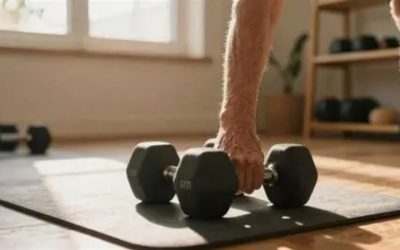
These are the unglamorous workhorses of a home leg setup. The neoprene shell gives a slightly tacky, forgiving grip that stays comfortable through long lunge series, and the flat-sided hex profile means the weight parks itself instead of rolling away between sets. Sizes run from very light singles up to around 20 lb, and they’re color-coded by weight, which sounds trivial until you’re mid-circuit and need to grab the right pair without squinting at a stamped number.
Where they shine is unilateral and tempo work. A pair of 12s makes a rear-foot-elevated split squat genuinely hard if you hold a three-second descent and a one-second pause at the bottom. Single-leg RDLs with 10 lb in the opposite hand expose hamstring and hip stability issues no amount of bilateral squatting will reveal. Step-ups onto a 16-inch box with a moderate pair build the exact quad and glute strength that transfers to stairs, hiking, and sprint mechanics. The compact heads matter here: they hang beside the thigh without knocking your knee on the way up.
The honest limitation is absolute load. Once your goblet squat needs more than 20 lb — which happens fast for most people — you’re stuck adding reps, slowing tempo, or moving to single-leg variations. That’s not a flaw so much as a scope boundary. Neoprene can also pick up odors over time if stored damp, and the coating will eventually scuff if you clang the heads together. Treat them as accessory tools and light-to-moderate primary load, and they’ll outlast the phase of training you bought them for.
Frequently Asked Questions
Can I actually build muscle in my legs with light dumbbells?
Yes, within limits. Research on training to near-failure shows meaningful hypertrophy across a wide load range, roughly 30% of your maximum and up. The catch is that lighter loads demand higher effort and more reps — sets of 15 to 25 taken close to failure, not comfortable sets of 10. Single-leg variations solve much of this by halving the load requirement while doubling the total work.
Which single leg exercise gives the most return?
The rear-foot-elevated split squat, if you can only pick one. It loads the quad through a long range, demands hip stability, and scales almost infinitely with tempo and pauses before load becomes the limiter. Add a single-leg RDL to cover the hinge side and you’ve addressed both halves of the thigh.
How do I keep progressing once the weight feels easy?
Change the variable that isn’t load. Slow the eccentric to four seconds. Add a pause at the deepest position. Elevate the front foot to extend the range. Reduce rest between sets. Shift from two legs to one. Each of these raises difficulty without touching the poundage, and most people have years of runway in them.
Do I need a bench or box?
Not to start, but it opens things up. A sturdy 12–18 inch surface enables step-ups, foot-elevated split squats, and hip thrusts. A low couch or solid stair landing works fine before you buy anything dedicated — just confirm it doesn’t slide.
Final Thoughts
Leg training with dumbbells succeeds or fails on execution, not equipment. A pair of neoprene hex weights in the 10–20 lb range, used with slow eccentrics and a bias toward single-leg patterns, will produce more visible change than a heavier set used carelessly. Buy two or three pairs across the range, learn the four patterns, and let tempo do the work your load can’t. The Amazon Basics set is a reasonable, unfussy entry point for exactly that plan.
Write Your Review
No reviews yet. Be the first to share your experience!