
A useful forearm workout with dumbbells can be organized around separate wrist-flexion and wrist-extension practice blocks. Learn the two supported movements, select appropriate resistance and pause between them. The best session is understandable from preparation to finish, rather than a long list of variations performed without a clear setup.
This guide provides practical selection and use considerations. It does not report hands-on product testing.
This is a framework for organizing practice, not a universal prescription for repetitions or rehabilitation. Use suitable instruction for exercise selection and workload. If wrist symptoms or other concerns affect the movements, obtain appropriate advice before continuing.
Write a small session plan
Use four headings in your notes: preparation, palms-up movement, palms-down movement and review. Put the chosen equipment beside each exercise. The sequence makes the task clear while leaving room to adapt it to an individual plan.
Read the full descriptions before beginning. A picture of a bent wrist does not explain which parts remain supported or how the weight returns. If following a video, identify its pauses and how you will stop playback after putting the equipment down.
Practise the palms-up movement
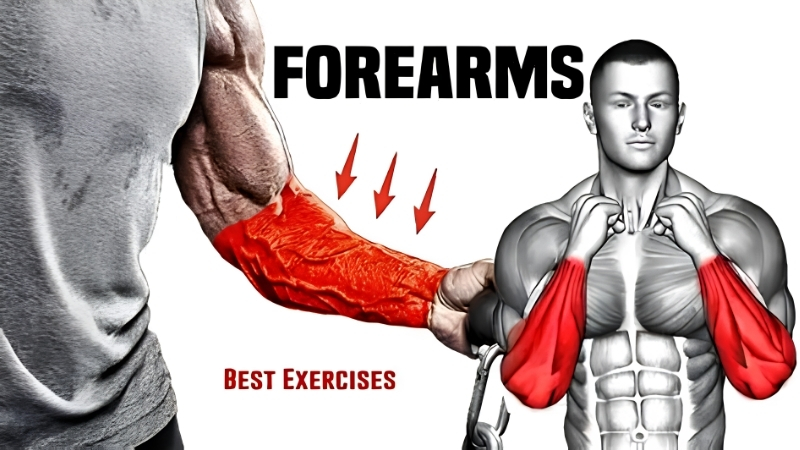
Kneel beside a bench, support the forearms with elbows near ninety degrees and let the hands clear the edge. Palms face up. Lower from neutral wrists and curl back slowly, maintaining your grip. Keep the arms supported and avoid leaning or straightening the elbows to assist.
Reset for the palms-down movement
With forearms supported and palms down, begin at neutral wrists. Lower the hands slowly and return to the starting alignment. Keep the handles gripped, elbows bent and torso steady. Do not lift the forearms from the support or use body movement to raise the weights.
Make rest part of the structure
Set the equipment down appropriately before changing the arrangement. Use the pause to check the next task and decide whether the practice should continue. Rest is an opportunity to make the sequence deliberate rather than an interruption to an inflexible challenge.
Record the work completed and any uncertainty. A specific note about support position or an unclear instruction can guide a conversation with an instructor. Do not treat a printed repetition target as something that must be finished regardless of control.
Product listings to compare
As an Amazon Associate we earn from qualifying purchases. Compare the selected variant and its current description with the requirements above.
Our top picks



As an Amazon Associate we earn from qualifying purchases at no extra cost to you.
Choose loads for the individual movements
The weights available in the room may have been bought for another exercise. Assess whether their settings suit this task rather than using them automatically. A larger upper limit is not a reason to select a product whose useful lower settings remain unclear.
For adjustable equipment, read the required process for changing and securing the setting. Carry out the change in its proper resting arrangement. Do not improvise while transferring between exercises simply because the session notes call for another load.
Arrange the support and reference area
Use an exercise support suited to the planned arrangement, following its placement requirements. Keep enough room for approaching it and setting equipment down. A decorative household item should not take its place solely because it appears to have a convenient height.
Place notes where they can be consulted while resting. The room should not encourage turning toward a distant screen during a loaded movement. Clear loose objects from the surrounding area and preserve ordinary access outside the activity zone.
Finish with a meaningful review
Ask which parts of the preparation you could repeat without searching for instructions. Note whether equipment changes were straightforward and which exercise details need clarification. These observations help distinguish a useful next step from merely adding more work.
Keep the session record and equipment information together. The next practice can begin with a clear reference instead of relying on memory. Add variations only when their role is understood, using appropriate guidance rather than collecting movements for their own sake.
The home setup should make deliberate practice possible without taking over the room. Appropriate storage, a clear support area and readable notes serve that purpose. They complement instruction and individual workload decisions; they do not replace them or promise a particular training outcome.
Additional product links
- Start 30-Day Prime Free Trial →
- See Today’s Amazon Deals
- ▸ Try Amazon Prime — free 30-day trial
- ▸ Start an Audible Premium Plus free trial
- ▸ Read free with Kindle Unlimited
Related reading
- Best workout for forearms with dumbbells
- Chris Parker
- Best Ab Workouts with Dumbbells: 6 Support Picks Compared
- Best Budget Adjustable Dumbbell: 6 Picks and Trade-Offs
- Best Abs Exercise with Dumbbells: 6 Picks by Coating Type
- Best Abs Workout with Dumbbells: 6 Picks for Fast Circuits
- Best at Home Dumbbells: 6 Picks for Sharing a Household
- Best beginner jump rope
- Best boxing jump rope
- Best boxer jump rope
- Best cheapest yoga mat
- Best workout exercise equipment
- Best Leg Workout With Dumbbells: Gear That Makes It Work
- Best Gym Equipment for Full Body Workout: 5 Key Choices
- Best Arm Workout With Dumbbells: 6 Home Setups to Choose
- Best Workout Dumbbells: 7 Picks for Small Home Gym Spaces
- 8 Best Dumbbells Back Workout Kits: Grip, Support and Ceiling




Write Your Review
No reviews yet. Be the first to share your experience!