
Key takeaways
- Frame Type: A-Frame
- Material: Metal
- Item Dimensions D x W x H: 12.8"D x 14.37"W x 25.98"H
Triceps respond to volume, and volume is exactly what dies when you spend forty seconds hunting for the next pair of dumbbells. A decent tricep block — close-grip floor press, seated overhead extension, lying skull crushers, then kickbacks or a Tate press to finish — burns through three or four different loads. You might press 40s, extend overhead with 25s, and kick back with 12s, all inside twelve minutes. If each transition means walking to a rack or spinning collars off a handle, the elbows cool down, the pump fades, and the last set stops earning its keep.
That is the whole argument for building a tricep kit around fast load changes rather than around the heaviest number you can theoretically lift. The gear below was chosen on one criterion first: how few seconds it takes to go from one working weight to the next while your forearms are still warm. Dial adjusters, twist handles, pin selectors, and one bench that actually locks flat without wobbling under a heavy skull crusher. Increment size matters too — triceps are a small muscle group, and a 10 lb jump on an overhead extension is often the difference between eight clean reps and four ugly ones.
Our top picks
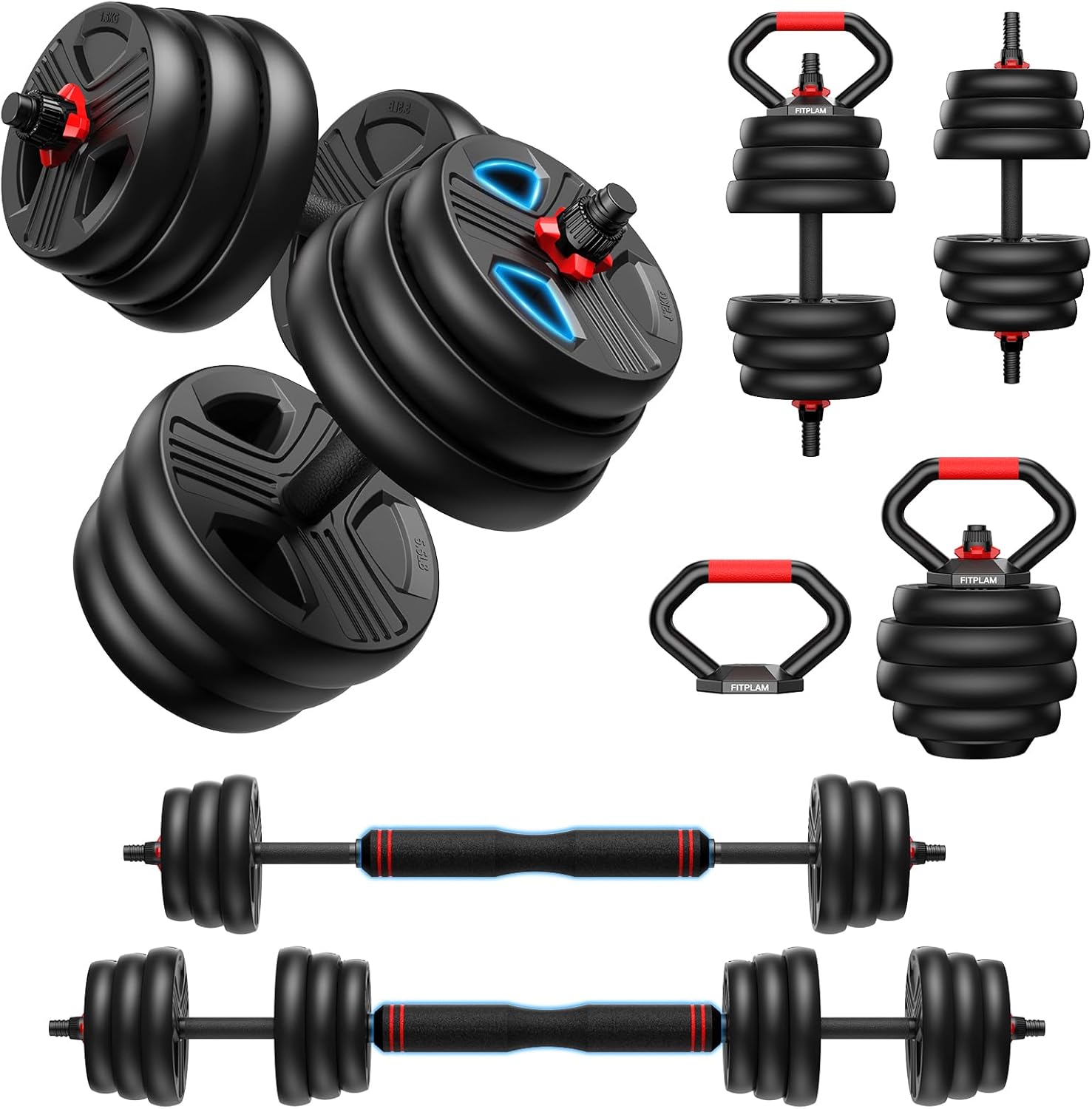 FITPLAM Adjustable dumbbell set
- Material: Alloy Steel, Iron, Polyethylene (PE)
Converts into dumbbells, kettlebells, barbells, and push-up stands
Dual-lock nuts add a second layer of security to plates
Textured ergonomic grips help reduce slipping during sets
Single 45-pound maximum weight limits heavier lifters
Switching between the five modes needs manual reassembly



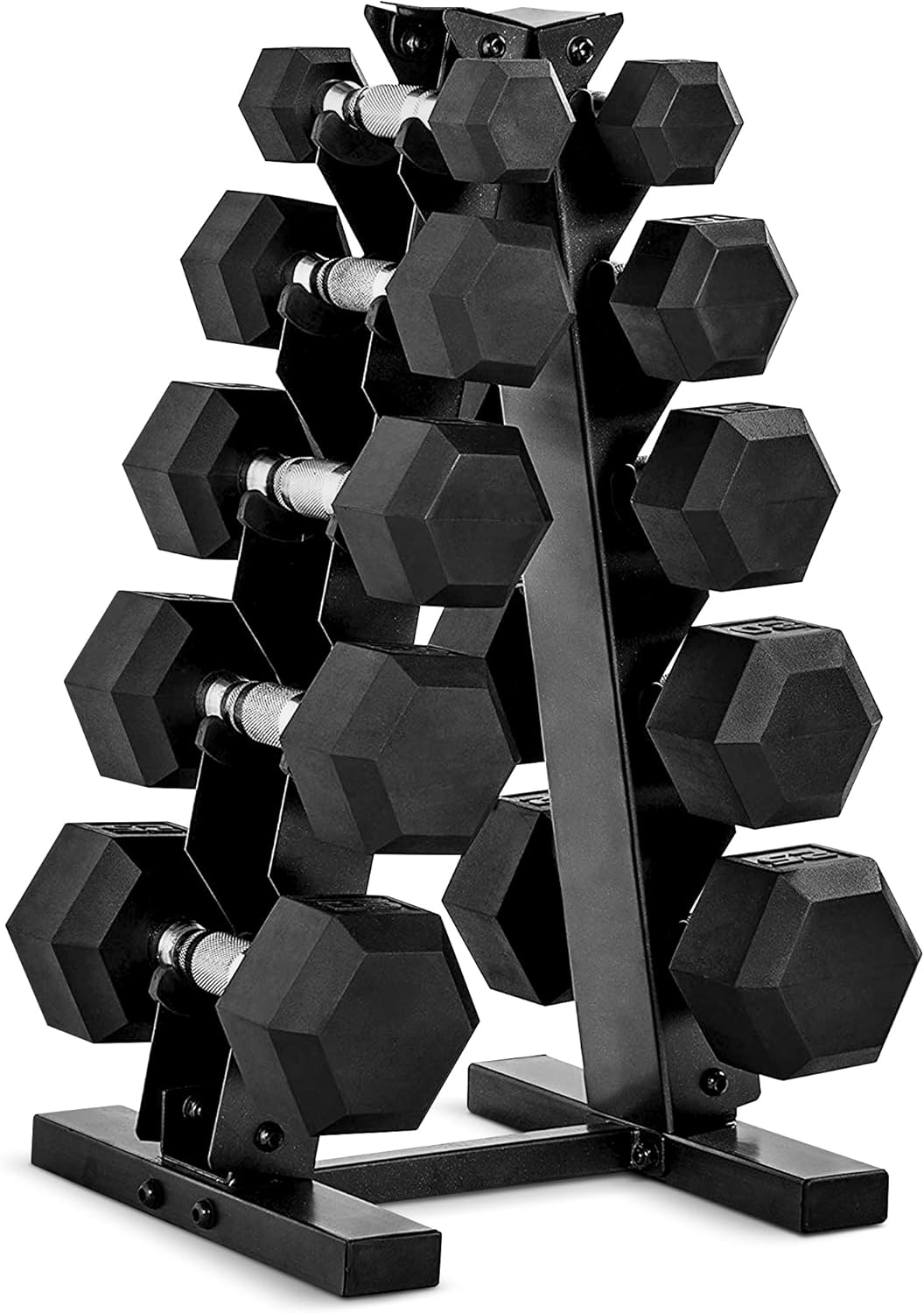 CAP Rubber Coated Hex Dumbbell Set with
- Frame Type: A-Frame
- Material: Metal
- Item Dimensions D x W x H: 12.8"D x 14.37"W x 25.98"H
Five paired weights from 5 to 25 pounds cover most routines
A-frame rack keeps the full set organized and off the floor
Knurled steel handles improve grip during heavier lifts
Manufacturer warranty covers only 30 days from purchase
Vertical rack needs dedicated floor space to set up


As an Amazon Associate we earn from qualifying purchases at no extra cost to you.
As an Amazon Associate we earn from qualifying purchases.

Quick Comparison
| Pick | Load Range | Smallest Increment | Change Method | Best For |
|---|---|---|---|---|
| Bowflex SelectTech 552 | 5–52.5 lb per hand | 2.5 lb (to 25 lb) | Twin dials, cradle required | Fine-tuned overhead work |
| NÜOBELL 80 Classic | 5–80 lb per hand | 5 lb | Twist handle in cradle | Heavy close-grip pressing |
| PowerBlock Elite EXP | 5–50 lb (expandable to 90) | 2.5 lb with adder kit | Selector pin | Tight spaces, floor drops |
| REP QuickDraw | 10–60 lb per hand | 5 lb | Squeeze lever, no cradle | Fastest mid-set switching |
| FLYBIRD Adjustable Bench | Supports ~700 lb | — | Ladder pin, 6 back angles | Skull crushers and inclines |
How to Choose
- Increment size beats top-end weight. Almost nobody does overhead extensions with 80 lb dumbbells, but plenty of people stall because the next rung up is a 10 lb leap. For triceps specifically, 2.5–5 lb steps in the 15–40 lb band are worth more than a high ceiling.
- Count the seconds and the hands. Cradle-based systems need both dumbbells set down and re-seated; lever systems adjust in your palm. If your program leans on drop sets or mechanical drop sets, that difference compounds across a session.
- Check handle diameter and grip texture. Adjustable handles run fatter than fixed dumbbells, which changes how a close-grip press feels and how hard your forearms have to work. Sweaty hands plus a smooth handle equals a bar sliding toward your forehead.
- Know whether you can drop them. Selectorized dumbbells with exposed plates dislike being dumped on concrete. Failed skull crushers happen. Steel-shrouded or nylon-clad designs and a rubber mat both help.
- Match the bench to the movement, not the marketing. Overhead extensions need a back pad that locks upright without gapping; skull crushers need a stable flat position and a pad narrow enough that your shoulders aren’t propped up. Test the wobble before you trust it with your face.
Top Picks Reviewed
Bowflex SelectTech 552 Adjustable Dumbbells
The 2.5 lb steps below 25 lb are the reason these keep showing up in tricep programs. Overhead extensions and kickbacks live in that exact range, and being able to go 17.5, then 20, then 22.5 lets you progress without your elbows flaring to compensate. The dial system takes roughly two to three seconds per hand once you stop looking at it, though you must return each dumbbell to its cradle to change loads. The plates rattle slightly at some settings, and the handle is longer than a fixed dumbbell, which occasionally clips your shoulders on a narrow-grip press. Not a deal-breaker, just something you adjust to in the first week.
NÜOBELL 80LB Classic Adjustable Dumbbells
These feel closest to a real dumbbell in the hand: compact head, metal-shrouded plates, and a knurled handle that doesn’t slip when your palms go damp mid-set. A quarter turn of the handle in the cradle changes weight, and it is genuinely quick — call it two seconds. The 5 lb increments are coarser than the Bowflex for isolation work, but if your tricep training centers on heavy close-grip and floor presses, the 80 lb ceiling means the dumbbells outlast your progress curve. They demand the cradle for every change, so plan your bench position accordingly.
PowerBlock Elite EXP
The boxy shape puts most people off, then wins them over. Pull the pin, slide it into a new slot, done — no cradle, no threading, and the whole set occupies less floor area than a laundry basket. For kickbacks and single-arm overhead work the flat underside is actually an advantage: you can rest the dumbbell on your thigh or the bench between reps without it rolling away. The expansion kits push the range to 90 lb per hand, and the selector-pin design tolerates the occasional controlled drop better than dial systems. The trade-off is the U-shaped handle, which limits how you can rotate your wrist on some pressing variations.
REP Fitness QuickDraw Adjustable Dumbbells
Built for exactly the problem this article is about. A squeeze of the lever on the end cap releases the plates, and because it works off the loading tray rather than a locked cradle, changes happen in about a second and a half without careful re-seating. That makes true drop sets practical — press 50s to failure, strip to 35s, keep going. The 10 lb floor is a limitation for high-rep kickbacks, and the mechanism has more moving parts than a pin, so keep the tray free of dust and gym grit.
FLYBIRD Adjustable Weight Bench
The overlooked half of the kit. Six back positions cover flat skull crushers, a slight incline for a different elbow angle, and a near-upright setting for seated overhead extensions with proper lumbar support. It folds against a wall, the pad is firm rather than squishy, and the ladder adjustment takes a few seconds without leaving the bench. Wide enough to be stable under a 60 lb dumbbell press, narrow enough not to interfere with scapular position. Assembly runs about twenty minutes; recheck the bolts after the first few sessions.
Frequently Asked Questions
Can I build real tricep size with dumbbells alone?
Yes, and in one respect you are better off. Dumbbells let each arm move through its own path, which reduces the elbow strain some lifters get from a fixed barbell during skull crushers. Cover all three heads — an overhead movement for the long head, a pressing movement for the lateral and medial heads — and add load over time. That combination is the whole recipe.
How much weight range do I actually need?
For most people training triceps two or three times a week, 5 to 50 lb per hand covers every useful variation with room to grow. The heavy end matters less than you would think: even strong lifters rarely exceed 35–40 lb per hand on a strict seated overhead extension, because the long head is at a mechanical disadvantage in that position.
Are adjustable dumbbells safe for skull crushers?
Generally yes, with two habits. Confirm the load is fully locked by lifting and giving each dumbbell a light shake before it goes near your head, and press from the floor instead of a bench when you are chasing a rep max — the reduced range of motion gives you an escape route. Steel-shrouded designs are the ones I would trust most overhead.
How often should I train triceps for growth?
Two sessions a week, roughly 10 to 16 hard sets total, works for the large majority of lifters. Triceps recover quickly, so splitting the volume across two days beats cramming it into one. Fast set changes are what let you fit eight to ten of those sets into a twenty-minute block instead of forty.
Final Thoughts
If you buy one thing from this list, make it a dumbbell system whose adjustment mechanism you will still tolerate on session number two hundred. The QuickDraw is the speed champion, the NÜOBELL feels the most like real iron, the SelectTech 552 has the increments isolation work rewards, and the PowerBlock survives abuse in the smallest footprint. Pair any of them with a bench that locks solid, keep a mat under the loading trays, and the friction that used to eat half your tricep workout simply disappears.
Best Ab Workouts With Dumbbells: Carry and Floor Practice
The best ab workouts with dumbbells can combine a loaded trunk-control task with an unloaded exercise, rather than requiring a bench full of...
Best Budget Adjustable Dumbbell: Compare Complete Costs
The best budget adjustable dumbbell is the lowest-cost option that supplies the loads, quantities and adjustment process your routine needs. A low...
Best Abs Exercise with Dumbbells: Learn the Standing Woodchop
The best abs exercise with dumbbells depends on the movement you are ready to learn. A controlled standing woodchop is one option when a diagonal...
Best Abs Workout with Dumbbells: A Controlled Floor Session
The best abs workout with dumbbells should be a sequence you can perform with control, not a race between complicated movements. A floor-based session...
Best at Home Dumbbells: Plan for Shared Sessions
The best at home dumbbells for a shared household should accommodate the way people actually use the room, including whether they exercise together....
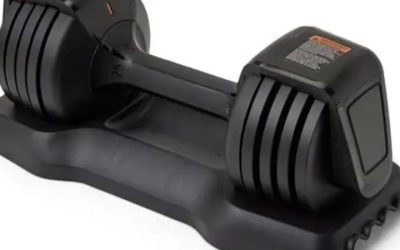
Best Dumbbells Home Gyms Use: Plan the Working Areas
The best dumbbells home gyms use are the ones that suit the exercises and the space available for handling them. Start by separating the room into...
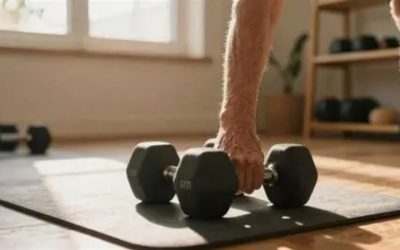
Best Ab Exercise with Dumbbells: A Controlled Carry
A useful ab exercise with dumbbells is the suitcase carry, provided you have learned appropriate handling and have a clear place to walk. It asks you...
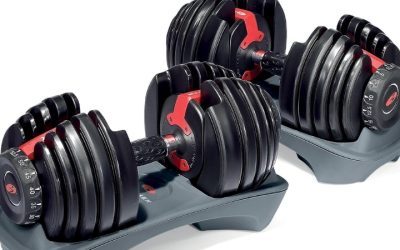
Best Dumbbell Set for Home Gym: Plan the Working and Storage Space
The best dumbbell set for home gym use is the set that supplies the weights your routine needs and fits the way the room works. Decide between fixed...
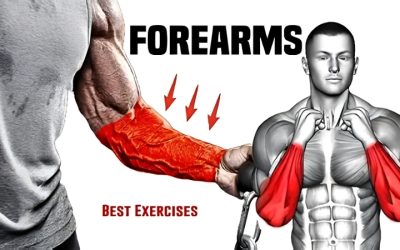
Best Workout for Forearms With Dumbbells: Organize Controlled Practice
A useful forearm workout with dumbbells can be organized around separate wrist-flexion and wrist-extension practice blocks. Learn the two supported...
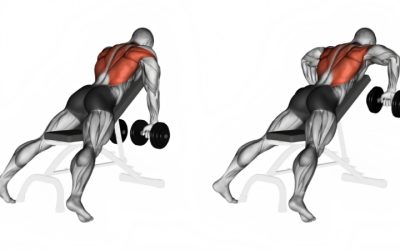
Best Lat Exercises With Dumbbells: Learn the Supported Row
A supported single-arm row is a useful dumbbell exercise to understand when planning back and lat training at home. Begin with the setup and controlled...
Write Your Review
No reviews yet. Be the first to share your experience!