
The best exercises using dumbbells are movements that serve a clear purpose in your program and that you can perform with control. A small selection can cover different tasks without turning the room into a collection of specialized machines. Begin with the exercise, then choose the equipment and space it requires.
This guide provides practical selection and use considerations. It does not report hands-on product testing.
Two examples are a dumbbell squat and a lying triceps extension. They involve different movement patterns and should be learned separately. They are examples to consider with suitable guidance, not a complete personalized program or a promise of a particular result.
Learn a lower-body movement
For the dumbbell squat demonstrated by Mayo Clinic, hold the weights at your sides, stand with feet around shoulder width and bend through the hips and knees while keeping the back neutral. Return to standing with control. Avoid rounding the back or allowing the knees to collapse inward.
Use the range and load appropriate to your instruction and circumstances. If the movement is unfamiliar, learn it before adding weight. The ability to pick up a dumbbell does not establish that its load is suitable for every exercise.
Compare a different upper-arm task
A lying triceps extension begins on the back with the upper arm pointing upward and the elbow bent. Straighten the elbow slowly to move the dumbbell up, then lower under control. Mayo Clinic emphasizes smooth movement and a stable, relaxed head and body rather than jerking the arm.
Learn how to position and finish the exercise appropriately. If the weight cannot be controlled near the body, stop and obtain help with technique and load selection. Do not turn the movement into a general press simply to complete the repetition.
Choose exercises by their role
A squat and an arm extension are not substitutes for one another. The same principle applies when considering other familiar dumbbell movements: identify what the exercise is intended to do within your plan before adding it. A long list of variations can contain substantial overlap.
Record the exact version you have learned, including the support arrangement where relevant. Avoid changing the position, grip and load together without a reason. Clear choices make a session easier to repeat and discuss with an instructor.
Use a manageable session structure
Follow a workload appropriate to your experience, with time to prepare and reset between exercises. This guide does not assign one repetition or rest target to every reader. The useful aim is a session in which technique remains understandable and controlled.
Stop if pain occurs, and seek individual guidance for symptoms, injury or uncertainty about suitability. If fatigue changes the movement, pause instead of using momentum to finish a number. More repetitions are not automatically better when they are no longer the intended exercise.
Match the dumbbells to the selected tasks
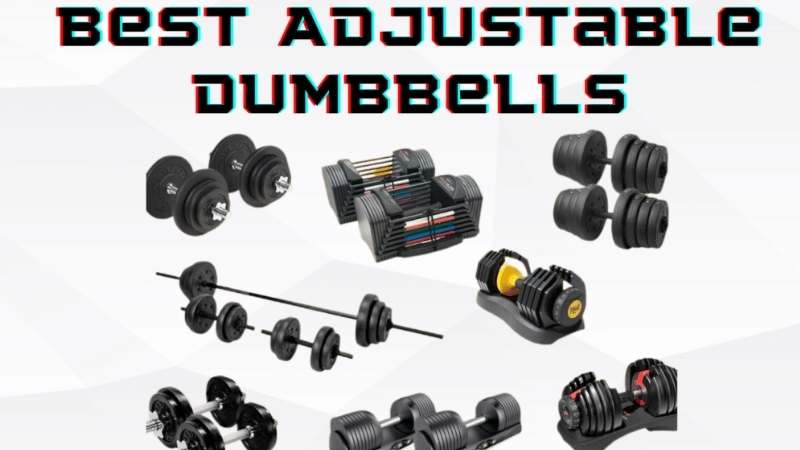
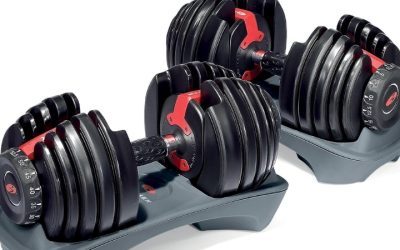
Different exercises may require different loads. Compare the useful settings and increments rather than choosing equipment by its highest number. Fixed and adjustable dumbbells create different storage and preparation routines, so consider the complete system.
For selectable equipment, perform the required locking and inspection checks before use. Keep any adjustment base in its intended position. A quick transition between exercises should not depend on omitting the manufacturer’s procedure.
Product listings to compare
As an Amazon Associate we earn from qualifying purchases. Compare the selected variant and its current description with the requirements above.
Our top picks

 Palace Learning Dumbbell Workout Exercise Poster
- Orientation: Portrait
- Item Shape: Rectangular
- Theme: Building


 Adjustable Dumbbells
- Set Name: GOIMU Adjustable Dumbbells
- Item Dimensions L x W: 23.62"L x 11.42"W
- Material: Cast Iron
 Women's Health The Woman's Guide To Strength
- Target Audience: Adult
- Recommended Uses For Product: Health & Fitness
- Format: Notebook
As an Amazon Associate we earn from qualifying purchases at no extra cost to you.
Zone the room for the movement
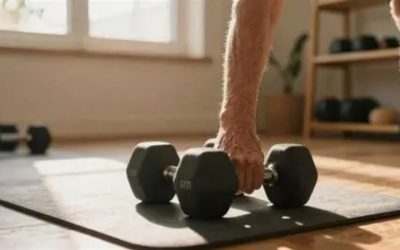
Standing and floor-based exercises use the room differently. Plan the actual movement area and the route used to retrieve the weights. Furniture that is clear of your feet may still interfere with your arms or the equipment.
Use suitable support equipment when needed; ordinary furniture is not automatically interchangeable with an exercise bench. Check the floor and protective materials against relevant instructions and keep storage outside the activity zone.
Decide what to add next
- Identify a genuine gap in the existing program.
- Learn the proposed exercise before increasing its load.
- Check the required equipment and setup.
- Allow space for preparation and finishing.
- Record questions rather than guessing through them.
A useful dumbbell routine is built from purposeful movements, not a matching set of product labels. Choose exercises first and let equipment and room design support the work you have actually planned.
Additional product links
- Start 30-Day Prime Free Trial →
- See Today’s Amazon Deals
- ▸ Try Amazon Prime — free 30-day trial
- ▸ Start an Audible Premium Plus free trial
- ▸ Read free with Kindle Unlimited
Related reading
- Best exercises using dumbbells
- Chris Parker
- Best Ab Workouts with Dumbbells: 6 Support Picks Compared
- Best Budget Adjustable Dumbbell: 6 Picks and Trade-Offs
- Best Abs Exercise with Dumbbells: 6 Picks by Coating Type
- Best Abs Workout with Dumbbells: 6 Picks for Fast Circuits
- Best at Home Dumbbells: 6 Picks for Sharing a Household
- Hot yoga mat best
- Best dumbbells exercises
- Best workout dumbbells
- Best back exercises using dumbbells
- Best exercise upright bike
- Best exercise stationary bike
- Best Bicep Exercises Dumbbells: 6 Sets for Curl Progress
- Best Lat Exercises Dumbbells: 6 Picks for Heavy Row Work
- 8 Best Forearm Exercises Dumbbells: 6 Grip-Friendly Picks
- 8 Best Arm Exercises With Dumbbells: 6 Home Setups Compared



Write Your Review
No reviews yet. Be the first to share your experience!