
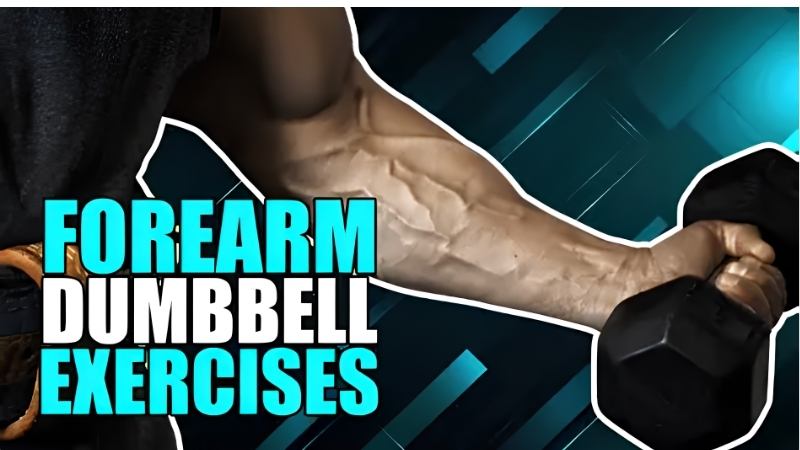
Two straightforward dumbbell forearm exercises to understand are wrist flexion and wrist extension. They use different hand orientations, so treat them as separate movements rather than turning one into a hurried continuation of the other. Start with a controllable load and learn the supported setup before making the exercise more demanding.
This guide provides practical selection and use considerations. It does not report hands-on product testing.
The best choice depends on your routine and individual needs. These descriptions explain the movements; they do not prescribe rehabilitation or a personal training dose. If wrist symptoms or uncertainty affect the exercise, seek appropriate advice instead of trying to solve the issue by purchasing a heavier dumbbell.
Wrist flexion with palms upward
Kneel at a bench with elbows bent near ninety degrees and forearms supported, palms up. Let the weights clear the edge. From neutral wrists, lower slowly, keeping your grip and arms steady; then curl back toward the starting position. Avoid rocking your body or releasing the handles.
Wrist extension with palms downward
Use the supported position with palms down and wrists neutral. Lower the weights through the wrists without straightening your elbows, loosening your grip or shifting your torso. Bring the hands back up under control to the initial alignment, keeping the forearms in place throughout.
Make each movement a distinct practice block
Put the weights down appropriately before changing the setup. Read the next movement’s instructions while resting, rather than rotating into a new exercise simply because the current effort has ended. The change in palm orientation deserves deliberate attention.
Choose the amount of work with suitable guidance for your circumstances. A clear sequence can identify the movement, selected load and a pause to review control. It does not need to demand a fixed total regardless of how the exercise is going.
Record a useful observation
After a practice block, write what you could reproduce and what remained uncertain. A note about the starting position or the support height is more actionable than describing the session only as difficult. Keep questions specific enough to discuss with an instructor.
Do not assume the same weight is appropriate for every movement in a larger routine. Equipment selected for another exercise may not match this task. The resistance choice should follow control of the movement, not the convenience of using what is already beside the bench.
Product listings to compare
As an Amazon Associate we earn from qualifying purchases. Compare the selected variant and its current description with the requirements above.
Our top picks


As an Amazon Associate we earn from qualifying purchases at no extra cost to you.
Choose equipment for the supported arrangement
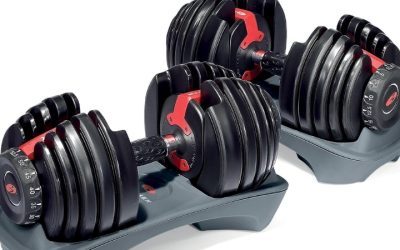
Check that the selected weights can be used in the intended position without unwanted contact with the support. Compare the actual shape and handle rather than a photograph of a different setting. If adjustment is involved, follow the product’s procedure after putting it down.
Use an exercise support suited to its intended role. A decorative ottoman should not substitute for a bench merely because it appears to have the right height. The surrounding room can be attractive without turning ordinary furnishings into unverified exercise equipment.
Leave a clear area for consultation
Place written instructions or a screen where they can be read during the pause. Avoid arranging the room so you must twist around while holding the weights to see a demonstration. Preview the full exercise before beginning rather than chasing the next image.
Keep the area beside the support free of loose household items. Identify where equipment rests between movements and follow its handling instructions. This makes the beginning and end of a practice block easier to organize without claiming that room design determines the training result.
Review before adding complexity
Begin by resolving uncertainties in the two supported movements. A longer list of variations is not automatically more useful when the setup is still unfamiliar. If you want to expand a routine, discuss the purpose of the addition rather than choosing it solely for novelty.
Keep suitable storage and the exercise notes together in the home plan. The next session can then begin from a known arrangement. Useful forearm training depends on understanding the movement and an appropriate workload; equipment and room planning should support that understanding rather than replace it.
Additional product links
- Start 30-Day Prime Free Trial →
- See Today’s Amazon Deals
- ▸ Try Amazon Prime — free 30-day trial
- ▸ Start an Audible Premium Plus free trial
- ▸ Read free with Kindle Unlimited
Related reading
- Best forearm exercises dumbbells
- Chris Parker
- Analytics
- Best Ab Workouts with Dumbbells: 6 Support Picks Compared
- Best Budget Adjustable Dumbbell: 6 Picks and Trade-Offs
- Best Abs Exercise with Dumbbells: 6 Picks by Coating Type
- Best Abs Workout with Dumbbells: 6 Picks for Fast Circuits
- Best at Home Dumbbells: 6 Picks for Sharing a Household
- Best beginner jump rope
- Best boxing jump rope
- Best boxer jump rope
- Best cheapest yoga mat
- Best workout exercise equipment
- Best Ab Exercise with Dumbbells: 6 Floor-Friendly Picks
- Best Lat Exercises Dumbbells: 6 Picks for Heavy Row Work
- Best Triceps Exercises With Dumbbells: 6 Equipment Picks
- Best Kettlebell Ab Exercises: 6 Adjustable and Fixed Picks
- 8 Best Dumbbells Exercises: 6 Home Sets That Cover Everything
- 8 Best Arm Exercises With Dumbbells: 6 Home Setups Compared
- 8 Best Exercises Using Dumbbells: 6 Sets That Cover It All
- 8 Best Shoulder Exercises With Dumbbells: 6 Setups Compared





Write Your Review
No reviews yet. Be the first to share your experience!