Key takeaways
- Multi-Admin Control: An iPhone user in your home can adjust bedroom light brightness via Apple Home, while an Android user in the same room can turn off those same lights using Google Assistant or an Amazon Echo show display, with both interfaces updating instantaneously.
- Local Control Execution: Commands travel directly across your local Wi-Fi router or Thread mesh network rather than routing out to a remote cloud server and back. This reduces control latency to under 200 milliseconds and ensures light switches and automations still function even if your main internet service drops.
- Unified Setup: Pairing requires scanning a single standard 11-digit QR code located on the bulb or socket base, skipping the need to register individual user accounts across dozens of third-party companion apps.
The Short Answer
Yes, Matter-compatible smart lighting is worth the investment, but it depends on whether your home uses devices across multiple ecosystems (such as Apple Home, Amazon Alexa, and Google Home) or if you plan to build an expansive smart setup over time. If your household relies on a single platform and you already own working legacy bulbs, upgrading immediately is unnecessary. However, if you are buying new lighting, configuring a multi-user household, or seeking lower latency and local network reliability, choosing Matter-certified fixtures and bulbs is the smartest path forward.
What You Actually Get
When you purchase Matter-compatible smart lighting, you are buying into an open-source interoperability standard designed to eliminate the walled gardens of home automation. Rather than locking yourself into a single brand app or platform, Matter allows lighting products to communicate directly with all major smart home platforms simultaneously over your local network using Wi-Fi or Thread protocols.
Our top picks


As an Amazon Associate we earn from qualifying purchases at no extra cost to you.
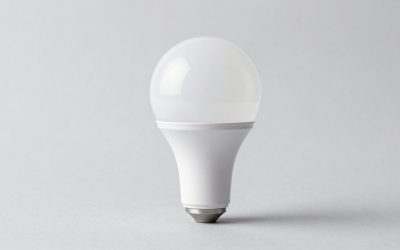
In practice, a standard Matter smart bulb delivers typical residential hardware specs: a standard A19 form factor (measuring roughly 2.4 inches in diameter by 4.2 inches in height and weighing about 2.5 ounces), drawing 9 watts of power while outputting 800 lumens (the standard equivalent of a traditional 60-watt incandescent bulb). These bulbs fit standard E26 light sockets and operate on standard 120V residential circuits. Prices for entry-level multi-packs have dropped significantly, with options like the 4-pack Linkind Matter Smart Light Bulbs priced around $23.72 (roughly $5.93 per bulb). If you prefer keeping your existing accent lamps or decorative fixtures, Matter-enabled smart plugs—such as the 4-pack Linkind Matter Smart Plug priced around $25.99—provide standard 15-amp/1800-watt switching capability in a compact 2.6 x 1.5-inch physical housing.
Key functional advantages you gain include:
- Multi-Admin Control: An iPhone user in your home can adjust bedroom light brightness via Apple Home, while an Android user in the same room can turn off those same lights using Google Assistant or an Amazon Echo show display, with both interfaces updating instantaneously.
- Local Control Execution: Commands travel directly across your local Wi-Fi router or Thread mesh network rather than routing out to a remote cloud server and back. This reduces control latency to under 200 milliseconds and ensures light switches and automations still function even if your main internet service drops.
- Unified Setup: Pairing requires scanning a single standard 11-digit QR code located on the bulb or socket base, skipping the need to register individual user accounts across dozens of third-party companion apps.
Pros
- True Cross-Platform Flexibility: You are no longer trapped within one voice assistant brand. If you switch from iOS to Android or add an Echo device to an Apple-centric living room, your lighting system migrates seamlessly without requiring hardware replacement.
- Faster Response Times and Local Reliability: Because Matter processes lighting commands locally on your home network, light activation is virtually instantaneous, eliminating the frustrating 2-to-4-second cloud delays common in older smart bulbs.
- Simplified Device Management: In 2026, smart home setups no longer require managing five different manufacturer apps just to update light schedules or group living room lamps together.
- Improved Mesh Network Stability: When using Thread-based Matter bulbs or plugs, each powered device acts as a mesh repeater, expanding coverage across large homes without clogging your main Wi-Fi bandwidth.
- Competitive Pricing: The standardization of components has brought price parity between basic smart bulbs and Matter-certified options, making the barrier to entry lower than ever.
Cons
- Feature Parity Limitations: The current Matter specification covers core functions like power, dimming, color temperature, and RGB color selection, but complex brand-specific features—such as custom dynamic color scenes, sync-to-music modes, or localized wake-up gradient schedules—may still require downloading the manufacturer’s original app.
- Hub or Border Router Requirement: To use Matter devices across platforms, your home network must contain at least one compatible Matter Controller (such as an Apple TV 4K, HomePod, Amazon Echo 4th Gen, or Google Nest Hub).
- Existing Infrastructure Overlap: If you already have a stable system built around proprietary hubs (like Philips Hue Zigbee bridges), converting everything to Matter offers minimal day-to-day improvement for basic room lighting.
Who Should Buy It
You should choose Matter-compatible smart lighting if:
- You live in a multi-platform household: If family members or roommates use a mix of iPhones, Android phones, Alexa smart speakers, and Apple Watches, Matter ensures everyone enjoys full native control.
- You are starting a smart home setup from scratch: Buying into Matter guarantees your lighting investment won’t become obsolete if you switch smart home ecosystems down the road.
- You prioritize local speed and privacy: Users who dislike cloud-dependent smart devices that cease functioning during internet outages will appreciate local execution.
Who Should Skip It
You can safely skip Matter smart lighting if:
- You are heavily invested in a single ecosystem: If your entire house exclusively uses Apple Home or Amazon Alexa with zero intent to change, standard HomeKit or Alexa-certified Wi-Fi bulbs will perform virtually identically for single-user tasks.
- You rely on complex, dynamic light shows: Interior design enthusiasts who rely on highly customized color-matching scenes or entertainment lighting synchronization may find Matter’s standardized feature set too basic compared to proprietary lighting software suites.
- You want the absolute lowest upfront hardware cost: Non-smart LED bulbs paired with standard wall switches remain drastically cheaper if remote control and automation hold no appeal.
Cheaper Alternatives
If you want smart lighting control on a tighter budget or without adopting the Matter framework, several alternative options exist:
| Option | Cost | Trade-off |
|---|---|---|
FAQ
Do Matter smart bulbs work if my internet goes down?
Yes. Because Matter operates over local network protocols (Wi-Fi and Thread), your smart switches, automation sensors, and mobile apps can still control your Matter bulbs as long as your local Wi-Fi router remains powered on and transmitting, even if your broadband internet connection drops completely.
Do I need a special hub to use Matter smart lighting?
You do not need a brand-specific bridge, but you do need at least one device that acts as a Matter Controller (and a Thread Border Router if your lights use Thread rather than Wi-Fi). Common household devices like the Apple TV 4K, HomePod Mini, Amazon Echo (4th Gen), and Google Nest Hub (2nd Gen) already function as Matter hubs out of the box.
Can I group Matter bulbs with my older smart bulbs?
Yes, but the grouping happens within your chosen controller platform (like Apple Home or Google Home) rather than at the hardware level. As long as your older bulbs are exposed to that same ecosystem app, you can assign them to the same room or light group alongside your new Matter bulbs.
Is Matter replacing Thread and Wi-Fi?
No. Matter is an application-layer software standard, whereas Wi-Fi and Thread are wireless network transport protocols. Matter actually runs *on top* of Wi-Fi and Thread to pass information between devices. Think of Wi-Fi and Thread as the roads, and Matter as the common language spoken by the vehicles driving on them.