Key takeaways
- Learn the ideal dorm-room humidity range, how to measure it, what changes readings, and when moisture needs maintenance instead of another appliance.
An ideal humidity level for a dorm room is generally 30% to 50% relative humidity, with readings kept below 60% when practical. That range reflects U.S. Environmental Protection Agency guidance for indoor moisture control, but it is not a rigid medical limit. Climate, season, room temperature, ventilation, and campus building systems all affect what is achievable. The useful goal is a stable, comfortable pattern without persistent condensation, damp materials, or water damage—not the lowest number a machine can produce.
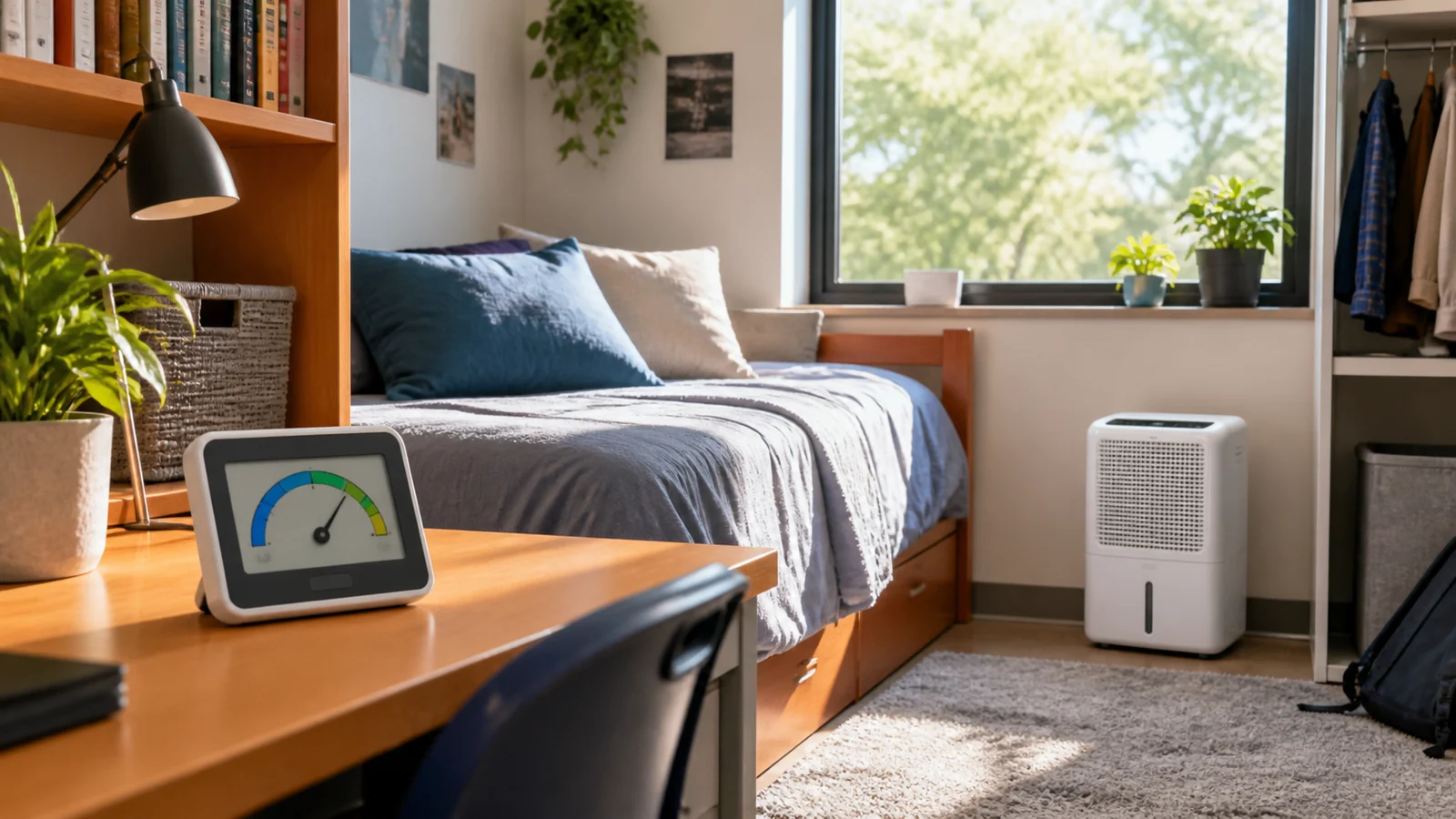
Editorial illustration; it does not represent an inspection or a product test.
Our top picks
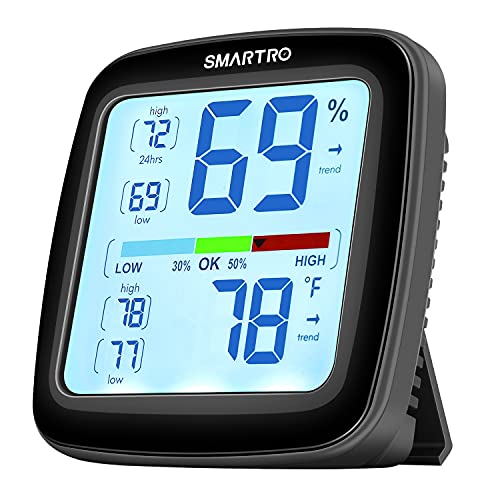


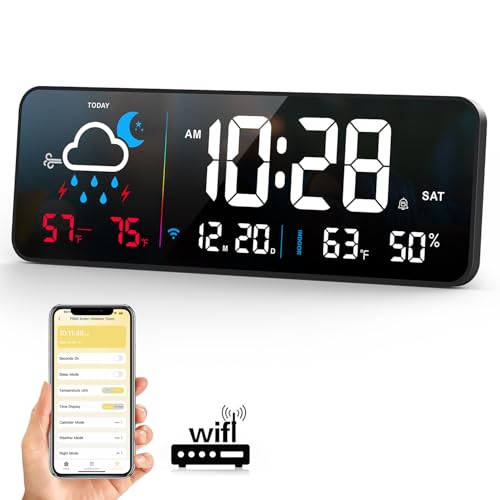


As an Amazon Associate we earn from qualifying purchases at no extra cost to you. Ratings are shown as listed on Amazon.
What relative humidity actually tells you
Relative humidity, or RH, expresses how much water vapor the air contains compared with the maximum it could hold at the same temperature. It changes when temperature changes. If the room cools overnight, RH can climb even when no new moisture enters. When morning heat raises the temperature, RH may fall again.
That is why a lone reading can mislead. A display showing 58% after a shower is different from a room that remains near 58% all day. The first may be a temporary event; the second may point to weak ventilation, wet belongings, humid outdoor air, or a building problem.
EPA moisture guidance commonly recommends keeping indoor RH below 60%, ideally between 30% and 50% if possible. ENERGY STAR also emphasizes using a correctly sized dehumidifier and an accurate humidistat rather than running equipment without regard to conditions. Neither source suggests that every room must stay on one exact percentage around the clock.
Why 30% to 50% is a useful target
This middle range gives students a practical operating band. Below it, dry air may contribute to static electricity, dry skin, or discomfort. Above it, moisture is more likely to condense on cold surfaces and remain in fabrics or furnishings. Persistent dampness can support mold growth and material damage.
Do not interpret 50% as a cliff where a room suddenly becomes unsafe. Indoor moisture risk depends on time, surface temperature, airflow, and whether materials get wet. A brief rise to 55% during humid weather does not mean a dorm needs emergency treatment. A window corner that stays wet each morning deserves attention even if a centrally placed meter reports 48%.
Use the range as a decision aid:
- 30% to 50%: usually a reasonable indoor target when practical.
- 50% to 60%: observe duration, moisture sources, and cold surfaces; improve ordinary moisture control.
- Repeated readings above 60%: investigate sources, ventilation, leaks, or HVAC performance and notify housing when appropriate.
- Repeated readings below 30%: avoid unnecessary dehumidification and ask housing staff about excessive heating or ventilation if discomfort persists.
These are management cues, not a diagnosis of air quality or health.
Measure the room correctly
Use a separate digital hygrometer if possible. Appliance sensors sit inside moving air and may not represent the occupied room. Place the meter roughly at desk or breathing height, away from direct sunlight, radiators, supply vents, bathroom doors, exterior glass, and the exhaust of a dehumidifier.
Leave it in one location long enough to stabilize. Record temperature and RH in the morning, afternoon, and evening for at least three days. Add short notes for rain, showers, open windows, indoor laundry, cooking, or a crowded gathering. A simple log reveals whether the problem follows behavior, weather, or the building schedule.
If a second meter is available, place it in a different part of the room for comparison. Consumer hygrometers can disagree, so focus on repeated trends rather than treating a one-point difference as precision. Do not place a meter directly against a cold wall or window unless you are deliberately investigating that local surface.
Account for season and temperature
In a humid summer climate, outdoor air entering through an open window can raise indoor moisture even when it feels fresh. In cold weather, overly high indoor RH can create condensation on cold glass or frames. The practical winter target may therefore need to be lower than the summer target to keep vulnerable surfaces dry.
Campus HVAC may change modes during shoulder seasons. A room can feel clammy when cooling is off but outdoor humidity remains high. Report sustained conditions rather than altering vents or opening mechanical equipment. Residents should never block supply or return grilles in an attempt to change temperature.
Use outdoor dew point and campus guidance when deciding whether opening a window will help. Outdoor RH alone is not enough because cool air with high RH may contain less actual moisture than warm indoor air. Security, weather, freeze protection, and residence policies always take priority.
Look beyond the number
A suitable center-of-room reading does not rule out local moisture. Check for recurring window condensation, damp closet corners, wet carpet, swollen trim, ceiling stains, or a persistent musty odor. Furniture pressed tightly against a cold exterior wall can create a stagnant pocket that the main hygrometer misses.
Do not move or disturb suspected mold, remove ceiling tiles, or open wall cavities. Photograph visible water damage and report it through the residence maintenance process. Students with health symptoms should consult an appropriate healthcare professional; humidity readings cannot identify the cause of symptoms.
Condensation is especially useful evidence because it shows that a surface has reached the dew point. Our small-room dehumidifier technology comparison explains why different machines respond differently when that moisture pattern persists.
Reduce moisture before buying equipment
Start with sources the resident can safely control. Move wet towels and clothing to approved drying facilities, use bathroom exhaust as directed, keep vents clear, and wipe ordinary condensation from clean hard surfaces. Avoid drying a full laundry load inside the room. A fan moves moisture around; it does not remove water from the air.
Open windows only when outdoor conditions and campus rules make that useful. Keep an attached bathroom door closed during steamy showers if housing guidance supports it. Store damp shoes or sports gear in a ventilated, permitted area rather than sealing them in a closet.
Our step-by-step dorm humidity guide provides a seven-day method for logging conditions and controlling sources. Give these changes enough time to produce a pattern before assuming an appliance is required.
When a dehumidifier may help
A dehumidifier can be reasonable when measured RH stays high after obvious sources are controlled, the building has no unresolved leak, and campus policy permits the appliance. It should be matched to the moisture load and operating temperature—not selected solely from an exaggerated square-foot badge.
Compressor units generally remove more water in warm, humid conditions but add compressor noise, weight, and power demand. Thermoelectric units are compact and may suit a mild localized load, but their collection rate is usually modest. Compare those limits in manufacturer documentation before choosing a technology.
Read the housing handbook before purchase. Confirm permitted wattage, electrical certification, unattended use, placement, and drainage. Choose a model with automatic full-tank shutoff and an adjustable humidistat. Search the U.S. Consumer Product Safety Commission recall database by model and serial number, particularly for a used unit.
Do not force the room toward an unnecessarily low setting. Once readings remain in a reasonable band and surfaces stay dry, continued operation wastes energy and can make the room uncomfortable. The dorm dehumidifier selection guide covers safety, noise, and capacity in more detail.
When to contact housing
Submit a maintenance request for active leaks, wet building materials, recurring ceiling or wall stains, nonworking bathroom exhaust, blocked HVAC airflow, or condensation that returns despite ordinary source control. Include dates, photographs, meter readings, and related weather conditions. Specific evidence is more useful than saying the room “feels humid.”
Escalate promptly if water approaches outlets, power strips, or electrical equipment. Do not handle wet plugs or energize equipment in standing water. Follow the residence emergency procedure.
If housing determines that the problem comes from the building envelope or mechanical system, a portable dehumidifier is not the repair. It may temporarily collect water while authorized work proceeds, but it should not hide continuing damage.
A simple monitoring routine
For the first week, record RH and temperature three times per day. After conditions stabilize, check once daily and after major weather changes. Empty any permitted dehumidifier tank safely, clean filters according to the manual, and keep intake and exhaust clear.
Review the weekly pattern:
- Are most readings within the practical range?
- Do peaks have an identifiable source and fall afterward?
- Are windows, walls, textiles, and closets staying dry?
- Has maintenance addressed documented defects?
- Is equipment cycling normally rather than running continuously?
The best dorm humidity target is one supported by measurements and dry materials. A stable 45% reading is not a guarantee that every corner is dry, and a temporary 55% reading is not automatically a crisis. Combine the number with time, temperature, visible conditions, and building guidance.
Sources
- U.S. EPA: A Brief Guide to Mold, Moisture and Your Home
- U.S. EPA: Indoor air quality and moisture control
- ENERGY STAR: Dehumidifiers
- U.S. Consumer Product Safety Commission: Recalls