Key takeaways
- Insist on H13 True HEPA: Phrases like “HEPA-style” or “HEPA-type” signal media that hasn’t been tested to the 99.97% standard at 0.3 microns. Pair it with an activated carbon layer, since HEPA alone does nothing for odor molecules from shared bathrooms, vape residue, or wildfire smoke.
- Do the room math, not the marketing math: A “1,073 sq ft” claim usually means one air change per hour at maximum speed. In a 200 sq ft dorm you want four or five changes hourly at a medium setting, so oversizing lets you run the unit quiet instead of screaming.
- Demand light discipline: Ask whether the display goes fully off, not just dim. A pinprick of cool blue LED at 3 a.m. reads far brighter than the spec sheet suggests, and it will pull your eye every time you shift. Amber or warm-white night lighting is the exception worth keeping.
- Listen to the noise floor, not the decibel number: 22 dB on paper can still be irritating if the tone is narrow and whistling. The goal is a low, even hush that masks a roommate’s keyboard rather than competing with it.
- Match the footprint to the furniture: A 360-degree intake needs a few inches of clearance on all sides, which rules out cramming it between a wardrobe and a wall. Desktop cylinders suit lofted beds; taller towers want floor space you may not have.
What's inside
A dorm room is one of the few spaces you’ll ever live in that you cannot repaint, rewire, or ventilate. You get cinderblock, a sealed or barely-opening window, an overhead fixture with all the warmth of a copy shop, and air that has already passed through a hallway, a stairwell, and somebody’s microwave popcorn. I spend my working life shaping how rooms feel — the glow, the hum, the layers you notice at 1 a.m. and not at noon — and an air purifier is one of the few appliances that touches every one of those layers at once.
That’s why this guide grades on two axes. First, the non-negotiable: real H13 True HEPA media plus an activated carbon stage, sized honestly for 150 to 250 square feet. Second, the part most roundups skip — how the thing behaves as an object in a small room you sleep in. Can its indicator lights go fully dark? Is the noise a soft broadband wash or a thin electrical whine? Does it read as furniture, or as a glowing plastic obelisk beside your pillow? Below are six that earn their floor space.
As an Amazon Associate we earn from qualifying purchases.




🛒 Best Price Today on Amazon
Prime members get fast, free shipping on everything above, plus member-only deals. New members get a 30-day free trial — cancel anytime.
How to Choose a Dorm Room Air Purifier (2026)
- Insist on H13 True HEPA: Phrases like “HEPA-style” or “HEPA-type” signal media that hasn’t been tested to the 99.97% standard at 0.3 microns. Pair it with an activated carbon layer, since HEPA alone does nothing for odor molecules from shared bathrooms, vape residue, or wildfire smoke.
- Do the room math, not the marketing math: A “1,073 sq ft” claim usually means one air change per hour at maximum speed. In a 200 sq ft dorm you want four or five changes hourly at a medium setting, so oversizing lets you run the unit quiet instead of screaming.
- Demand light discipline: Ask whether the display goes fully off, not just dim. A pinprick of cool blue LED at 3 a.m. reads far brighter than the spec sheet suggests, and it will pull your eye every time you shift. Amber or warm-white night lighting is the exception worth keeping.
- Listen to the noise floor, not the decibel number: 22 dB on paper can still be irritating if the tone is narrow and whistling. The goal is a low, even hush that masks a roommate’s keyboard rather than competing with it.
- Match the footprint to the furniture: A 360-degree intake needs a few inches of clearance on all sides, which rules out cramming it between a wardrobe and a wall. Desktop cylinders suit lofted beds; taller towers want floor space you may not have.
The Best Dorm Room Air Purifier (2026)s Reviewed
Levoit Core Mini-P
The one I recommend most often for tight rooms, because it disappears: a small matte cylinder that sits on a desk corner and vanishes into the visual field. Its warm-toned night light is genuinely usable as a low ambient source, and the fragrance sponge lets you layer a faint scent without a candle your RA will confiscate.
Levoit Core 300-P
The benchmark for a reason — AHAM-verified performance, proper H13 media, and a sleep mode near 24 dB that reads as room tone rather than machinery. It’s larger than the Mini and floor-standing by nature, but it clears a smoky, dander-heavy room in minutes instead of hours.
VOOPNU DH-JH12
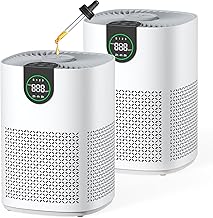
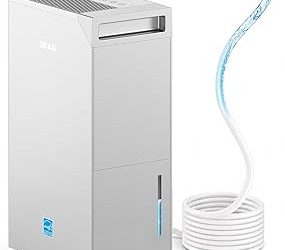
A 360-degree intake with three speeds, a timer, and a 22 dB low setting, which gives you the quiet-medium sweet spot this guide keeps pointing toward. The clean white shell and aroma option make it easy to place in a styled corner without breaking the palette.
FULMINARE H13 (Pink)
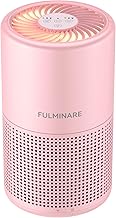
Rare in this category: a purifier with an actual color story, plus a built-in night light that handles the soft glow duty a dorm desk lamp usually can’t. Filtration is legitimate H13, and the compact body suits a nightstand or a shelf above a lofted bed.
YADU Dorm Room Purifier
The pick for anyone who wants to schedule their air the way they schedule their lighting — app control means you can spin it up before you get back from class and drop it to whisper mode from bed. Its 536 sq ft rating and three-stage filter handle wildfire season without needing full fan speed.
Frequently Asked Questions
Are air purifiers allowed in dorms?
Almost always, yes — they draw little power and involve no heating element or open flame, unlike the candles and diffusers most housing contracts ban outright. Check your residence life handbook for wattage caps and confirm whether scented pads are permitted, since some allergy-sensitive halls restrict them.
Where should I place it?
Off the floor if you can, with four to six inches of clearance around the intake, and near the doorway or window where outside air enters. Avoid tucking it behind a bed frame; blocked airflow costs you more performance than a lower fan speed would.
Will the lights keep me awake?
Only if you let them. Every model here offers some form of display dimming or shutoff, and the ones with warm night lights can replace a harsh overhead when you’re getting into bed. A single strip of blackout tape over a stubborn blue LED is a legitimate fix.
How often do filters need changing?
Plan on every six to eight months with continuous use, sooner if you’re near a smoking area or living with a pet. Vacuum the pre-filter mesh monthly — it’s a two-minute habit that meaningfully extends the HEPA layer’s life.
Final Thoughts
For most rooms, the Levoit Core 300-P is the safest buy: proven filtration, verified numbers, genuinely quiet. If your desk is the only real estate you have, the Core Mini-P gives you clean air and a warm pool of light in one small footprint, while the YADU is the smart-control pick for anyone who’d rather automate the whole atmosphere than reach for a button.