Key takeaways
- Choose a dorm-room dehumidifier by measured humidity, campus appliance rules, extraction method, noise, tank safety, energy use and room conditions.
What's inside
- Check permission before shopping
- Confirm that humidity is actually high
- Compressor or thermoelectric?
- Ignore oversized square-foot marketing
- Noise in a shared room
- Tank design and spill control
- Electrical and fire-safety checks
- Controls worth paying for
- Placement and daily operation
- A practical shortlist
- Recommended products
- Sources
The best dehumidifier for a dorm room is the smallest permitted machine that can control a measured moisture problem under the room’s actual temperature and ventilation conditions. A large basement unit is usually a poor match for a shared bedroom, while a tiny thermoelectric model may collect too little water in a persistently humid room. This research-based guide does not claim that products were tested. It provides a safe selection method using manufacturer ratings, campus rules and humidity measurements.
- Check permission before shopping
- Confirm that humidity is actually high
- Compressor or thermoelectric?
- Ignore oversized square-foot marketing
- Noise in a shared room
- Tank design and spill control
- Electrical and fire-safety checks
- Controls worth paying for
- Placement and daily operation
- A practical shortlist
- Recommended products
- Sources
Editorial illustration, not product photography or evidence of performance testing.
Check permission before shopping
Dorm appliance policies vary. Some residences prohibit compressor appliances, continuous drains, unattended operation, extension cords, or devices above a wattage limit. Others require recognized electrical certification or inspection. A room with centralized ventilation may require a maintenance request rather than another appliance.
Read the current housing handbook and ask the residence office in writing. Record permitted wattage, placement, hours, drainage and electrical rules. Do not assume that a product marketed for bedrooms is allowed. If water enters through a leak, failed HVAC or building defect, report it promptly; a portable machine must not conceal damage the institution needs to repair.
Confirm that humidity is actually high
Use a separate digital hygrometer placed away from windows, vents, showers, radiators and the dehumidifier outlet. Compare readings at several times for a few days. EPA guidance commonly discusses keeping indoor relative humidity below 60 percent and ideally around 30–50 percent where practical, but comfort and feasible targets vary with climate and building operation.
A single spike after a shower or wet-weather arrival does not prove a constant problem. Look for a repeated pattern and record room temperature, because relative humidity changes as air warms or cools. Check whether damp towels, indoor laundry, blocked vents or an open bathroom door explain the peaks.
Musty odor, condensation or visible spotting deserves attention, but none identifies a specific health cause. Students with respiratory symptoms should seek appropriate medical care, while visible or suspected mold and water damage should be reported under campus procedures. A dehumidifier can manage moisture; it does not diagnose symptoms or remediate contaminated materials.
Compressor or thermoelectric?
Compressor dehumidifiers cool air across a refrigerant coil. They generally remove much more water in warm, humid conditions but use more power, create fan and compressor noise, weigh more and need clearance. Product capacity should use current test standards and stated conditions; an impressive pint rating from a large-space listing does not make it suitable for a dorm.
Thermoelectric or Peltier units use a solid-state cooling module. They are compact and avoid compressor cycling, but extraction is usually modest and falls in cooler or less humid air. A small collection number measured at hot, very humid laboratory conditions may not represent a typical bedroom.
Our thermoelectric versus compressor guide explains the trade-off. Choose architecture after measuring the problem, not from a “quiet” or square-foot badge.
Ignore oversized square-foot marketing
Room area is only a starting point. Ceiling height, air exchange, temperature, outdoor humidity, attached bathroom use, wet clothing and building leakage determine moisture load. A device advertised for thousands of square feet can be physically, acoustically and electrically unsuitable for a dorm even when discounted.
For compressor products, compare the capacity under the current Department of Energy test method and the manufacturer’s operating-temperature range. For a Peltier unit, look for water removal stated with temperature and relative humidity. If conditions are missing, the number cannot be compared responsibly.
Avoid selecting excess capacity “just in case.” Frequent cycling can be distracting, a larger tank increases spill weight, and a high-power machine may violate policy. If a modest allowed unit cannot control repeated high readings, escalate ventilation or building moisture concerns rather than adding multiple appliances.
Noise in a shared room
Sound varies by fan speed, compressor cycle, vibration and surface. A single decibel number needs a distance, mode and measurement method. Without comparable independent measurements, do not treat a two-decibel listing difference as proof of better sleep.
Look for multiple fan modes, a display-off option and clear descriptions of alert sounds. Compressor cycling may be more noticeable than steady airflow. Place the unit on a hard, level surface with the manual’s clearances; soft bedding or carpet can block airflow and increase vibration or heat.
Discuss operating times with a roommate. Running the machine while occupants are in class may be more acceptable only if campus rules and the manufacturer permit unattended use. Never defeat a full-tank alarm or switch.
Tank design and spill control
A dorm-friendly tank should be easy to remove without twisting through furniture, have a secure handle and provide a visible level. Auto-shutoff should stop collection when the tank is full or displaced. Confirm behavior in the manual rather than trusting a feature icon.
Smaller tanks are lighter but need more frequent emptying. Larger tanks reduce trips but can be awkward over electronics, books and shared floors. Carry the tank with both hands and empty it into an approved drain. Do not use collected condensate for drinking, cooking, pets or plant care unless authoritative guidance for the specific situation allows it; it can contain contaminants from air and internal surfaces.
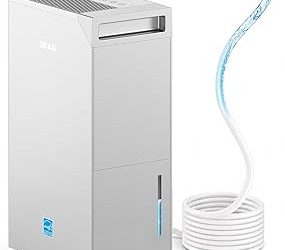
Continuous drain hoses are often impractical or prohibited in dorms. They require reliable downhill routing and cannot cross a walkway. Never drain into a bucket that can overflow while unattended.
Electrical and fire-safety checks
Choose a model with a recognized certification appropriate to the market and verify the listing rather than relying on a logo image. Check input wattage, cord length and plug. Use a wall receptacle as directed; avoid extension cords and overloaded power strips. Keep the plug dry and the cord out of doorways.
Compressor models need upright transport and settling time if the manual specifies it. Do not operate a unit with damaged housing, cord, unusual heat, burning odor or repeated breaker trips. Stop, unplug from a safe dry location and contact housing staff or authorized service.
Portable dehumidifiers have been subject to significant CPSC recalls for fire hazards. Search the current recall database using brand, model and serial details before purchase, including used units. Register the product where available and retain the receipt.
Controls worth paying for
An adjustable humidistat is more useful than decorative lighting. It allows the machine to respond to a target rather than run continuously. A restart feature may be convenient, but automatic restart after an outage must comply with housing policy and safe placement.
A washable intake filter can protect airflow; it is not an air purifier or mold-remediation system. Follow cleaning intervals and reinstall it fully dry. Timers, child locks and app control can help routines, but network features should not replace local auto-shutoff.
Placement and daily operation
Provide every clearance in the manual. Keep intake and exhaust away from curtains, bedding, clothing and walls. Do not place the unit where a roommate can kick it, where a tank must pass over a laptop, or beneath a leak-prone window.
Close windows while operating when building rules and ventilation needs allow. Keep bathroom moisture from entering the bedroom, hang wet towels in permitted ventilated areas and do not dry laundry across the machine. Our dorm humidity reduction guide covers no-appliance steps.
Check the tank daily at first, clean the filter as instructed and review hygrometer trends. Lower is not always better: overly dry air can be uncomfortable and waste energy. Stop running when readings remain in a suitable range.
A practical shortlist
Recommended products
As an Amazon Associate, we may earn from qualifying purchases.
- Small-space thermoelectric option: Eva-Dry EDV-1100 Petite Dehumidifier
Shortlist a small compressor model only when policy allows it, measured humidity is persistent, the room stays within operating temperature, and meaningful removal is needed. Prioritize current standardized capacity, humidistat, auto-shutoff, verified recall status and manageable noise.
Shortlist a thermoelectric model for a mild localized problem when expectations are modest, low weight matters and the published extraction conditions are transparent. Do not buy it to solve water intrusion or a whole-building ventilation problem.
Choose no machine when readings are normal, the issue is a temporary behavior source, policy prohibits it, or the building needs repair. The responsible recommendation may be a hygrometer, maintenance request and improved moisture habits.
Sources
- U.S. EPA: mold and moisture control
- ENERGY STAR: dehumidifiers
- U.S. Department of Energy: consumer dehumidifier standards and test procedures
- U.S. Consumer Product Safety Commission recalls