Key takeaways
- Compare compatible lamp shades with the same bulb and position, separating reading light, room glow and visible glare in a simple worksheet.
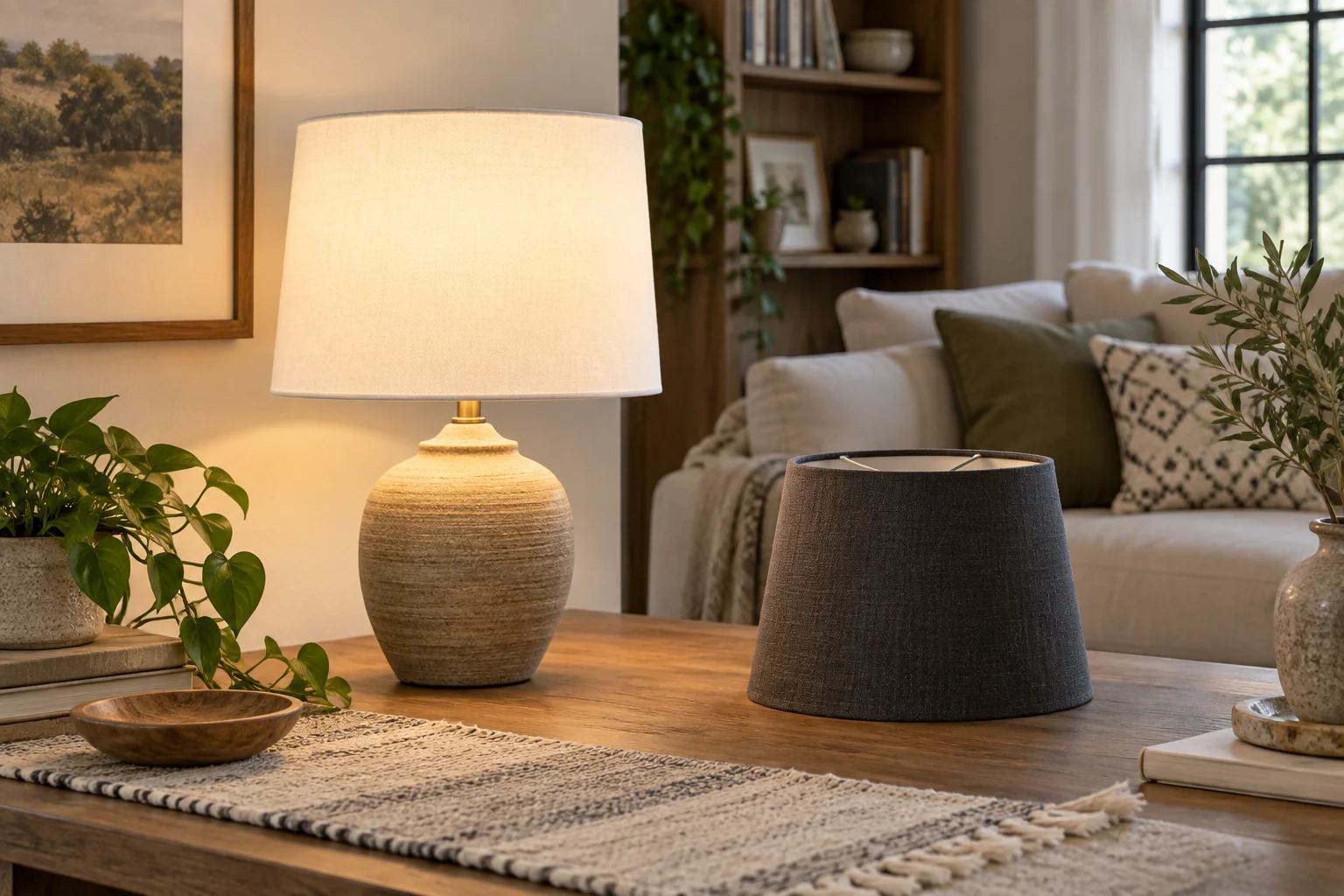
To compare lamp brightness through different shade fabrics, keep the lamp, approved bulb, position and room conditions the same. Then assess three different results: light on the task, light spreading into the room, and glare visible from your seat. A shade can improve one while making another less useful.
This is a practical comparison of two compatible shades, not a laboratory measurement or a way to calculate fabric transmission. The finished worksheet should help you decide which shade supports the activity beside the lamp without relying on a photograph of a glowing lampshade.
Confirm both shades belong on the lamp
Before comparing fabrics, confirm fitter type, dimensions, attachment and the lamp manufacturer’s bulb restrictions. A shade that balances loosely on the wrong fitting is not a valid trial. Follow the lamp and shade instructions, switch off and unplug before changing parts, and allow hot components to cool.
Use a complete shade intended for that lamp arrangement. Do not wrap spare cloth or paper around a bulb to imitate a fabric, remove a lining, or change approved clearances. If one candidate needs an unverified adapter, resolve compatibility before switching the lamp on.
Also note whether the shades have different shapes. Comparing a narrow dark shade against a wide white one changes both fabric and geometry. That can still answer which finished product you prefer, but it cannot isolate the effect of fabric alone.
Understand what the fabric description leaves out
Lamps Plus’s shade guidance describes light-colored unlined fabrics as allowing more light through the shade, while linings and opaque fabrics can reduce that transmission. Its guidance is a useful starting point, not a brightness rating for your particular lamp. Color, lining, weave and openings work together.
Read the complete shade description and inspect the inside. Two shades both described as linen may have different backing materials. Record the actual construction available from the maker; use “lining unknown” where information is missing instead of filling the gap with a guess.
Set up a repeatable comparison
Choose the main activity: reading in a chair, lighting a bedside surface, or providing background light. Put a real task object in its normal place, such as an open book you already read comfortably. Leave the lamp and chair where they will be used.
Compare under your normal evening conditions first if that is when the lamp matters most. Keep other lights and curtains unchanged. Use the same approved bulb and dimmer setting for both candidates; do not raise the dimmer for the darker shade until you have recorded the first comparison.
Take notes from the seated position rather than leaning over the table. Look at the task and surrounding area without staring into the light source. If glare is uncomfortable, stop the trial and record that problem rather than trying to get used to it.
Copy this shade comparison worksheet
| Observation | Shade A | Shade B |
|---|---|---|
| Fabric, lining and shape | Record maker description | Record differences |
| Bulb and control setting | Exact same approved bulb | Same setting for first comparison |
| Reading page at usual position | Comfortable, uneven or inadequate | Describe the change |
| Visible glare from chair | Where it appears | Where it appears |
| Nearby wall and room glow | Useful spill or distracting patch | Useful spill or distracting patch |
| Daytime appearance | Unlit color and texture | Unlit color and texture |
Use descriptive notes instead of invented percentages. “The lower half of the page looks darker” is more actionable than “30 percent less light” without a controlled instrument and measurement method. A phone camera adjusting its exposure can make different shades appear equally bright.
Worked example: reading light versus room glow
In a fictional comparison, an owner tries two compatible shades on the same table lamp. Shade A is pale and unlined; Shade B is darker and lined. At the same bulb setting, the owner finds the page comfortable with both, but the wall behind Shade A looks much brighter. Shade B creates a more contained pool of light and suits the preferred evening atmosphere.
The owner records that result as a preference for this particular setup. It does not prove that dark shades are always better for reading. If the page had become difficult to see with Shade B, keeping it solely for its appearance would not have met the original task.
A second trial changes only the permitted dimmer setting. The owner writes this separately, including whether more light introduces glare. The final choice reflects the setting that will actually be used, with no claim about energy savings or a precise output difference.
Make the decision and retain the evidence
Check the selected shade unlit in daylight as well as lit at night. Confirm that its attachment stays secure and that the lamp remains usable without reaching awkwardly under the shade. Keep the product reference, approved bulb information and return conditions until the decision is settled.
If neither candidate supports the task, pause rather than fitting a brighter bulb beyond the lamp’s rating. You may need a different compatible shade shape, another lamp position or a separate task light. Use the worksheet to identify the actual shortcoming before spending again.
Save a few short observations with the shade’s care instructions. The point is not to name one fabric the brightest in every room. It is to choose a specific, compatible shade that provides the light you need where you use it.