Key takeaways
- Compare bulb labels, control settings and room surroundings with a simple record that separates color appearance from brightness.
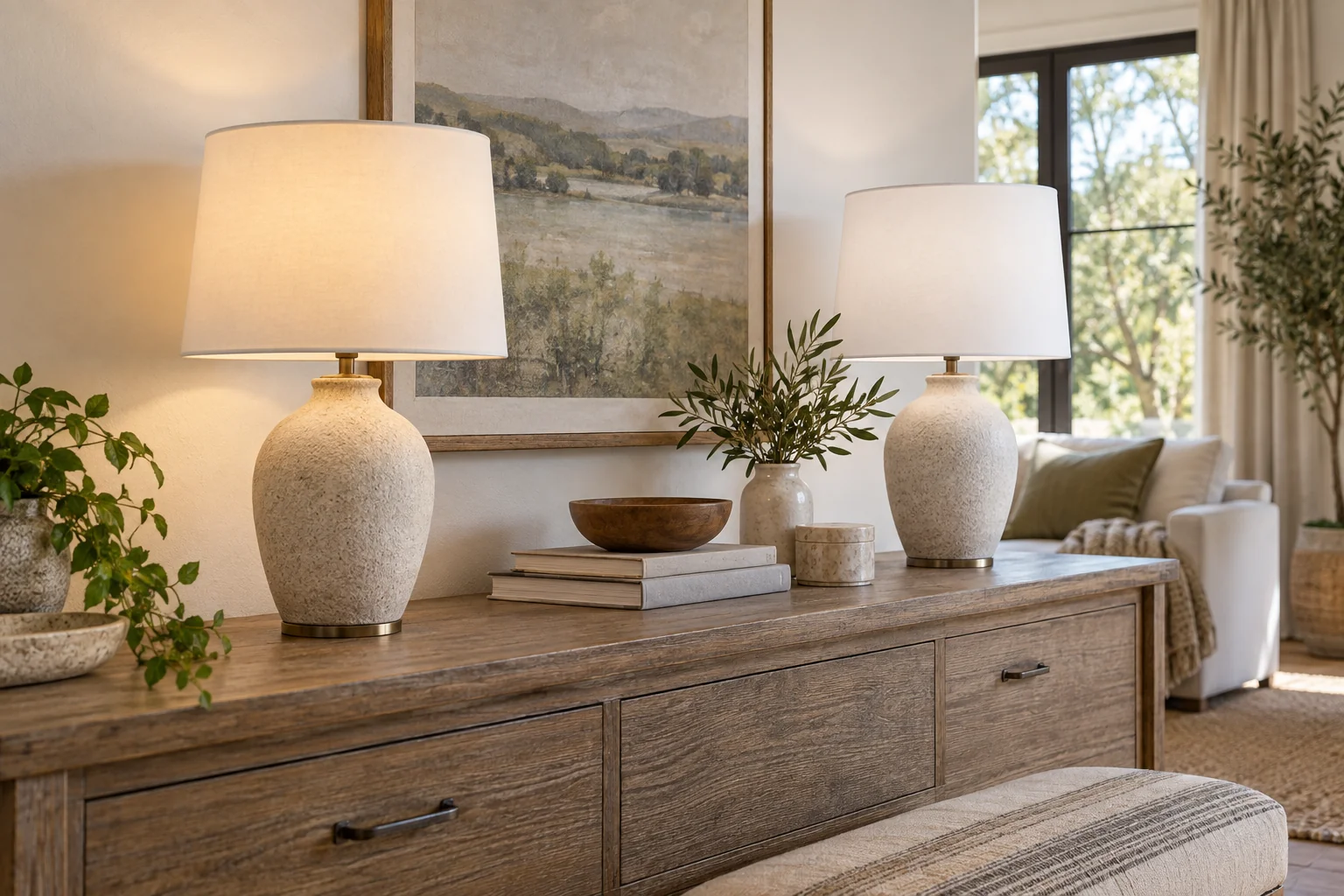
Two bulbs described as warm white can look different because the phrase is broad, their labeled color temperatures may differ, their settings may differ, or their light may interact differently with shades and nearby surfaces. Even matching Kelvin labels do not guarantee identical color appearance. Compare the bulbs under controlled household conditions before replacing a whole room’s lighting.
The goal is to identify what changes the appearance, not to conduct a laboratory color test. Keep all comparisons within the fixture and bulb manufacturers’ compatibility instructions. Do not alter wiring or use an incompatible bulb to make a comparison possible.
Separate three questions that often get mixed together
First ask whether the light itself looks warmer, cooler, pinker or greener. Next ask whether one lamp appears brighter. Finally ask whether an object under the light looks different. Those observations can overlap, but they are not interchangeable.
The US Department of Energy’s LED basics explains that correlated color temperature, or CCT, condenses color information and loses detail. It also distinguishes the appearance of the source from how it renders objects. That helps explain why the same Kelvin number alone cannot describe everything you see.
Write the problem as an observation: “The right lamp looks pinker when both are at full output” is more useful than “the new bulb is bad.” Record the time and which other lights are on. A comparison near a window can change as daylight changes.
Read the labels before changing the arrangement
With the lights safely switched off and the bulbs cool, record the exact model, labeled Kelvin value, lumen output and whether each bulb is dimmable or color tunable. Keep packaging or take a readable photograph of the label. Do not assume two bulbs from the same brand or product family have identical specifications.
For an app-controlled bulb, record its current color setting as well as the printed label. A product capable of several color temperatures is not necessarily operating at the value shown in a retailer’s headline. If it has routines or presets, check whether they change between your observations.
A dimmer introduces another variable. DOE’s guide to color-tunable products describes dim-to-warm products that change color temperature as they dim, and illustrates different spectra with the same CCT that can look pinker or greener. These are explanations of possible differences, not a diagnosis of your particular bulbs.
Use this comparison record
| Field | Bulb A | Bulb B | Why record it? |
|---|---|---|---|
| Exact model and Kelvin label | Copy label | Copy label | Checks whether the starting specification matches |
| Lumens and current setting | Record both | Record both | Separates output and control differences |
| Shade and fixture | Describe | Describe | Identifies different surroundings |
| Observation at one position | Plain description | Plain description | Reduces room-position differences |
| Result after permitted swap | Difference follows bulb or position? | Record | Suggests the next question |
Leave a field blank if you cannot establish it. A guessed model number can make a later support request less useful than an honest unknown. Record replacement dates if known, but do not infer age from how yellow a bulb looks.
Compare in the same permitted position
If both bulbs are approved for the same fixture, compare them one at a time there, using the same shade and control setting. Follow the fixture’s instructions when changing bulbs, and allow cooling before handling. If compatibility is uncertain, stop the swap and compare the documentation instead.
Keep the background simple: the same wall, a plain white sheet of paper and the same familiar colored object. Observe from the same position without staring into the light source. Note whether the light’s apparent tint changes or only the object looks different. This is a personal comparison, not a measured color-rendering score.
Then, if appropriate, compare the original lamp positions again. A colored shade, reflected wall color or nearby light may explain why the room comparison differs from the single-fixture comparison. Change one condition at a time, rather than replacing the shade, bulb and dimmer setting together.
Worked example: matching labels, different surroundings
Imagine two living-room lamps whose bulbs both carry a 2700 K label. One lamp has a cream shade beside a terracotta wall; the other has a white shade beside a pale wall. The household first records those differences instead of concluding that one bulb is defective.
In a permitted single-fixture comparison, the two bulbs look similar to the observer. Back in their original locations, the cream-shaded lamp again looks warmer. The practical next step is to examine the shade and surrounding colors, rather than buying more bulbs with the same label. This fictional example does not predict your result.
If the difference instead follows the bulb in the controlled comparison, record that outcome. Check the exact specifications and contact the manufacturer with model details. You can choose a visually matched pair for adjacent lamps, but matching a printed number alone is not proof they will look identical.
Decide what needs changing
A slight variation may be acceptable across separate corners and distracting in a closely spaced pair. Judge it in the arrangement you actually use. Do not chase perfect uniformity across unlike shades if those shades are part of the intended design.
Save the model details for a pair that works well together, including the control setting. Treat flickering, damage or unsuitable fixture compatibility as separate problems requiring the appropriate manufacturer guidance. A color comparison should end with a documented choice, not electrical experimentation.