
Key takeaways
- Age Range Description: Adult
- Mount Type: Doorway Mount
- Item Dimensions W x H: 37"W x 20.2"H
Every doorway pull-up bar review skips the part that matters to renters: what it does to the frame. A leverage-style bar bears against the trim above the door and the wall on the inside, and while the physics are sound, soft plaster, hollow trim, or an old painted frame will mark. On a modern solid frame with a decent bracket and a foam sleeve, damage is negligible. On 1930s lath and plaster, it is a deposit-losing experiment.
That single question — can I put load into my door frame or not — splits this category cleanly. If yes, a good doorway bar is the cheapest, smallest way to start doing pull-ups. If no, you need a freestanding tower or cage, which costs more and claims a permanent square of floor but touches nothing structural. Below, six options across both camps, from a 440 lb rated doorway bar to a 2000 lb power cage.
Our top picks
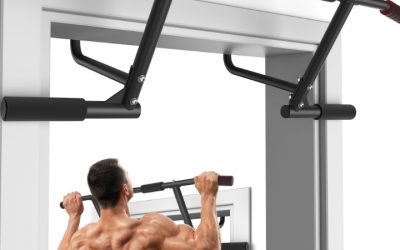
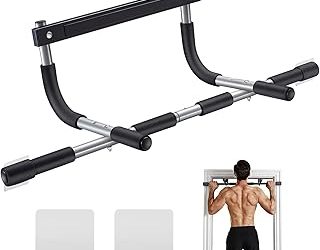
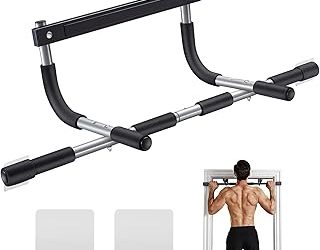
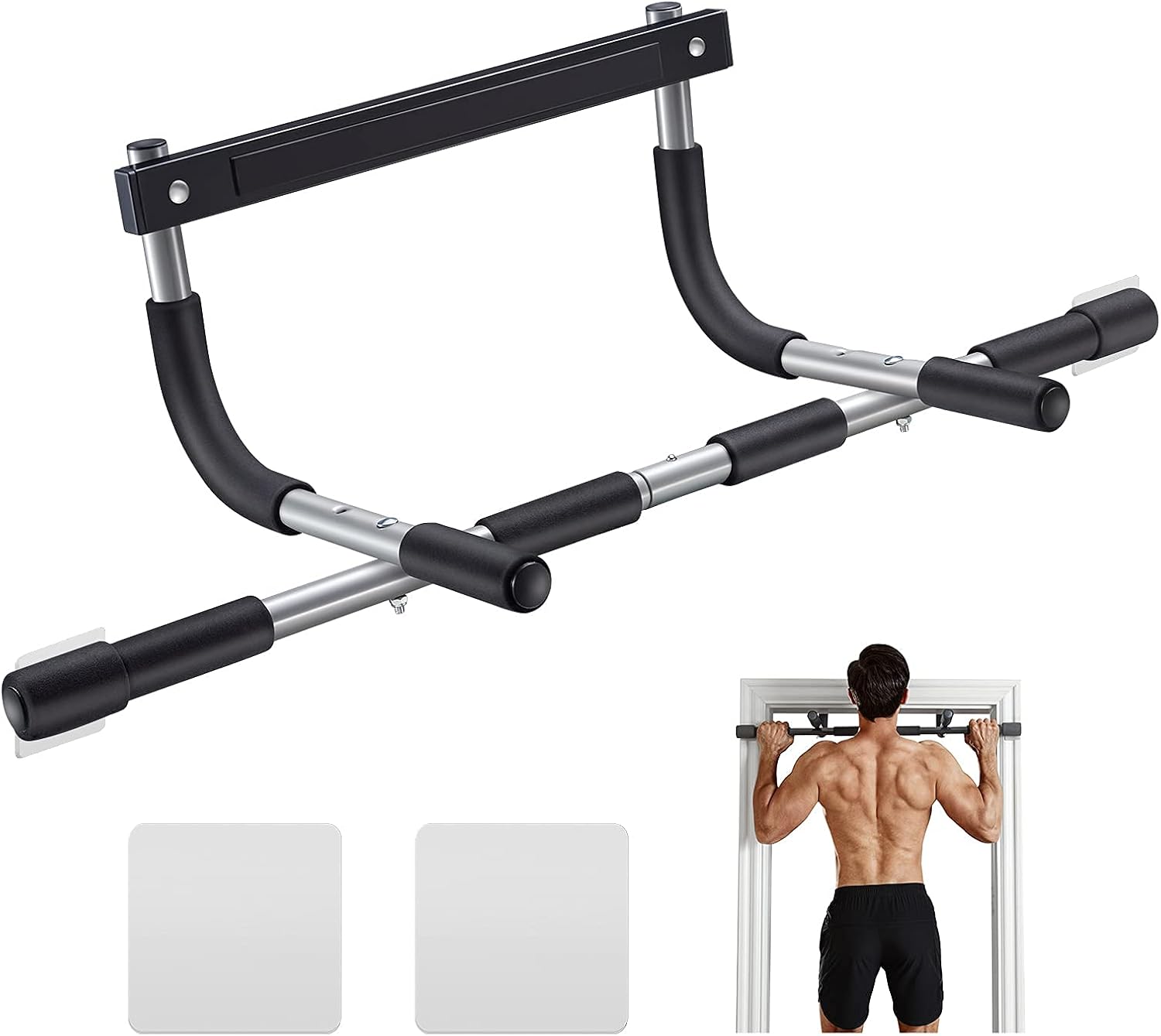 Ally Peaks Pull Up Bar for Doorway
- Age Range Description: Adult
- Mount Type: Doorway Mount
- Item Dimensions W x H: 37"W x 20.2"H
 Pooboo Power Tower Dip Station Pull Up
- Maximum Weight Recommendation: 450 Pounds
- Warranty Type: Manufacturer
- Material: Alloy Steel
 CAP Barbell Power Racks and Attachments
- Item Package Dimensions L x W x H: 47 x 12 x 6 inches
- Package Weight: 29.94 Kilograms
- Item Dimensions LxWxH: 45.67 x 50.79 x 85.43 inches
| Product | Key specs | |
|---|---|---|
| Ally Peaks Pull Up Bar for Doorway | Age Range Description: Adult Mount Type: Doorway Mount Item Dimensions W x H: 37"W x 20.2"H | Check price |
| Pooboo Power Tower Dip Station Pull Up | Maximum Weight Recommendation: 450 Pounds Warranty Type: Manufacturer Material: Alloy Steel | Check price |
| CAP Barbell Power Racks and Attachments | Item Package Dimensions L x W x H: 47 x 12 x 6 inches Package Weight: 29.94 Kilograms Item Dimensions LxWxH: 45.67 x 50.79 x 85.43 inches | Check price |
 Sunny Health & Fitness Power Tower Dip Sunny Health & Fitness Power Tower Dip | Maximum Weight Recommendation: 330 Pounds Warranty Type: Manufacturer Material: Alloy Steel | Check price |
 Mikolo Smith Machine with Weight Stack Mikolo Smith Machine with Weight Stack | Warranty Description: 2 Year Tension Supported: 264 lbs Strap Type: Cable/Pulley straps | Check price |
 pooboo Multi-Functional Machine Power Cage pooboo Multi-Functional Machine Power Cage | Warranty Description: 2 Year Warranty Time Material Type: Alloy Steel, Plastic Tension Supported: 2000 pounds | Check price |
 48'' Joist Mounted Pull Up Bar with 48'' Joist Mounted Pull Up Bar with | Age Range Description: Adult Mount Type: Wall Mount Material: Alloy Steel | Check price |
 Sportsroyals Power Tower Pull Up Bar Station Sportsroyals Power Tower Pull Up Bar Station | Warranty Description: 2-Year Warranty Maximum Weight Recommendation: 360 Pounds Warranty Type: No Warranty | Check price |
As an Amazon Associate we earn from qualifying purchases at no extra cost to you.
Quick Comparison
| Product | Best For | Standout Feature | Watch Out For |
|---|---|---|---|
| Ally Peaks Doorway Bar | Renters with solid frames | 440 lb rating, multi-grip | Can mark trim and paint |
| Pooboo Power Tower | Freestanding pull-ups | 450 lb capacity, dip station | Needs a permanent spot |
| CAP Barbell Power Rack | Barbell training too | Rack plus attachments | Assembly is substantial |
| Sunny Health Power Tower | Multi-station bodyweight | Pull-up, dip and knee raise | Frame footprint is wide |
| Mikolo Smith Machine | Full home gym setups | Weight stack and crossover | Largest install here |
| pooboo Power Cage | Heavy lifters | 2000 lb rated squat rack | High ceiling required |
How to Choose
- Test your door frame honestly: Press hard on the trim above the door. If it flexes or the paint is thick and brittle, choose freestanding. Trim replacement costs far more than the difference between a bar and a tower.
- Measure the frame width and depth: Doorway bars fit a range, typically around 26 to 36 inches, and need enough trim depth for the bracket to seat. A door with no protruding trim at all is not compatible with most leverage designs.
- Ceiling height for freestanding towers: A power tower puts the bar around 7 feet up, and your head goes above it. Anything under an 8-foot ceiling makes full pull-ups uncomfortable or impossible.
- Think about what else it does: Dip stations, knee raise pads, and push-up handles turn a single-purpose bar into a whole upper-body station for a modest price increase and no extra floor space.
- Weight rating includes you plus added load: If you weigh 200 lb and plan on weighted pull-ups with a 40 lb vest, a 440 lb rating gives sensible margin. Ratings close to your bodyweight are not.
Top Picks Reviewed
Best for Renters: Ally Peaks Doorway Bar
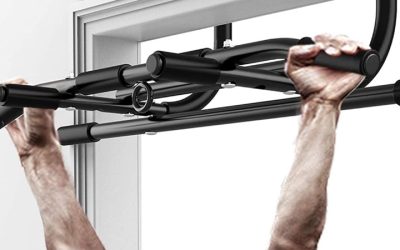
Thickened steel with a 440 lb limit and multiple grip positions makes this the most capable doorway option, and it takes ten seconds to remove when you need the doorway back. For a flat with a solid frame, it is the highest value purchase in the category.
Even with padding, repeated loading leaves compression marks on painted trim over months. Foam sleeves and a piece of thin card behind the contact points help, but do not eliminate it entirely.
Best Freestanding Option: Sunny Health Power Tower
Pull-up bar, dip station, and knee raise pad on one frame gives you a complete upper-body bodyweight gym that never touches a wall or door. For anyone who cannot or will not load their door frame, this is the practical answer.
The base is wide by necessity for stability, so it claims a real footprint permanently. It also does not fold, which rules out shared living rooms.
Best Stability: Pooboo Power Tower
A 450 lb capacity and adjustable height make this the tower to choose if you are heavier or plan to add a weight vest. The frame stays planted through kipping and swinging movements that make lighter towers shift.
It needs a dedicated spot and level flooring. On carpet over a soft underlay, expect some rocking until you put a board or mat underneath.
Best for Barbell Users: CAP Barbell Power Rack
If you squat and bench as well as pull, a rack with an integrated pull-up bar consolidates three purchases into one and gives you safety bars for solo lifting. The attachment ecosystem lets you expand over time.
Assembly is a genuine project, and the rack needs both floor space and ceiling height. This is a garage or basement purchase, not a spare-bedroom one.
Most Complete System: Mikolo Smith Machine
A Smith machine with a weight stack, lat pulldown, and cable crossover plus a pull-up bar is effectively a whole gym in one frame. For someone building a permanent home setup, it removes the need for almost anything else.
It is the largest and most involved installation here by a wide margin, and the guided Smith bar path is not to everyone’s taste for pressing and squatting.
Best for Heavy Training: pooboo Power Cage
A 2000 lb rated cage with a LAT pulldown and dual pulley crossover supports serious barbell work alongside pull-ups, and the full cage design means you can train heavy alone with safety bars in place.
Ceiling height is the constraint that catches people out — a cage plus a pull-up bar plus your head needs more headroom than most basements offer.
Frequently Asked Questions
Will a doorway pull-up bar damage my door frame?
On a solid, well-built frame with padded contact points, damage is usually limited to minor compression marks in the paint. On soft plaster, hollow trim, or older frames, more serious damage is a real risk — choose freestanding in that case.
How much ceiling height do I need for a power tower?
At least 8 feet, ideally more. The bar sits around 7 feet and your head and hands go above it, so a low basement ceiling will force you into a partial range of motion.
Can I do pull-ups if I cannot do one yet?
Yes — use a resistance band looped over the bar, or do slow negatives from the top position. Both build the strength for a first unassisted rep within a few weeks of consistent practice.
Are power towers stable enough for kipping or swinging?
The heavier-rated models handle controlled movement well, but any freestanding frame will shift under aggressive kipping. Keep movements strict, or anchor the base if the design allows.
Final Thoughts
Renters with a solid door frame should start with the Ally Peaks Doorway Bar — it costs the least, stores instantly, and covers every grip variation. If your frame is not up to it, the Sunny Health Power Tower gives a complete upper-body station without touching the building, and the pooboo Power Cage is the endgame for anyone who intends to squat and press heavy at home.


Write Your Review
No reviews yet. Be the first to share your experience!