
Key takeaways
- Age Range Description: Adult
- Mount Type: Doorway Mount
- Item Dimensions W x H: 37"W x 20.2"H
There is a specific frustration that comes with a pull-up bar you cannot actually use through a full range of motion. The bar mounts fine, holds your weight fine, and then your head clips the top of the frame every single rep, so you shorten the pull and never quite lock out. That is a geometry problem, and it is entirely predictable from the doorway before you buy — but almost nobody checks it, because the listings talk about steel gauge and weight ratings instead of clearance.
The geometry that matters is this: a doorway bar sits roughly two to four inches below the top of the opening depending on the mounting style, and multi-grip designs hang lower still. Subtract that from your ceiling-side clearance and compare it to your own reach. A person of average height in a standard 80-inch doorway will usually be fine on a slim bar and cramped on a multi-grip one. Anyone over six feet needs to do the arithmetic properly. The second geometric constraint is casing depth, which decides whether the hooks seat flat or perch on the edge of the trim. Both factors matter more than the numbers on the box, and they split the six bars below into distinct use cases.
Our top picks
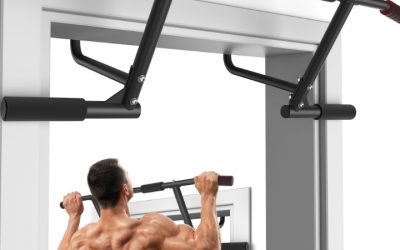
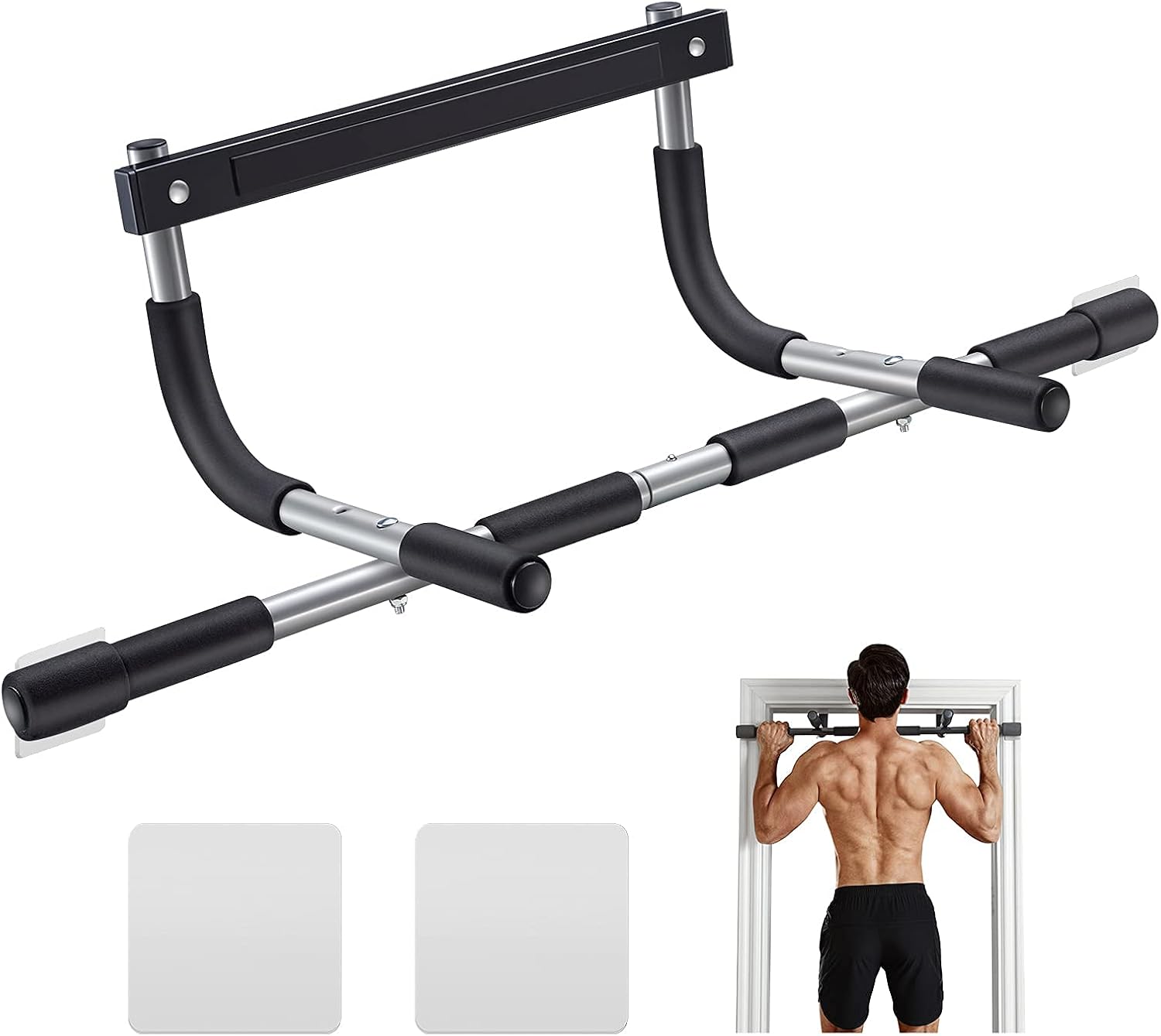 Ally Peaks Pull Up Bar for Doorway
- Age Range Description: Adult
- Mount Type: Doorway Mount
- Item Dimensions W x H: 37"W x 20.2"H


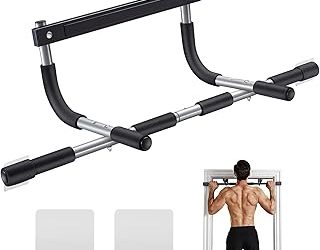
 Sportneer Pull Up Bar for Doorway
- Age Range Description: Adult
- Mount Type: Doorway Mount
- Item Dimensions W x H: 37.01"W x 6.69"H
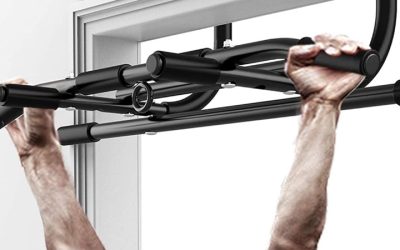
 KAKICLAY 2026 Upgrade Multi-Grip Pull Up Bar
- Age Range Description: Adult
- Mount Type: Doorway Mount
- Item Dimensions W x H: 10.5"W x 2"H


As an Amazon Associate we earn from qualifying purchases at no extra cost to you.
Quick Comparison
| Product | Best For | Standout Feature | Watch Out For |
|---|---|---|---|
| Ally Peaks Pull Up Bar | Maximum head clearance | Slim profile, sits high in frame | Requires flat wall above casing |
| Ally Peaks Multi-Grip Bar | Shorter users, grip variety | Neutral handles reduce elbow strain | Hangs lower, cuts clearance |
| Body-Solid PUB34 Bar | Precision fit | Adjustable width, commercial welds | Notably more expensive |
| Sportneer No-Drill Bar | Doorways with no wall above | Compression fit, 29.5-37 in | Tension drifts with use |
| KAKICLAY Multi-Grip Bar | Thick period architrave | Deep hooks seat on heavy trim | Rocks on shallow flat casing |
| No-Screw Adjustable Bar | Narrow openings | Fits from 29.1 in, 360-degree lock | Lock must fully engage |
How to Choose
- Calculate head clearance: Stand in the doorway and measure from the top of your head to the top of the opening. You need roughly six inches beyond the bar position to complete a chin-over-bar rep without ducking. Slim bars preserve the most of it.
- Match hook depth to trim: Casing under an inch works with standard hooks; deeper architrave needs an oversized hook or the bar will bear on the trim edge instead of the wall behind it.
- Consider grip spacing, not just count: Multi-grip bars vary in how far apart the neutral handles sit. Narrow neutral handles bias the pull toward the biceps; wider ones engage the lats more. Look at the spacing rather than the number of positions.
- Think about the door itself: A bar that hangs low may prevent the door from closing. If the doorway has a door you still use, favour a slim profile mounted high in the frame.
- Bar diameter and finish: Knurled or textured steel around 1.25 inches gives the most secure grip. Thick foam sleeves feel kinder but effectively increase the diameter, which makes high-rep sets harder for smaller hands.
Top Picks Reviewed
Best Overall: Ally Peaks Pull Up Bar
The slim single-bar profile is what makes this work for taller users — it mounts high in the frame and gives you the most usable range of motion of anything here. The thickened steel means it does not deflect noticeably even at the bottom of a dead hang, which is where cheaper bars start to feel unsettling.
Its requirement is a flat, uninterrupted wall above the door casing for the backplate. Crown moulding or a low soffit above the doorway makes this bar unusable, and no amount of adjustment gets around it.
Best for Joint-Friendly Pulling: Ally Peaks Multi-Grip Bar
Neutral grip handles change the shoulder and elbow angles enough to let people train through minor tendon irritation that would sideline them on a straight bar. Rotating positions week to week is also a legitimate way to keep progressing without adding load.
The honest cost is height. Those handles hang below the main bar and consume the clearance you may not have to spare. If you are over six feet in a standard doorway, measure before you commit.
Best Fit Accuracy: Body-Solid PUB34 Adjustable Bar
Getting the width exactly right matters more than most people realise — a bar that is nearly the right size sits under uneven load. The PUB34 adjusts across a useful range and the welds and finish are a step above the category norm.
You are paying a substantial premium for that precision and durability. In a doorway that a cheaper bar already fits properly, the day-to-day difference is small.
Best Where Nothing Else Fits: Sportneer No-Drill Bar
Some doorways simply have no flat wall above them. This compression design ignores that entirely, tensioning across the jambs between 29.5 and 37 inches and touching nothing above the frame.
It demands a routine. Tension bleeds off gradually and a loose compression bar is unsafe, so a quick firmness check before every session is part of owning one. If that sounds like something you would forget, pick a leverage design instead.
Best for Period Homes: KAKICLAY Multi-Grip Bar
Heavy Victorian or craftsman architrave defeats standard hooks, which end up perched on the trim edge rather than bearing on the wall. The deeper hook geometry here is purpose-built for that and makes an otherwise impossible doorway workable.
Put it on thin modern casing and the same hooks hold the bar too far off the wall, increasing the leverage on the trim. Check your casing depth before deciding this is the right tool.
Best for Narrow Frames: No-Screw Adjustable Bar
The 29.1 inch lower limit reaches slightly narrower than most competitors, which is exactly what you need for a converted loft or a secondary doorway. The 360-degree locking collar also makes the tension setting more repeatable than a plain threaded adjuster.
That lock has to be driven fully home. Reports of slippage almost always trace back to a partially engaged collar, so turn until it positively stops and check it after the first few sessions.
Frequently Asked Questions
How much head clearance do I need for pull-ups in a doorway?
You want enough room to bring your chin above the bar without your head contacting the frame — roughly six inches above the bar for most people. Slim bars mounted high in the opening preserve the most; multi-grip designs consume several inches of it.
Do multi-grip bars actually make a difference?
Yes, mainly for joint comfort. Neutral and angled grips reduce the rotational stress on the elbow and shoulder that a fixed pronated grip creates. Whether that outweighs the lost clearance depends on your height and your doorway.
Will these bars fit a doorway with thick moulding?
Only if the hooks are deep enough to clear the trim and bear on the wall behind it. Standard hooks are sized for casing under about an inch. Heavier architrave needs an oversized-hook model.
Can two people share one bar at different heights?
Doorway bars mount at a fixed height determined by the frame, so you cannot adjust for different users. Shorter household members will need a step or a low stool to reach the starting position safely.
Final Thoughts
If your doorway has ordinary trim and clear wall above, the Ally Peaks Pull Up Bar gives the most usable range of motion and the least flex under load. Where elbow comfort matters more than an inch of clearance, the Ally Peaks Multi-Grip Bar is the better daily driver. And in a doorway with moulding right up to the ceiling, the Sportneer No-Drill Bar remains the one option that ignores the wall above entirely.


Write Your Review
No reviews yet. Be the first to share your experience!