
Key takeaways
- Item Diameter: 17 Inches
- Item Firmness Description: Firm
- Product Benefits: Muscle Therapy
A foam roller is one of the few pieces of recovery equipment where the physics are obvious once you feel them. A 6-inch diameter cylinder spreads your body weight across a wide contact patch and feels broad and forgiving; drop to a 5-inch roller and the same pressure concentrates into a narrower band, which is why smaller rollers feel sharper on quads and IT bands. Density does the same thing from the other direction — soft EVA compresses under a 200-pound athlete and stops delivering pressure halfway through the stroke, while molded high-density foam over a rigid core holds its shape through a full 20-second hold on the calf.
That interaction between diameter, density, and surface texture is what separates the rollers below. I’ve grouped them by the job they actually do: smooth rollers for broad, tolerable pressure across large muscle groups; textured rollers for targeted work along the length of a muscle; vibrating rollers for people whose tissue tightens up defensively under static pressure. Sizing matters too — a 36-inch roller is the only sensible choice if you want to lie lengthwise along your spine for thoracic extension, while a 13-inch model fits in carry-on luggage and travels to the gym without argument.
Our top picks


 Vulken Extra Long 17” Vibrating Foam Roller
- Item Diameter: 17 Inches
- Item Firmness Description: Firm
- Product Benefits: Muscle Therapy
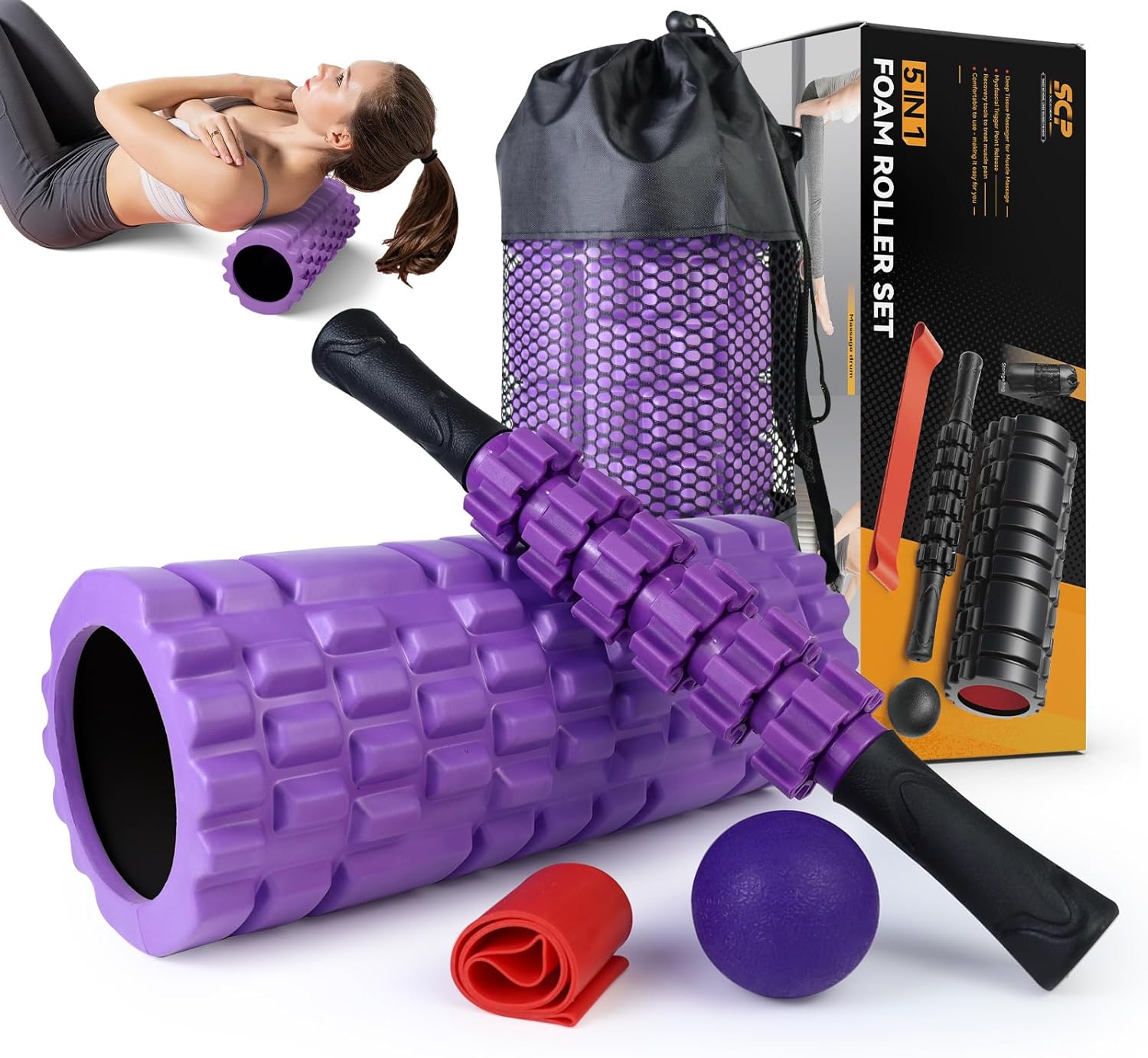
 Amazon Basics High-Density Foam Roller for Exercise
- Item Dimensions: 18 x 6 x 6 inches
- Item Diameter: 6 Inches
- Item Firmness Description: Firm

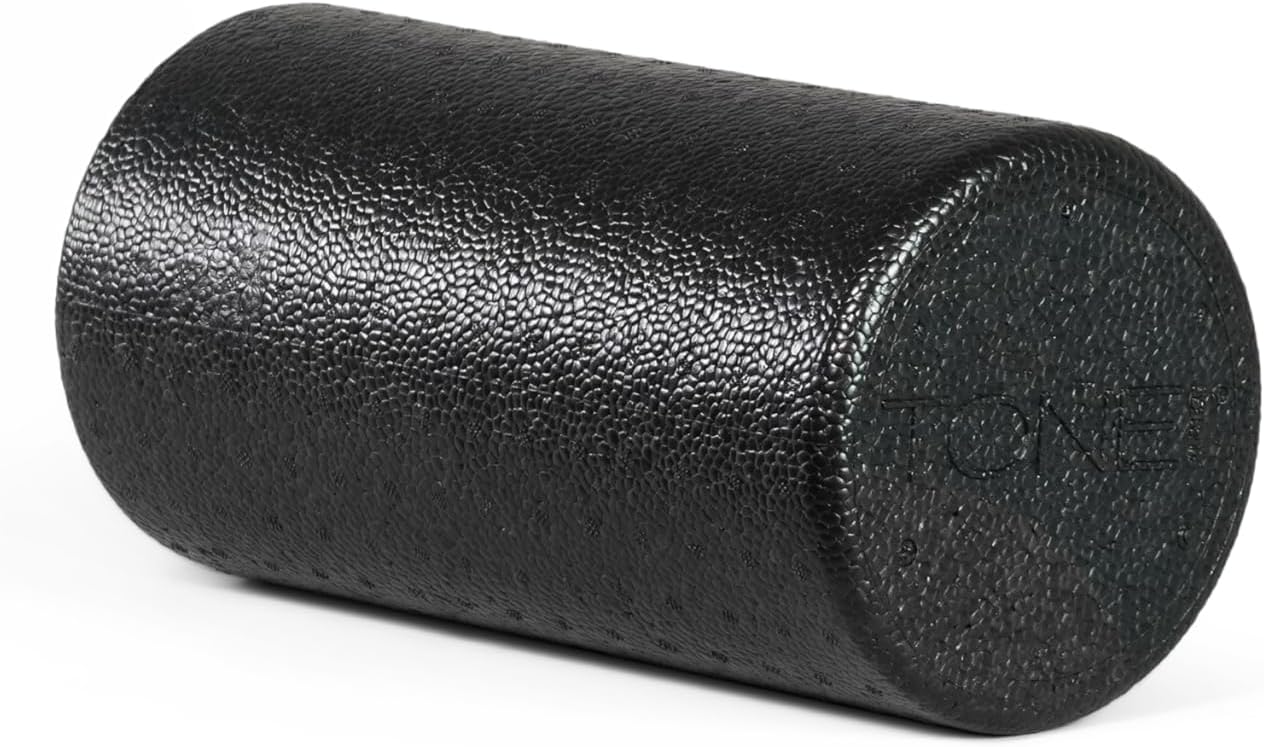 Tone Fitness High Density EPP Foam Exercise
- Item Dimensions: 5.71 x 5.71 x 11.61 inches
- Item Diameter: 5.7 Inches
- Item Firmness Description: Firm
As an Amazon Associate we earn from qualifying purchases at no extra cost to you.
Quick Comparison
| Roller | Best For | Approx. Size | Feel | Vibration |
|---|---|---|---|---|
| TriggerPoint GRID 1.0 | All-around use | 13″ × 5.5″ | Firm, multi-zone surface | No |
| LuxFit High-Density Roller | Full-body and spine work | 36″ × 6″ | Firm, smooth | No |
| Hyperice Vyper 3 | Pre-workout warm-up | 12″ × 5.5″ | Very firm, ribbed | Yes, 3 speeds |
| RumbleRoller Deep Tissue | Aggressive trigger-point work | 13″ or 22″ | Very firm, tall knobs | No |
| Therabody Wave Roller | Guided recovery routines | 12″ × 5.5″ | Medium-firm, wave ridges | Yes, app-connected |
| 321 STRONG Deep Tissue | Value textured roller | 12″ × 5″ | Medium, triple-zone | No |
| Brazyn Morph Collapsible | Travel and small spaces | 15″ × 5.5″, folds flat | Medium-firm | No |
How to Choose
- Match density to your tolerance, not your ego. Beginners and anyone rolling over recently sore tissue do better on medium-density EVA. Heavier or well-conditioned users usually need molded high-density foam, because softer rollers simply bottom out.
- Pick length based on the body part you care about. Anything 30 inches or longer lets you lie along your spine and roll both hamstrings at once. Sub-15-inch rollers are better for isolating one calf or one glute, and they pack.
- Treat texture as a targeting tool. Knobs and ridges concentrate force into small areas the way a thumb would. That’s useful on a stubborn peroneal or upper trap, and unpleasant across a bruised quad.
- Only pay for vibration if static pressure makes you tense up. The added stimulus genuinely helps some people relax into a hold and shortens warm-up time, but a $30 roller does the mechanical work of a $200 one.
- Check the core and the outer shell separately. A hollow ABS core is what keeps a roller from deforming after a year of use; the outer EVA layer determines whether it feels grippy or slick on carpet.
Top Picks Reviewed
TriggerPoint GRID 1.0 — Best Overall
The GRID’s surface is divided into flat pads, narrow channels, and tubular ridges, so a single pass over a hamstring cycles through three different pressure profiles. The hollow ABS core keeps the geometry intact under load, which is the main reason it outlasts cheap solid rollers. At 13 inches it handles calves, quads, and lats comfortably, though it’s too short for lengthwise spinal work. If you buy one roller and never think about it again, this is the one.
LuxFit High-Density Foam Roller — Best for Full-Body Work
Molded polypropylene, smooth surface, and a 36-inch length make this the closest thing to a physical-therapy-clinic standard. Lying along it opens the thoracic spine in a way no short roller can replicate, and the broad 6-inch diameter keeps pressure tolerable on sensitive areas. It’s dense enough that some users find it harsh on the IT band. Bulky to store, unbeatable for mobility drills and stability exercises.
Hyperice Vyper 3 — Best Vibrating Roller
Three vibration intensities transmit through a rigid ribbed shell, and the top setting is genuinely strong — strong enough that most people use it for 30-second warm-up passes rather than long holds. The value here is pre-training: rolling quads with vibration before squats tends to buy range of motion faster than static rolling alone. It’s heavy, it needs charging, and the shell is unforgiving. Worth it if you train early and stiff.
RumbleRoller Deep Tissue — Most Aggressive
The firm rubber-like knobs stand tall enough to push between muscle bellies instead of gliding over them, which is why this roller has a cult following among runners with chronically tight calves. It hurts. That’s the design intent, and it’s a poor first roller. Choose the 22-inch version if you want to work both legs, and expect a two-week adaptation period before it feels productive.
Therabody Wave Roller — Best Guided Experience
Wave-shaped ridges plus five vibration frequencies, paired with an app that walks through timed routines by body part. The structured guidance is the real feature — it stops people from mashing one spot for four minutes and calling it recovery. Vibration is smoother and less punishing than the Vyper’s, making it the better pick for post-training wind-down. Premium price for a roller you must remember to charge.
321 STRONG Deep Tissue — Best Value Textured Roller
A triple-zone EVA surface that mimics palms, fingers, and thumbs, wrapped around a hollow core, at a fraction of the price of premium models. It’s slightly softer than the GRID, which makes it friendlier for people new to rolling. The foam shows compression marks over time and the finish is less refined, but the mechanics are sound and the price makes it easy to keep one at the office.
Brazyn Morph Collapsible — Best for Travel
A bamboo-and-nylon frame that collapses to roughly an inch thick and springs back into a full-size cylinder in a second. It supports serious body weight without flexing, and it slides into a suitcase pocket where a solid roller would eat half the bag. The trade-off is a firmer, slightly ridged feel and a price closer to a vibrating model. Ideal for frequent travelers and apartment dwellers with no storage.
Frequently Asked Questions
How long should I spend on each muscle?
Roughly 60 to 90 seconds per area is enough. Slow passes of about an inch per second work better than fast scrubbing, and pausing 20 to 30 seconds on a tender spot while breathing out is where most of the range-of-motion benefit shows up. Beyond two minutes per muscle you’re mostly just accumulating discomfort.
Before or after training?
Both, with different goals. Brief rolling beforehand improves joint range without the strength drop-off that long static stretching can cause, so keep it to 30 to 60 seconds per area. Afterward, longer and gentler sessions reduce perceived soreness in the following days, even though they don’t speed up actual tissue repair.
Should foam rolling hurt?
It should register as pressure you can breathe through — think 5 or 6 out of 10. Sharp, radiating, or numbing sensations mean you’ve drifted onto a nerve or bone and should reposition. Never roll directly over a joint line, the lower back, or an acute injury.
Do I need a vibrating roller?
No. Vibration is a comfort and compliance feature: it makes pressure feel more tolerable and can shorten warm-ups, but the underlying mechanical effect comes from the roller itself. Spend the money if you struggle to relax under static pressure or want faster morning warm-ups; skip it otherwise.
Final Thoughts
Most people are best served by the TriggerPoint GRID, which balances density, durability, and a surface that works on nearly every muscle group. Add a 36-inch high-density roller if thoracic mobility and stability work matter to you, upgrade to the Vyper 3 or Wave Roller only if vibration solves a specific problem, and reserve the RumbleRoller for tissue that has stopped responding to gentler pressure. The best roller is simply the one within arm’s reach of where you train — consistency beats specification every time.
Write Your Review
No reviews yet. Be the first to share your experience!