Key takeaways
- Slat spacing: Measure the gaps in your frame before anything else. Foam mattresses need slats no more than about 3 inches apart, or the underside bulges between them and the surface develops soft spots you’ll feel within months. Wider gaps call for a bunkie board or a plywood insert.
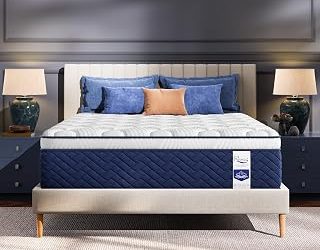
- Profile height and sightlines: An 8-inch mattress on a low platform puts the sleeping surface around 14 inches off the floor — intimate, modern, and it lets a small table lamp cast light across the bed rather than down into someone’s eyes. A 14-inch build sits closer to 22 inches, which reads more traditional and needs taller nightstand lighting to stay balanced. Neither is wrong; pick the one that matches the room you want.
- Foam versus hybrid: All-foam sinks in and quiets movement, which suits side sleepers and light-sleeping couples. Hybrids add pocketed coils for lift and edge support, which matters if you sit on the perimeter to put on shoes or read.
- Heat management: Foam traps warmth, and a warm bedroom sabotages sleep more reliably than a bright one. Look for gel infusions, open-cell structures, or zoned airflow channels — and keep the frame open underneath so air can actually move.
- Certifications and trial windows: CertiPUR-US confirms the foam has been tested for emissions and content. Fiberglass-free construction is worth insisting on. A long sleep trial matters because a mattress feels different in week six than it does on night one.
What's inside
I spend my working hours aiming light at things — grazing a plaster wall, tucking a warm strip under a headboard, talking a client out of a ceiling fixture that turns their bedroom into a dental office. The bed always ends up in the conversation, because it is the largest reflective surface in the room and the anchor everything else is measured against. And more often than not, the question that stalls a project isn’t about lumens at all. It’s a client standing over a slatted platform frame, box spring hauled to the curb, asking what actually goes on top of it. Retail sites rarely make that clear, and the wrong answer means a sagging deck, a mattress riding too high for the nightstand lamps, or a room whose proportions never quite settle.
Good news: nearly every mattress built in the last decade is designed for exactly this setup. Foam and hybrid builds distribute weight across a solid or closely-slatted base, so the box spring is redundant rather than missing. What follows is a look at six mattresses that perform well on platform frames, slat systems, and low bed decks — chosen with an eye on comfort, cooling, and the thing my trade cares about that nobody else mentions: profile height, and how it changes the way a room reads at night.
As an Amazon Associate we earn from qualifying purchases.


🛒 Best Price Today on Amazon
Prime members get fast, free shipping on everything above, plus member-only deals. New members get a 30-day free trial — cancel anytime.
How to Choose a Mattresses Without Box Spring (2026)
- Slat spacing: Measure the gaps in your frame before anything else. Foam mattresses need slats no more than about 3 inches apart, or the underside bulges between them and the surface develops soft spots you’ll feel within months. Wider gaps call for a bunkie board or a plywood insert.
- Profile height and sightlines: An 8-inch mattress on a low platform puts the sleeping surface around 14 inches off the floor — intimate, modern, and it lets a small table lamp cast light across the bed rather than down into someone’s eyes. A 14-inch build sits closer to 22 inches, which reads more traditional and needs taller nightstand lighting to stay balanced. Neither is wrong; pick the one that matches the room you want.
- Foam versus hybrid: All-foam sinks in and quiets movement, which suits side sleepers and light-sleeping couples. Hybrids add pocketed coils for lift and edge support, which matters if you sit on the perimeter to put on shoes or read.
- Heat management: Foam traps warmth, and a warm bedroom sabotages sleep more reliably than a bright one. Look for gel infusions, open-cell structures, or zoned airflow channels — and keep the frame open underneath so air can actually move.
- Certifications and trial windows: CertiPUR-US confirms the foam has been tested for emissions and content. Fiberglass-free construction is worth insisting on. A long sleep trial matters because a mattress feels different in week six than it does on night one.
The Best Mattresses Without Box Spring (2026)s Reviewed
EGOHOME 8 Inch Green Tea Memory Foam, Full
The lowest-profile option here, and my quiet favorite for guest rooms, studio apartments, and any space where you want the bed to sit down in the room rather than dominate it. Medium-firm with green tea gel infusion, CertiPUR-US certified and fiberglass free — a clean, unfussy foam mattress that flatters a slim platform frame.
Nectar 12″ Memory Foam, Queen
Nectar has been the safe recommendation for years for good reason: a balanced medium-firm feel, genuine motion isolation, and a full year to decide whether you like it. At 12 inches it hits the proportional sweet spot on most platform beds, tall enough to look substantial without swallowing your headboard.
Sweetnight CoolNest 14″ Cooling, Queen
Five-zone support means the shoulders and hips get more give than the lumbar region, which keeps side sleepers aligned without the hammock effect. The breathability engineering is the real draw here — this is the pick for warm bedrooms or anyone who runs hot under the covers.
Novilla 14″ Gel Memory Foam, Queen
A thick, plush gel-foam build that leans toward pressure relief and stillness. If you share a bed with a restless partner or a dog that circles three times before settling, the motion isolation on this one earns its keep.
Sleepmax 14″ Hybrid, Queen
The hybrid in the group, pairing coils with cooling foam for a more responsive, buoyant feel and noticeably better edge support. Back and side sleepers do well on it, and the 365-night trial removes most of the risk from buying a mattress you can’t test in person.
Frequently Asked Questions
Do I really not need a box spring?
Correct, for every mattress on this list. Box springs were built to flex under innerspring mattresses. Foam and hybrid builds want a firm, even, non-flexing base — a platform, closely-spaced slats, or a bunkie board.
Can I put a foam mattress directly on the floor?
You can, briefly, but airflow underneath is what keeps moisture from collecting and foam from breaking down. If you love the floor-level look, use a low platform with an open base instead.
How does mattress height affect my bedroom lighting?
Considerably. The rule I use: your nightstand lamp shade should sit roughly at shoulder height when you’re sitting up in bed. Change the mattress thickness by 6 inches and that relationship breaks — you either get glare in your eyes or light pooling uselessly below the mattress line.
How long before a new foam mattress feels right?
Give it two to four weeks. Foam softens as it’s used, and your body adapts alongside it. Air the room out for the first few days to clear off-gassing odor.
Final Thoughts
If you want one recommendation, the Nectar 12″ is the least likely to disappoint — well-proportioned on a platform frame, honestly comfortable, and backed by a year to change your mind. For hot sleepers the Sweetnight CoolNest is the smarter buy, and if you’re furnishing a compact or low-slung room where the bed shouldn’t crowd the light, the EGOHOME 8″ gives you a mattress that disappears into the design rather than fighting it.