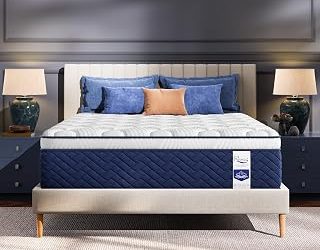
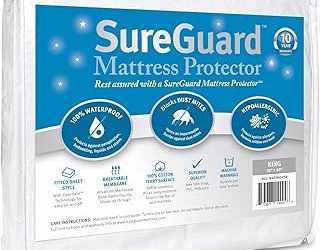
Key takeaways
- Slat gap tolerance: Check your frame before you check the mattress. Gaps wider than three inches will let foam bow between slats over time; if yours are wider, add a bunkie board or a plywood sheet rather than blaming the mattress later.
- Total height and sightlines: A 14-inch mattress on a 12-inch platform puts your surface near 26 inches, which is tall enough to crowd a nightstand lamp and flatten the light it throws. A 10- or 12-inch build usually sits better in a room where you care how the shadows fall.
- Base foam density: The bottom layer does the structural work a box spring used to. Look for a firm high-density support core, generally at least 60 percent of total thickness, so edges stay square and the corners hold under a fitted sheet.
- Heat management: Platform beds close off underside airflow compared to a spring foundation. Gel infusions, copper, graphene covers, and open-cell structures aren’t marketing filler here — they compensate for a base that doesn’t breathe much.
- Certifications and materials: CertiPUR-US confirms foam emissions and content limits; OEKO-TEX covers the fabric side. Fiberglass-free construction is worth confirming explicitly, since it determines whether you can safely remove a cover.
What's inside
Most people meet the platform bed problem the same way: the slats go in, the old innerspring goes on top, and by week two there’s a sag mapping every gap in the frame. A platform bed does the box spring’s job already — it lifts, it spaces, it distributes — so the mattress has to bring its own structural spine instead of borrowing one. I spend my working hours tuning how a room feels after sundown, and the bed is the anchor of that whole composition. A mattress that dips in the middle throws off the visual line of the headboard, the shadow the lamp casts across the duvet, the entire quiet geometry you were trying to build.
This guide covers the mattresses that hold their shape on slats and low-profile frames without any additional foundation. I’ve focused on foam-core builds between 10 and 14 inches, because that range keeps the sleep surface at a height that flatters most platform frames and doesn’t swallow your bedside lighting. Below you’ll find the picks, the specs that actually matter for slatted support, and answers to the questions that come up most.
As an Amazon Associate we earn from qualifying purchases.


🛒 Best Price Today on Amazon
Prime members get fast, free shipping on everything above, plus member-only deals. New members get a 30-day free trial — cancel anytime.
How to Choose a Mattress For Platform Bed Without Box Spring (2026)
- Slat gap tolerance: Check your frame before you check the mattress. Gaps wider than three inches will let foam bow between slats over time; if yours are wider, add a bunkie board or a plywood sheet rather than blaming the mattress later.
- Total height and sightlines: A 14-inch mattress on a 12-inch platform puts your surface near 26 inches, which is tall enough to crowd a nightstand lamp and flatten the light it throws. A 10- or 12-inch build usually sits better in a room where you care how the shadows fall.
- Base foam density: The bottom layer does the structural work a box spring used to. Look for a firm high-density support core, generally at least 60 percent of total thickness, so edges stay square and the corners hold under a fitted sheet.
- Heat management: Platform beds close off underside airflow compared to a spring foundation. Gel infusions, copper, graphene covers, and open-cell structures aren’t marketing filler here — they compensate for a base that doesn’t breathe much.
- Certifications and materials: CertiPUR-US confirms foam emissions and content limits; OEKO-TEX covers the fabric side. Fiberglass-free construction is worth confirming explicitly, since it determines whether you can safely remove a cover.
The Best Mattress For Platform Bed Without Box Spring (2026)s Reviewed
EGOHOME 14″ Queen Memory Foam
This is the most substantial pick here, with a copper-gel layer and a graphene-treated cover that handles the trapped-heat issue platform frames create. The medium-firm profile and dense support base keep the perimeter honest, so the mattress reads as a clean rectangle in the room rather than a slumping mound.
Nectar 12″ Memory Foam
Nectar’s twelve-inch build is the safest recommendation on this list — balanced medium firmness, reliable slat performance, and a trial period long enough to survive a full seasonal swing. The height also sits in the sweet spot for standard platform frames, keeping your bedside light at a useful angle.
Novilla 14″ Gel Memory Foam
A softer, more enveloping feel than the EGOHOME at the same height, with gel infusion doing the cooling work and strong motion isolation for shared beds. Best suited to side sleepers who want contour without giving up structural support underneath.
Vibe 12″ Gel Memory Foam
The most economical way to get a properly supportive foam core onto a slatted frame, and the full size makes it a natural fit for guest rooms or smaller bedrooms. Expect a straightforward medium feel with no unnecessary layers.
EGOHOME 10″ Full with Green Tea Gel
At ten inches this is the low-profile option, ideal when you want the mattress to sit quietly within the frame instead of towering over it. Medium-firm support, fiberglass-free construction, and a green tea gel infusion that keeps things fresh in rooms with limited ventilation.
Frequently Asked Questions
Do I really need to skip the box spring?
Yes. Stacking a box spring on a platform bed raises the surface awkwardly and adds a layer of give the frame was designed to eliminate. Foam mattresses are built to rest directly on a firm, evenly spaced base.
What slat spacing is safe for foam?
Aim for three inches or less between slats. Beyond that, the foam base flexes into the gaps and develops uneven wear that shows up as ridges within a year.
Will a 14-inch mattress overwhelm a low platform frame?
It can. On frames under ten inches tall a 14-inch mattress usually looks proportional; on taller frames it pushes the total height past where most nightstands and reading lamps function well.
How long before a bed-in-a-box mattress is ready?
Most expand usable within a few hours and reach full loft in 24 to 72 hours. Let it air in a ventilated room during that window to clear the initial off-gassing smell.
Final Thoughts
For most platform beds, the Nectar 12″ is the pick I’d default to — the height is proportionate, the support core is dependable on slats, and the trial removes the guesswork. If heat retention is your main concern, the EGOHOME 14″ with its copper and graphene cooling stack is the stronger choice, while the EGOHOME 10″ Full is the one to reach for when you want the bed to sit low and let the rest of the room breathe.