Key takeaways
- Zipper lock quality: Look for a six-sided design with a micro-zipper or tuck-flap closure. A single broken tooth defeats the entire purpose — the best encasements use reinforced polyester zippers that resist snagging over hundreds of wash cycles.
- Waterproof membrane type: Thermoplastic polyurethane (TPU) outperforms older PVC layers in breathability while still blocking liquids entirely. PVC tends to trap body heat and creates that crinkly, synthetic noise that disrupts a calm sleep setting.
- Fabric weight and hand-feel: A 100 GSM or higher fabric drapes quietly over the box spring and won’t rustle. Thinner 60–70 GSM covers are lighter but transmit every sound, which matters if you design your bedroom around stillness the way I do.
- Allergen certification: True dust-mite-proof encasements use a pore size under 10 microns. Check for independent lab testing rather than relying on in-house claims — a labeled pore size or mention of OEKO-TEX or similar third-party verification adds real credibility.
- Fit and depth tolerance: Measure your box spring before purchasing. Standard queen box springs vary from 9 to 11 inches in height; a tight fit eliminates bunching at the corners, which is both an aesthetic problem and a potential gap where bed bugs could slip through.
What's inside
Shopping for a bed bug box spring encasement can feel like navigating a maze of nearly identical claims: every listing promises to be “the one,” yet fabric thickness, zipper construction, and actual waterproof integrity vary wildly once the packaging is opened. A poorly chosen encasement doesn’t just fail to protect — it changes how your bed sounds when you shift at night, how cool or clammy the surface feels, and whether that 2 a.m. stillness you’ve been chasing actually arrives.
As someone who designs sleep environments for a living, I evaluate encasements the same way I evaluate every element in a bedroom: does it support the atmosphere without becoming a distraction? This guide breaks down six leading options, ranks five in detailed reviews, and gives you a clear framework for choosing the right one based on material science, not marketing fluff.
As an Amazon Associate we earn from qualifying purchases.




🛒 Best Price Today on Amazon
Prime members get fast, free shipping on everything above, plus member-only deals. New members get a 30-day free trial — cancel anytime.
How to Choose a Bed Bug Box Spring Encasement (2026)
- Zipper lock quality: Look for a six-sided design with a micro-zipper or tuck-flap closure. A single broken tooth defeats the entire purpose — the best encasements use reinforced polyester zippers that resist snagging over hundreds of wash cycles.
- Waterproof membrane type: Thermoplastic polyurethane (TPU) outperforms older PVC layers in breathability while still blocking liquids entirely. PVC tends to trap body heat and creates that crinkly, synthetic noise that disrupts a calm sleep setting.
- Fabric weight and hand-feel: A 100 GSM or higher fabric drapes quietly over the box spring and won’t rustle. Thinner 60–70 GSM covers are lighter but transmit every sound, which matters if you design your bedroom around stillness the way I do.
- Allergen certification: True dust-mite-proof encasements use a pore size under 10 microns. Check for independent lab testing rather than relying on in-house claims — a labeled pore size or mention of OEKO-TEX or similar third-party verification adds real credibility.
- Fit and depth tolerance: Measure your box spring before purchasing. Standard queen box springs vary from 9 to 11 inches in height; a tight fit eliminates bunching at the corners, which is both an aesthetic problem and a potential gap where bed bugs could slip through.
The Best Bed Bug Box Spring Encasement (2026)s Reviewed
Hospitology Products Box Spring Encasement
The Hospitology Sleep Defense System is the benchmark most competitors are measured against. Its 100 GSM polyester face fabric feels substantial without adding heat, and the six-sided zippered design seals completely with a fabric-over-zipper flap that eliminates the hair-thin gap cheaper models leave exposed. If you want an encasement that disappears visually and thermally inside a well-styled bedroom, this is the one I specify most often for clients.
SureGuard Queen Box Spring Encasement
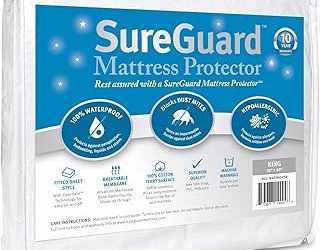
SureGuard’s queen-sized cover brings a genuinely waterproof TPU membrane to a price point where most rivals still use basic polyester. The result is a six-sided barrier that handles spills and perspiration without the plasticky texture that ruins a bed’s quiet, layered feel. It fits snugly on standard 9-inch box springs and stays put under fitted sheets without corner bunching — a detail that matters when clean lines are part of your design language.
Linenspa Zippered Waterproof Box Spring Encasement
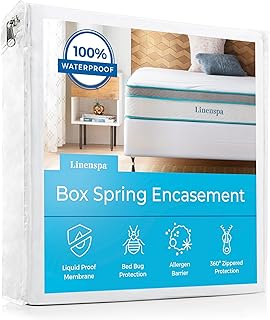
Linenspa delivers a 360-degree zippered enclosure that punches above its budget-friendly price. The fabric is thinner than premium competitors, which makes it easier to install but also means it picks up more ambient noise when the bed is disturbed. For guest rooms or secondary beds where occasional use doesn’t demand heirloom-grade materials, the Linenspa is a practical and unobtrusive choice.
Guardmax Premium Box Spring Cover
Guardmax uses a six-sided absorbent exterior paired with a waterproof inner barrier, creating a dual-layer system that wicks moisture before it pools on the surface. The fit runs slightly generous, so it accommodates deeper box springs without stretching the seams tight — an advantage for newer, thicker foundations. It reads as a clean, matte surface that doesn’t fight against neutral bedroom palettes.
Utopia Bedding Bed Bug Encasement
Designed to fit mattresses up to 12 inches deep rather than box springs specifically, the Utopia Bedding encasement fills a niche for renters or anyone who needs a single six-sided protective layer without buying two separate products. The fabric is fully washable and the zipper lock is functional if not exceptional. Its versatility makes it a smart pick for temporary setups where permanence isn’t the priority.
Frequently Asked Questions
Do I need to encase both the mattress and the box spring?
Yes. Bed bugs colonize both surfaces independently, and an encasement on only one leaves the other exposed. For complete protection, seal every upholstered component of the bed frame in its own zippered cover.
How long does a quality encasement typically last?
A well-made encasement with a reinforced zipper and TPU membrane should maintain its structural integrity for three to five years of regular use, assuming you follow the manufacturer’s washing instructions and avoid fabric softeners that degrade waterproof layers over time.
Will an encasement change the feel or height of my bed?
A quality encasement adds negligible thickness — usually under two millimeters. It won’t alter mattress firmness or visual proportions. The only noticeable difference, if you choose a well-constructed model, is a quieter, more sealed sleep surface.
Can I remove the encasement to wash it easily?
Most zippered encasements are designed for removal and machine washing, though the process takes more effort than stripping a fitted sheet. Plan on washing every three to six months in warm water and tumble-drying on low heat to preserve the waterproof membrane.
Final Thoughts
After evaluating construction, material quality, and real-world performance, the Hospitology Products encasement remains the strongest overall pick for queen beds, with the SureGuard queen as a close runner-up that adds true waterproofing at a competitive price. For budget-conscious buyers or temporary living situations, the Linenspa offers reliable protection without overspending. Any of these three will quietly do its job — which, in sleep environment design, is the highest compliment a product can earn.