Key takeaways
- Light output and color temperature: A fan that pulls double duty as your primary light source needs a panel capable of at least 1,800 lumens with selectable CCT (ideally 2700K–6500K). Fixed cool-white LEDs are a dealbreaker for living spaces where warmth matters.
- Motor type and noise floor: Brushed DC motors run at roughly 30 dB—quieter than a library. If this fan is going into a bedroom or nursery, anything with audible hum at low speed is a non-starter. AC motors are cheaper but thicker-sounding and less efficient.
- Mounting profile and ceiling height: Standard 8-foot ceilings call for flush or hugger mounts to maintain safe clearance. If your room is larger, a downrod mount moves air more efficiently by positioning the blades higher in the convection cycle.
- Control ecosystem: Remote-only fans are the baseline in 2026. Smart-home integration—Alexa, Google Assistant, proprietary apps—adds genuine convenience if you already live in that ecosystem, but introduces another device to maintain if you don’t.
- Blade material and blade count: ABS and plywood blades resist warping in humid spaces like covered patios. Five blades provide a balance between airflow volume and visual weight; more blades push air less aggressively but move it more evenly.
What's inside
Picking a 42-inch ceiling fan with light is deceptively tricky. The wrong choice fills your room with a cold, institutional glare and an underwhelming breeze, while the right one can anchor a space’s entire mood—casting a warm wash across your dining table or keeping a bedroom sanctuary perfectly still and softly lit. Most shoppers default to whatever’s cheapest or most familiar, only to regret it once the fixture is wired in and the scaffolding is gone.
This guide cuts through the noise. I evaluated six of the most talked-about 42-inch fan-light combos through the lens of light quality, motor refinement, design coherence, and real-world installability. Each pick here earns its place for a specific reason, whether that’s a near-silent DC motor, tunable color temperature, or a flush-mount profile that actually looks intentional rather than like an afterthought.
As an Amazon Associate we earn from qualifying purchases at no extra cost to you. Product prices and availability are accurate as of the date shown and are subject to change.




🛒 Best Price Today on Amazon
Prime members get fast, free shipping on everything above, plus member-only deals. New members get a 30-day free trial — cancel anytime.
How to Choose a 42-Inch Ceiling Fan With Light (2026)
- Light output and color temperature: A fan that pulls double duty as your primary light source needs a panel capable of at least 1,800 lumens with selectable CCT (ideally 2700K–6500K). Fixed cool-white LEDs are a dealbreaker for living spaces where warmth matters.
- Motor type and noise floor: Brushed DC motors run at roughly 30 dB—quieter than a library. If this fan is going into a bedroom or nursery, anything with audible hum at low speed is a non-starter. AC motors are cheaper but thicker-sounding and less efficient.
- Mounting profile and ceiling height: Standard 8-foot ceilings call for flush or hugger mounts to maintain safe clearance. If your room is larger, a downrod mount moves air more efficiently by positioning the blades higher in the convection cycle.
- Control ecosystem: Remote-only fans are the baseline in 2026. Smart-home integration—Alexa, Google Assistant, proprietary apps—adds genuine convenience if you already live in that ecosystem, but introduces another device to maintain if you don’t.
- Blade material and blade count: ABS and plywood blades resist warping in humid spaces like covered patios. Five blades provide a balance between airflow volume and visual weight; more blades push air less aggressively but move it more evenly.
The Best 42-Inch Ceiling Fan With Light (2026)s Reviewed
Fanbulous 42-Inch Low Profile Ceiling Fan
This is the pick for anyone who wants the room to feel like it was designed, not assembled. The stepless dimming LED lets you slide from candlelit amber to full task brightness without that jarring jump that cheaper panels make. The flush-mount profile sits tight to the ceiling, making it ideal for rooms under eight feet where you need every inch of headroom. The app control and memory function are polished touches that show Fanbulous is thinking about how people actually use light day to day.
Sofucor 42-Inch Smart Ceiling Fan
For smart-home devotees, the Sofucor is the most fluent option here. It responds natively to Alexa, Google Assistant, and a dedicated app—no third-party bridge required. The five ABS blades are practically silent at speed two, and the six-speed DC motor lets you dial in exactly how much circulation you need without the clunky three-speed toggle that still plagues many competitors. Timer integration is seamless, which matters when you want the fan to cool the room before bed and then shut off on its own.
Hunter Builder 42-Inch Indoor Ceiling Fan
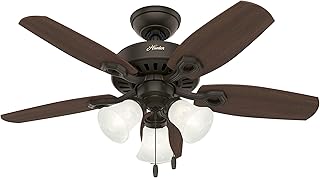
Hunter has earned its reputation the old-fashioned way: by making fans that simply last. The Builder’s New Bronze finish reads warm and timeless rather than trendy, and the included LED bulbs are a rare convenience that saves a trip to the hardware store. The pull-chain control feels refreshingly low-tech in a market obsessed with apps—and for a guest bedroom or basement, that reliability is genuinely the right call. Five wood-tone blades move air steadily without drawing attention to themselves.
42-Inch Flush Mount Ceiling Fan with Remote (White)
This no-name contender punches well above its price bracket. The 3CCT dimmable panel covers warm white through daylight, the noiseless DC motor is legitimately imperceptible at low speeds, and the ETL listing means it meets real safety standards for damp-rated outdoor use. If you need a clean white fan for a patio, laundry room, or minimalist bedroom and don’t want to overthink it, this is the one.
POCHFAN 42-Inch Brushed Nickel Flush Mount Fan
The brushed nickel finish on this POCHFAN elevates a budget flush-mount into something that actually complements modern hardware. It’s ETL-rated, six-speed adjustable, and dimmable—essentially every checkbox a renter or first-time homeowner needs without paying for smart features they’ll never use. The reversible motor is a practical bonus for seasonal airflow changes.
Frequently Asked Questions
Is 42 inches too small for a living room?
Not necessarily. For rooms under 144 square feet—a common living room dimension in apartments and townhomes—a 42-inch fan is perfectly proportioned. Oversizing a fan in a smaller room creates turbulence rather than comfort and makes the ceiling feel cramped.
What’s the difference between a flush mount and a standard mount?
Flush (hugger) mounts attach directly to the ceiling with no downrod, keeping the fan within 10 inches of the surface. Standard mounts use a downrod to drop the fan lower, which improves airflow in rooms with higher ceilings but requires at least seven feet of clearance beneath the blades.
Do DC motor fans really save energy?
Yes. DC motors consume roughly 60 to 70 percent less electricity than comparable AC motors while delivering the same airflow at the highest speeds. Over a full summer of nightly use, that difference adds up noticeably on your utility bill.
Can I install a ceiling fan on a sloped ceiling?
Most of the fans reviewed here can accommodate slopes up to 15 to 20 degrees with an optional angled-mount adapter. Check the manufacturer’s specification—installing on a steeper pitch without the correct hardware risks wobble and premature motor wear.
Final Thoughts
If I had to narrow it down, the Fanbulous takes the overall crown for its combination of light quality, quiet operation, and thoughtful design. The Sofucor wins for smart-home integration, and the Hunter Builder remains the most dependable pick for anyone who values longevity over features. Any of these three will transform a room’s atmosphere—just make sure the mount style matches your ceiling height before you buy.