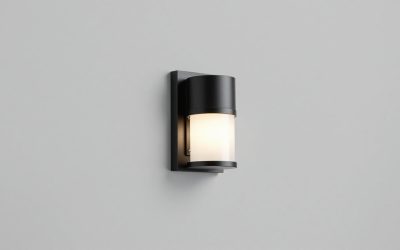
Most fan-and-light combos were designed by an engineer solving for airflow, not by anyone thinking about how a room feels after sunset. Bolt one to the ceiling and you get a single bright disc floating dead center overhead — a glare source at exactly the height your eye travels, throwing hard blade shadows across the walls and flattening every carefully chosen texture in the room. If you’ve already invested in table lamps, sconces, a picture light, or dimmable cans on a scene controller, a stock light kit doesn’t add to that scheme. It overrides it.
That’s the case for a fan with no light at all: let the fan move air, and let your lighting layers do the mood work. This guide covers the specs that actually matter when the fixture isn’t doing double duty — motor type and noise floor, blade finish and how it bounces or absorbs the light you already have, mounting drop, and control method. We’ve reviewed genuinely light-free models alongside a couple of low-profile fans with fully dimmable, tunable light in case you want the option held in reserve rather than removed entirely.
Our top picks
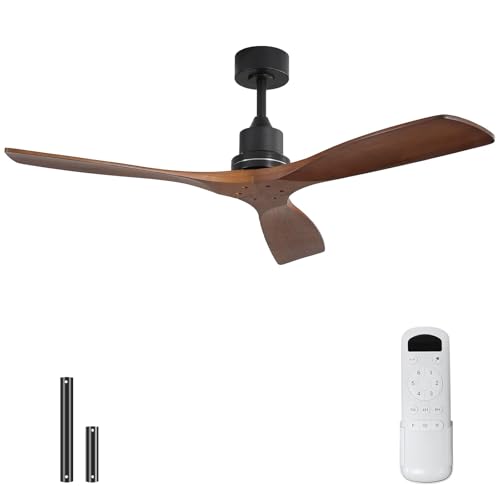 Sofucor 52 Inch Wood Ceiling Fan No
- Modern & Versatile Ceiling Fan without Lights: Sofucor…
- Silent DC Motor: Experience unmatched comfort with Sofucor…
- 6 Wind Speeds: Personalize your airflow from gentle…



As an Amazon Associate we earn from qualifying purchases at no extra cost to you.
🛒 Best Price Today on Amazon
Prime members get fast, free shipping on everything above, plus member-only deals. New members get a 30-day free trial — cancel anytime.
How to Choose a Ceiling Fan No Light (2026)
- Blade finish and reflectance: Matte walnut and brown wood tones drink up light and read as a warm silhouette against the ceiling. Snow white blades reflect ambient light back down and visually disappear on a white ceiling — the better choice if your room is already dim.
- Motor type and noise floor: DC motors run quieter and offer six or more speeds, which matters at night when the fan is the only sound in the room. AC motors are simpler and cheaper but usually give you three speeds and a bit more hum.
- Mounting drop versus shadow throw: The closer the blades sit to the ceiling, the softer the shadow they cast from your uplights and cove fixtures. Flush and low-profile mounts are ideal under 9-foot ceilings; save downrods for tall or sloped ceilings where airflow needs the drop.
- Control method: A remote or app keeps your wall plate free for a dimmer, which is exactly what you want when the fan isn’t carrying the lighting load. Pull chains are dependable and cost nothing extra, but they commit you to walking under the fan.
- Blade span and location rating: Match roughly 44 inches for a bedroom, 52 inches for a living room, and 60 inches for open-plan or vaulted spaces. Covered patios and porches need a damp-rated fan; indoor-only models will warp and corrode outside.
The Best Ceiling Fan No Light (2026)s Reviewed
Sofucor 52-Inch Wood Ceiling Fan, No Light
Three wide wooden blades on a quiet reversible DC motor with six speeds and remote control, rated for covered outdoor use. The warm brown finish reads as furniture rather than hardware, and with no light kit interrupting the plane, it lets wall sconces and lamplight define the room’s edges undisturbed.
60-Inch Wood Ceiling Fan Without Light (Walnut)
The pick for open-plan rooms, tall ceilings, and vaulted or sloped installs where a 52-inch fan looks undersized and moves too little air. The deep walnut blades sit as a low-contrast shape overhead, which keeps a big fan from becoming the thing you notice first.
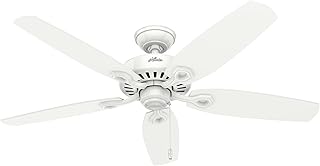
Hunter Builder Elite 52-Inch, Snow White
A five-blade, pull-chain workhorse from a brand that has been building fans for over a century — no remote to lose, no receiver to fail. Snow White blades on a white ceiling effectively vanish and gently bounce ambient light, making this the most visually discreet option here.
DREO 42-Inch Low Profile with Light
If you want light available but not imposed, this is the compromise: a 22dB DC motor, six speeds, and a dimmable 5CCT panel that tunes from warm to cool and drops low enough to sit in the background. At 42 inches with a flush mount, it suits smaller bedrooms and lower ceilings.
TCL 52-Inch White Low Profile with Light & Remote
A flush-mount, five-blade fan with a quiet six-speed reversible DC motor and a dimmable LED that pulls back to near-nothing when your lamps take over. The white housing and low silhouette make it a clean choice for bedrooms, living rooms, and garages alike.
Frequently Asked Questions
Will a fan with no light make my room too dark?
Only if the fan was your sole light source. Two or three lamps at seating height, or a pair of sconces, will light a living room more evenly and far more flatteringly than one overhead disc ever did.
Are light-free fans quieter?
Not inherently — the motor decides that. What they do avoid is the buzz of an integrated LED driver and the rattle of a glass shade, both common noise sources in combo fixtures.
Can I add a light later?
Many fans accept a manufacturer-specific light kit, but availability varies by model, so check before you buy. A dimmable model like the DREO or TCL is the safer route if you’re undecided.
Why do I see flicker from my fan?
Blades passing under a bright downlight create a strobing shadow. Move the fan away from direct downlights, or shift toward wall-washing and lamp light, and the effect disappears.
Final Thoughts
For most rooms, the Sofucor 52-inch wood fan strikes the best balance of quiet DC performance, remote control, and a warm finish that stays out of your lighting scheme’s way. Choose the Hunter Builder Elite if you want the most discreet, no-electronics option, or step up to the 60-inch walnut fan for large, open, or sloped-ceiling spaces.