Key takeaways
- Beam shape before brightness: A flood pattern that spreads evenly across a two-foot area beats a tighter, higher-lumen hotspot for engine bay work. Reserve narrow beams for peering down cylinder walls or into transmission tunnels.
- Color temperature and rendering: Look for roughly 5000K to 6000K neutral daylight. Cooler light keeps fluid colors readable, so you can distinguish pink coolant from red ATF and clean oil from contaminated.
- Glare management: A frosted or diffused lens softens the source and reduces the reflective flare you get off chrome, aluminum, and wet surfaces. Bare, undiffused emitters look impressively bright and are genuinely harder to work under.
- Mounting freedom: Magnets, hooks, and pivoting heads determine whether you can aim light across a surface rather than straight at it. Grazing angles reveal texture, cracks, and leaks that head-on lighting flattens out.
- Honest runtime: Prefer a battery gauge or digital percentage display over a three-LED guess, and confirm the light holds usable output on its mid setting for a full job rather than dimming after twenty minutes.
What's inside
Most garages are lit for storage, not for work. A pair of fixtures bolted to the ceiling throws light down onto the top of your head and your shoulders, which means the moment you lean into an engine bay or slide under a bumper, your own body becomes the largest object blocking the beam. The result is a workspace with plenty of ambient brightness and almost no usable light exactly where your hands are. Add the hard, high-contrast shadows that a single overhead source produces, and small details like a hairline coolant weep or the orientation of a spring clip simply disappear into black.
This guide looks at portable mechanics work lights the way a lighting designer would evaluate any fixture: not by the number printed on the box, but by beam shape, glare control, color quality, and how easily the source can be repositioned to sit level with the task instead of above it. Below are six current options, followed by the specifications that actually change what you can see and a few answers to questions that come up often.
As an Amazon Associate we earn from qualifying purchases at no extra cost to you. Product prices and availability are accurate as of the date shown and are subject to change.



🛒 Best Price Today on Amazon
Prime members get fast, free shipping on everything above, plus member-only deals. New members get a 30-day free trial — cancel anytime.
How to Choose a Mechanics Work Light (2026)
- Beam shape before brightness: A flood pattern that spreads evenly across a two-foot area beats a tighter, higher-lumen hotspot for engine bay work. Reserve narrow beams for peering down cylinder walls or into transmission tunnels.
- Color temperature and rendering: Look for roughly 5000K to 6000K neutral daylight. Cooler light keeps fluid colors readable, so you can distinguish pink coolant from red ATF and clean oil from contaminated.
- Glare management: A frosted or diffused lens softens the source and reduces the reflective flare you get off chrome, aluminum, and wet surfaces. Bare, undiffused emitters look impressively bright and are genuinely harder to work under.
- Mounting freedom: Magnets, hooks, and pivoting heads determine whether you can aim light across a surface rather than straight at it. Grazing angles reveal texture, cracks, and leaks that head-on lighting flattens out.
- Honest runtime: Prefer a battery gauge or digital percentage display over a three-LED guess, and confirm the light holds usable output on its mid setting for a full job rather than dimming after twenty minutes.
The Best Mechanics Work Lights (2026) Reviewed
5000mAh Magnetic Folding Work Light, 1200 Lumens
The folding body and 360-degree rotating head make this the most flexible aiming platform of the group, letting you set a shallow raking angle across a valve cover or fender seam where flatter fixtures can only stare straight down. At 1200 lumens it is the gentlest option here, which is a genuine advantage in tight, reflective spaces.
2-Pack Aluminum Work Light, 1500 Lumens with Digital Display
Two lights let you build proper cross-lighting, with a key source on one side and a softer fill on the other to lift shadows without washing out detail. The aluminum housing sinks heat well enough to hold output, and the digital percentage readout removes the guesswork about whether you can finish the job.
3000LM Magnetic Work Light Bar, 5200mAh (Green)
A bar-shaped emitter behaves like a linear fixture, spreading soft, even coverage along the length of an engine bay instead of punching one bright circle into it. This is the shape I would reach for first on any under-hood job that takes more than a few minutes.
Ropelux 3rd Gen, 3200LM with 6000mAh
The largest battery here paired with a bar-format diffused output makes this the endurance pick for long diagnostics and roadside work. Hooks plus magnets mean you can suspend it from the hood lip and let it light the whole bay hands-free.
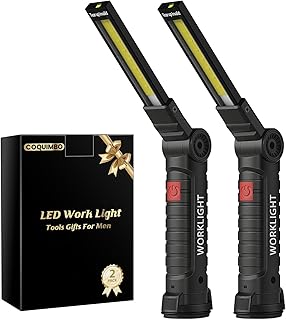
Coquimbo 2-Pack Rechargeable Work Light with Magnetic Base and Hook
A compact, dual-purpose pair that migrates easily from the garage to a grill, a crawlspace, or a stalled car. Output is modest, but the magnetic base and hook combination makes them the easiest lights in this roundup to simply stick somewhere useful and forget about.
Frequently Asked Questions
How many lumens do I really need?
For most under-hood and undercarriage work, 1200 to 3000 lumens from a diffused source is plenty. Beyond that, poor beam control and glare become the limiting factor rather than raw output.
Is warm or cool light better for mechanical work?
Cool. Neutral daylight around 5000K to 6000K preserves color accuracy for fluids, wire insulation, and corrosion, whereas warm light muddies reds, oranges, and browns together.
Will the magnets damage paint or bodywork?
Magnets themselves are safe, but trapped grit between the base and a painted surface will scratch it. Wipe both faces before mounting, and prefer the hook on visible panels.
Can these work as portable household lighting?
Yes, and they are surprisingly useful during outages or for lighting a closet, attic, or patio table. The compact two-packs adapt best to non-garage use.
Final Thoughts
If you want one light to handle most jobs, the 3000LM Magnetic Work Light Bar delivers the broad, even coverage that engine bay work actually rewards, while the Ropelux 3rd Gen adds the biggest battery for long sessions and roadside emergencies. Pair either with the 2-Pack Aluminum 1500-lumen set when you want true cross-lighting and a spare that lives in the trunk.