A pitched ceiling changes the physics of a room. Gravity still pulls a pendant straight down, but the ceiling plane no longer meets it at a right angle, so a standard flush mount leaves a wedge-shaped gap on the high side and a stem-mounted fixture hangs visibly crooked. Recessed cans behave even worse: drop a fixed downlight into a 6/12 pitch and the beam leaves the aperture at an angle, smearing light up the wall instead of onto the floor, while the exposed lamp sits in your line of sight from across the room. The result is a space that reads bright and uncomfortable at the same time, with hot scallops on one wall and dead shadow under the loft.
Solving it is mostly about geometry and glare control rather than raw lumens. This guide breaks down the four fixture types that actually work on a slope, canless sloped-housing downlights, gimbal and eyeball trims, semi-flush mounts built with an angled canopy, and rotatable track heads, then reviews the strongest 2026 options for each. You’ll also find the specs worth checking before you buy: tilt range, cutoff angle, CRI, dimming floor, and whether the trim can be retrofitted into cans you already have.
Our top picks


As an Amazon Associate we earn from qualifying purchases at no extra cost to you.
🛒 Best Price Today on Amazon
Prime members get fast, free shipping on everything above, plus member-only deals. New members get a 30-day free trial — cancel anytime.
How to Choose a Light For Slanted Ceiling (2026)
- Match the tilt to your pitch: Measure your roof slope before shopping. Most sloped housings and gimbals correct up to roughly 30 to 45 degrees; a cathedral ceiling steeper than that needs a dedicated sloped trim or a track head that swivels freely.
- Prioritize glare cutoff over brightness: On a slope, the aperture points toward eye level. Look for deep-regressed lenses, baffled trims, or anti-glare optics so you see the pool of light, not the diode array.
- Use selectable CCT to keep planes consistent: A 5-CCT switch lets you match new fixtures to existing lamps and tune the room, 2700K for a warm loft bedroom, 3500K to 4000K for a kitchen work plane under the same vault.
- Check the dimming floor, not just “dimmable”: A fixture that bottoms out at 20 percent is useless for evening ambience. Look for 5 to 10 percent minimums and confirm compatibility with your dimmer to avoid flicker at low output.
- Decide retrofit versus canless early: If you have existing 5 or 6 inch cans, a rotatable retrofit module is the fastest fix. New construction or bare joist bays call for an IC-rated canless unit with a junction box included.
The Best Light For Slanted Ceiling (2026)s Reviewed
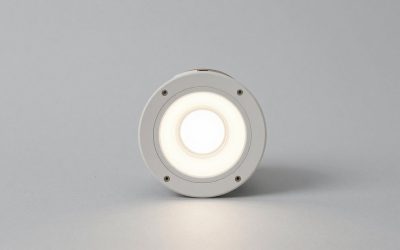
Maxxima 4″ Canless Sloped Anti-Glare LED Downlight
This is the purpose-built answer: the housing itself is angled so the 1000-lumen beam drops vertically even on a pitched plane, and the anti-glare optic keeps the source hidden from normal sightlines. At 90 CRI with five color temperatures and IC rating for insulation contact, it’s the cleanest new-install option for vaulted living rooms and sloped hallways.
Maxxima 5″ & 6″ Rotatable LED Retrofit Gimbal
If you already have cans in a slope, this retrofit gimbal is the least invasive upgrade, twisting into the existing socket and rotating to correct the angle. The black trim visually recesses the aperture, which does more for glare control on a high ceiling than most people expect, and 1150 lumens from 11 watts covers general lighting.
Ensenior 4 Inch Gimbal LED Recessed Light (4 Pack)
With 90 degrees of tilt and full 360 degree swivel, these are the most aimable trims here, which makes them ideal for washing a sloped wall or grazing stonework around a fireplace. The 5 to 100 percent dimming range is the standout spec, giving you real low-end ambience, and the damp rating covers covered porches and bathrooms.
Industrial Black Semi Flush Mount Ceiling Light (2-Light)
Semi-flush is the right call when you want a visible fixture rather than hidden apertures, and this two-light farmhouse design mounts cleanly on a slope without the crooked hang of a pendant. Best over a breakfast table or in an entry where the fixture is part of the composition.
LED 2 Light Track Lighting Kit
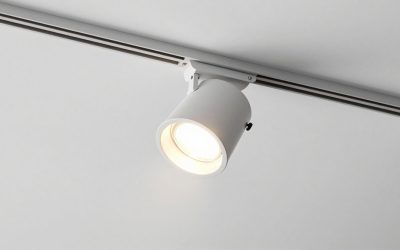
Track is the most forgiving solution on an awkward pitch: one mounting run, two independently rotatable heads, and the ability to re-aim later as furniture moves. The GU10 sockets take bulbs unbundled, so you control beam spread and color yourself, which is a real advantage for accent work.
Frequently Asked Questions
Can I use regular recessed lights on a slanted ceiling?
Not well. A fixed downlight in a sloped ceiling aims perpendicular to that plane, throwing light sideways and exposing the diodes. Use a sloped housing or a gimbal trim that lets you re-aim the beam to true vertical.
How many fixtures do I need on a vaulted ceiling?
Higher ceilings mean beams spread wider before they land, so plan on fewer fixtures spaced further apart than in an eight-foot room, roughly 4 to 6 feet on center for 4 inch trims at 10 to 12 feet of height.
What color temperature works best under a slope?
Warmer light flatters angled surfaces because it softens the contrast between the high and low sides. Start at 2700K to 3000K for bedrooms and lofts, and step up to 3500K to 4000K only where task visibility matters.
Are canless fixtures safe against insulation?
Only if they carry an IC rating, which the Maxxima sloped downlight does. That certification means the unit can sit in direct contact with attic insulation without a thermal clearance gap.
Final Thoughts
For a new install on a true pitch, the Maxxima 4″ Canless Sloped Anti-Glare Downlight is the most refined choice, correcting the angle in the housing rather than asking a trim to compensate. If you’re working with existing cans, the Maxxima 5″ & 6″ Rotatable Retrofit Gimbal solves the problem in minutes, and the Ensenior 4 Inch Gimbal four-pack is the value play when you need multiple aimable trims with genuinely low dimming. For rooms where placement is still in flux, either track kit keeps every option open.