Key takeaways
- Compare motif size, repeat and visible curtain width with a crop worksheet before choosing patterned curtains for a narrow window.
What's inside
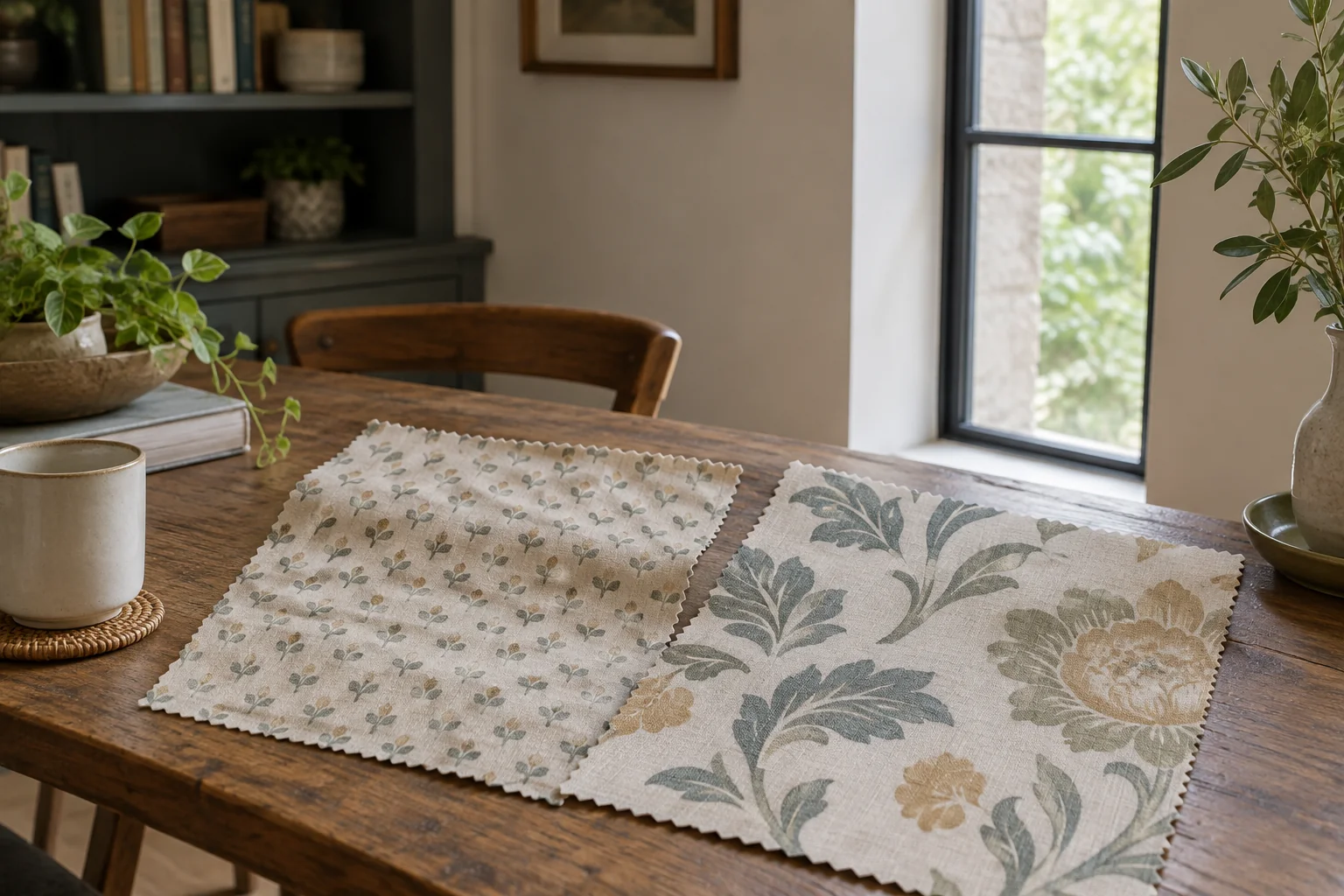
Choose a curtain pattern for a narrow window by comparing the size of the motif with the visible curtain area, both gathered and closed. A small window does not automatically need a tiny print. The useful question is whether the part of the design you like remains recognizable after folds, seams and the center opening interrupt it.
A product photograph usually shows a styled expanse of fabric. Your window may reveal only a narrow column when the curtains are open. Use a repeat-and-crop worksheet before ordering, especially when a large flower, animal or geometric medallion is the reason you like the fabric.
Separate motif size from repeat size
A motif is an individual visible element, such as a leaf or diamond. A repeat describes how the design recurs across the fabric. Record both where the seller provides them. A large repeat can contain several small motifs, so the repeat measurement alone does not tell you how bold the fabric will look.
Ask whether the listed repeat is horizontal, vertical or both. Also note whether adjacent rows are offset. You do not need to become a pattern designer, but you do need to know whether two narrow panels are likely to show equivalent parts of the design. Do not assume a pair of ready-made curtains is pattern-matched unless the seller says so.
Measure the area people will actually see
Record the curtain’s intended finished drop and the visible width of each side when open. Then record how much area each panel covers when closed. Keep these observations separate from flat fabric width and the heading’s fullness calculation. More fabric creates more folds; it does not guarantee that every printed element will remain visible.
| Detail | What to record | Question it answers |
|---|---|---|
| Largest motif | Approximate width and height from a scaled sample | Will one element dominate the narrow column? |
| Pattern repeat | Horizontal and vertical measurements | Where will the design recur? |
| Open curtain | Visible gathered width on each side | What remains visible most of the day? |
| Closed curtain | Visible area and center meeting line | Will the design be interrupted where you notice it? |
| Ordering detail | Pattern matching and sample scale confirmed | Is the preview representative? |
Add the actual fabric name and colorway. Two fabrics with similar photographs may have different motif scales. Save the supplier’s measurements rather than relying on a screenshot that can be resized without warning.
Make a scaled crop before judging color
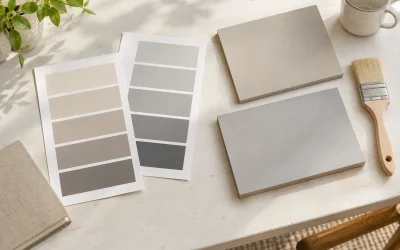
Spoonflower’s design-preview guidance distinguishes digital previews from physical proofs. Its preview rulers help show scale, while a physical swatch checks color, scale and layout on the chosen material. The company also notes that fabric widths vary. Those details explain why a screen image alone is a weak basis for judging a narrow curtain.
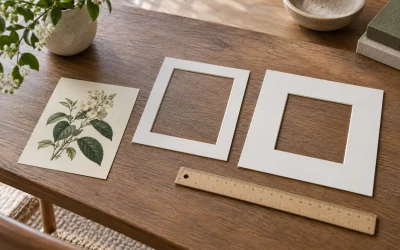
For your own mockup, draw the open curtain’s visible outline on paper. Use a supplier-approved scaled image or a physical sample to compare a portion of the design within that outline. Do not stretch the pattern to make it fit. If printing, include a known reference measurement and check it with a ruler after printing.
A small swatch may show color accurately while missing the largest motif entirely. Ask which part of the repeat a sample contains and whether a larger sample is available. A plain corner of an oversized botanical design cannot answer how the whole design will look.
A worked comparison for a narrow window
In this illustrative room, each open curtain forms a visible column about 18 centimeters wide. Fabric A has an approximately 4-centimeter motif; Fabric B has a 24-centimeter flower. The household draws an 18-centimeter paper opening and views the samples behind it. This is a visual screening exercise, not a simulation of the finished pleats.
The large flower is partly cropped even before gathering. That might be attractive if the desired effect is broad areas of color. It is less suitable if the buyer wants every flower clearly visible. The smaller motif remains recognizable in several positions, but it looks busier beside an already patterned chair. Neither result makes one fabric objectively better.
The household chooses Fabric B only after seeing a larger sample loosely folded to resemble the intended heading. It accepts the partial flowers and asks the maker how the two panels will be cut. The useful decision is an informed preference, not a rule that narrow windows always require small patterns.
Check the center opening and top edge
View the closed pair as two separate pieces. A strong stripe or central emblem may look interrupted where the panels meet. Ask a custom maker whether matching at that position is possible, what extra material it needs and whether the chosen heading changes the effect. Keep that answer with the quote.
At the top, folds or heading construction may conceal a band of the design. At the bottom, a hem can remove part of a motif. If those details are important, request a drawing or sample showing the finished treatment. Do not calculate cutting lengths from the visible repeat alone; seam allowances and the maker’s matching method also matter.
Approve the pattern in the room
Compare samples beside the wall, trim and nearby upholstery in the light normally used there. Review both open and closed appearances, then record the exact fabric, heading and matching agreement. This gives the order a clear reference if a substituted colorway or scale is offered later.
Keep the final decision simple: the pattern should look intentional in the amount of fabric your room actually reveals. A well-chosen crop can be more satisfying than a complete motif, provided it is a choice you have seen and accepted before purchase.