Key takeaways
- Plan brass and chrome finishes with an inventory of fixed hardware, a focal-point check and a small sample trial before buying accessories.
What's inside
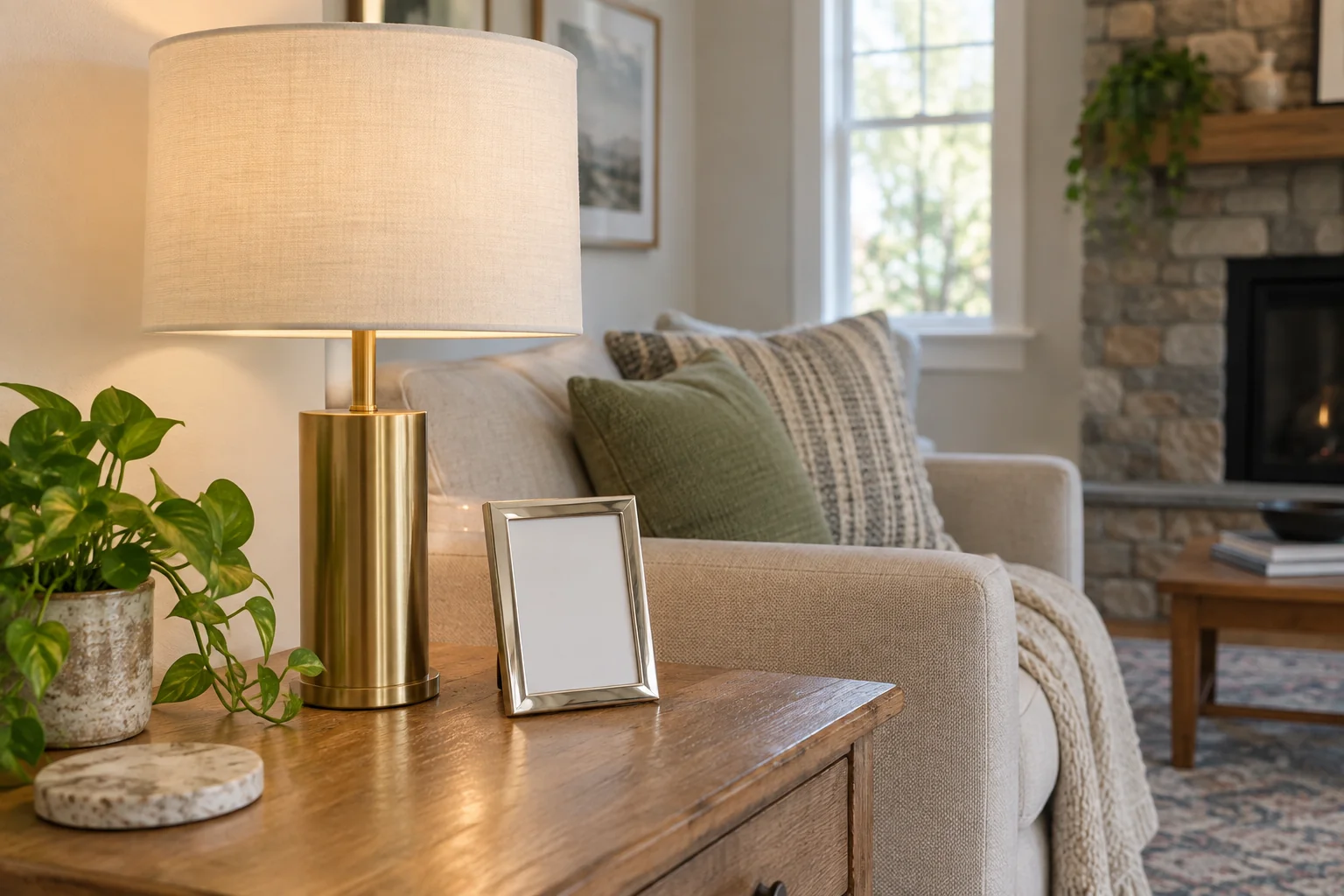
Brushed brass and chrome can share a room when their placement looks deliberate. Start with the finishes already attached to the room, choose which pieces should attract attention, and repeat the second finish where it makes visual sense. Counting metal objects alone is misleading: a large chrome mirror can dominate five small brass handles.
This guide uses a finish inventory and a small arrangement trial. It does not require replacing working hardware or following a fixed percentage rule. The useful result is a short shopping brief that describes the finish, sheen and location of the one item you actually need.
List the fixed pieces before adding decorative ones
Walk around the room and separate fixtures from movable accessories. Door handles, built-in cabinet pulls and installed lighting are harder to change than a frame or tray. Record the visible finish rather than guessing the underlying metal. A brass-colored coating is not necessarily solid brass, and that distinction matters when choosing cleaning products.
For each fixed item, note whether it is prominent from the doorway, only visible nearby, or usually hidden. Look from your normal seat as well. A polished fitting that seems minor in daylight may become the brightest reflection beside an evening lamp.
Keep installation decisions separate from styling. Do not loosen electrical fittings or substitute hardware simply to test a color. Photograph fixed pieces and use loose finish samples on a nearby table instead.
Choose a leading finish and a supporting finish
Kohler’s mixed-metal design guidance suggests giving one finish the main role and another a supporting role. Treat that as a design option, not a mandatory ratio. A room with substantial existing chrome fittings might use brass through a lamp and a frame; a brass-led room might keep chrome in one clearly defined furniture group.
Decide what “leading” means in your room. It could be the largest visible metal surface, the finish on the main light, or the metal repeated across built-in hardware. Write that decision in one sentence. If you cannot describe it, try removing movable accessories temporarily before buying more.
Use a finish inventory that includes sheen
| Piece or group | Finish and sheen | Visual role | Proposed action |
|---|---|---|---|
| Existing mirror | Bright chrome | Large reflected edge near entrance | Keep; check evening reflections |
| Reading lamp | Brushed brass | Warm focal point beside chair | Trial in normal position |
| Small picture frames | Mixed finishes | Scattered minor accents | Group, reduce or relocate |
| Cabinet handles | Record actual coating | Repeated fixed detail | Leave unless replacement has another purpose |
Add a care-instructions column to your own copy. Two objects can look similar while requiring different treatment. Keep the maker’s finish name and product reference with any sample you order, so a later purchase does not depend on a remembered shade of gold.
Compare the actual finishes together
Place a brass sample beside the existing chrome at the distance from which you normally see both. Check morning or afternoon daylight and your usual evening lighting. Keep the wall color, nearby wood and textiles in view: isolating a tiny sample against white paper can miss the relationship that matters in the finished room.
Ask three separate questions. Do you like the color contrast? Does one surface create a distracting reflection? Does the second metal appear intentional from more than one viewpoint? A “no” to the reflection question may call for a different sheen or position rather than another metal color.
Phone photos can help remember arrangements, but automatic exposure and white balance change their appearance. Compare with your eyes in the room before choosing. Do not interpret a photograph as a reliable finish match for an online order.
Worked example: a chrome mirror and a brass lamp
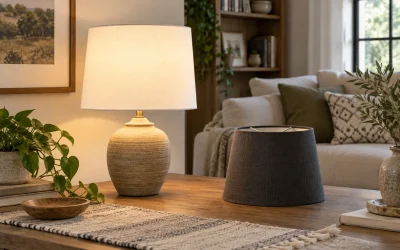
Consider a fictional living room with a chrome-framed mirror above a cabinet, chrome cabinet handles and a newly inherited brushed brass reading lamp. The owner first adds three brass ornaments across the room. The result feels busy because each ornament creates another small focal point.
The revised plan keeps chrome with the cabinet and mirror. The brass lamp stays beside the reading chair, accompanied by one existing brass frame on the adjacent shelf. The owner removes the other ornaments from this arrangement and observes it for an evening. Nothing in this example establishes a universal object count; the change creates two understandable groups using possessions already available.
The shopping brief now says “small brushed brass frame, subdued sheen, for the reading shelf.” That is more useful than “something gold to balance the room,” and it reduces the temptation to replace unrelated fixed fittings.
Check practical details before keeping the arrangement
Open cabinet doors, use the lamp switch and move through the room normally. Decorative pieces should not make daily tasks awkward. Confirm that a new frame or tray sits securely and that repositioning a lamp has not stretched its cord across a walking route.
Keep cleaning instructions with the inventory. Avoid assuming that a polish suitable for one bare metal is suitable for a plated, lacquered or brushed finish. If care information is missing, ask the manufacturer before experimenting.
Finish with one photograph and a short note describing what worked in daylight and after dark. Revisit the arrangement when you change a major light or large piece of furniture. You now have a reasoned finish plan rather than a rule to keep purchasing matching accessories.