
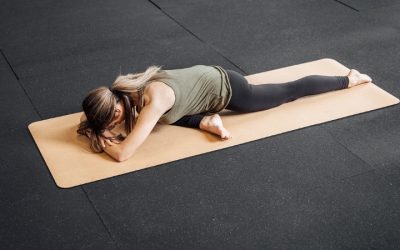
The moment you notice your mat is the moment it has already failed you. It happens in the third minute of a flow class, palms damp, hips lifting into downward dog, and your hands begin to creep forward like windshield wipers. Or it happens in a long-held pigeon, when a thin sheet of foam lets your kneecap find the studio’s concrete subfloor. A mat is not decor. It is the only piece of equipment standing between your joints and the ground, and its grip, thickness, and surface texture change what your practice actually feels like.
The ten mats below span a deliberate range: dense 6mm slabs built for decades of use, 1.5mm travel sheets that fold into a carry-on, sweat-activated polyurethane for 105-degree rooms, and cushioned foam for restorative work on hardwood. I have organized them by the problem each one solves rather than by price, because a sticky hot-yoga mat is a poor choice for gentle floor work, and a plush foam mat is genuinely unsafe in standing balance poses. Find the row that matches how you actually practice, not how you intend to.
Our top picks




As an Amazon Associate we earn from qualifying purchases at no extra cost to you.

Prime
Gaiam Thick Yoga Mat with Easy-Cinch Carrying Strap
View on Amazon
July 17, 2026

Retrospec
Prime
Retrospec Solana Yoga Mat 1" Thick w/Nylon Strap for Men & Women – Non Slip Exercise Mat for Home Yoga, Pilates, Stretching, Floor & Fitness Workouts
View on Amazon
July 17, 2026

wimwum
Prime
Extra Wide Yoga Mat 72" x 32", 6mm Non Slip TPE Exercise Mat with Carrying Strap, Large Workout Mat for Yoga, Pilates, Stretching, HIIT & Home Gym
View on Amazon
July 17, 2026

YOTTOY
Prime
YOTTOY Yoga Mat,Extra Thick Yoga Mat (1/2inch),Professional TPE Exercise Mat,Non-Slip Workout Mat for Yoga, Pilates, Fitness, Barefoot Workouts, Home Gym Studio with Strap
View on Amazon
July 17, 2026

AmazonBasics
Prime
Amazon Basics Extra Thick Exercise Yoga Mat with Carrying Strap
View on Amazon
July 17, 2026
View on Amazon
never
Quick Comparison
| Mat | Thickness | Surface | Approx. Weight | Best For |
|---|---|---|---|---|
| Manduka PRO | 6 mm | Closed-cell PVC | 7.5 lb | Lifetime durability, joint cushion |
| Liforme Original | 4.2 mm | Eco-polyurethane | 5.5 lb | Alignment guidance |
| Lululemon The Reversible Mat | 5 mm | PU over rubber | 5.2 lb | Wet and dry grip in one mat |
| JadeYoga Harmony | 5 mm | Open-cell natural rubber | 5 lb | Immediate tack, no break-in |
| B Yoga B Mat Everyday | 4 mm | Natural rubber | 6.5 lb | Vinyasa transitions |
| Yoga Design Lab Combo | 3.5 mm | Microfiber + rubber | 4.5 lb | Hot yoga, towel-free |
| Gaiam Premium Print | 6 mm | Textured PVC | 3 lb | Beginners on a budget |
| Manduka eKO Superlite | 1.5 mm | Natural rubber | 2.2 lb | Travel and hotel floors |
| Alo Yoga Warrior Mat | 5 mm | Matte natural rubber | 7 lb | Studio-grade stability |
| Retrospec Solana | 25 mm | High-density NBR foam | 2.5 lb | Restorative, Pilates, floor work |
How to Choose
- Match grip type to your sweat level. Closed-cell surfaces repel moisture and get slicker as you perspire; open-cell rubber and polyurethane absorb it and grow tackier. If you leave puddles, choose absorbent. If you practice cool and slow, closed-cell wipes clean faster.
- Treat thickness as a tradeoff, not an upgrade. Under 3mm gives you crisp floor feedback and steady balance. Around 5mm is the sweet spot for most. Above 15mm you gain knee comfort but lose your footing in tree and warrior III.
- Weigh it before you commit to carrying it. A 7-pound rubber mat is superb underfoot and miserable on a twenty-minute walk to the studio. Consider a heavy mat for home and a 2-pound folding mat for transit.
- Check the length against your height. Standard mats run 68 inches. If you are taller than 5’10”, a 71- or 79-inch option keeps your heels and fingertips on the surface during long lunges and savasana.
- Read the care instructions before buying. Natural rubber degrades in direct sunlight and dislikes oil-based cleaners. PVC tolerates almost anything. Microfiber tops usually go in the washing machine, which is a real convenience if you practice daily.
Top Picks Reviewed
1. Manduka PRO
The reference standard, and the heaviest thing in this roundup for good reason. Six millimeters of dense, non-slip-backed PVC lands flat on any surface and absorbs impact in jump-backs without bottoming out. The catch is a genuine break-in period: expect slick palms for the first several sessions until you scrub the factory sheen off with coarse salt. It comes with a lifetime guarantee and typically earns it.
2. Liforme Original
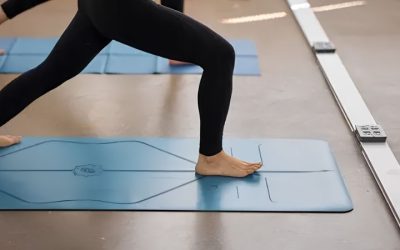
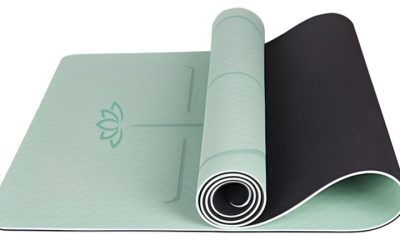
Etched into the polyurethane surface is a center line, angled hip markers, and hand placement guides. For anyone practicing at home without a teacher’s eye, those markings correct the slow drift of a crooked warrior II better than any mirror. Grip is excellent when damp. It is expensive, and the surface will show wear at the palm points within a couple of years of heavy use.
3. Lululemon The Reversible Mat 5mm
Two usable faces: a moisture-wicking polyurethane side for sweaty sessions and a smoother natural rubber side for dry practice. That flexibility makes it the best single purchase for someone who alternates between hot classes and gentle mornings. The PU face stains easily and will pick up a permanent map of your hand positions, which bothers some people and not others.
4. JadeYoga Harmony
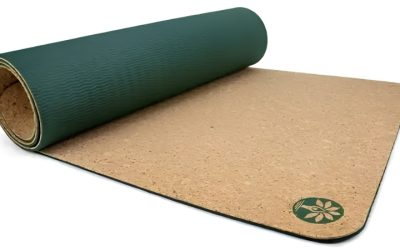
Open-cell rubber with a raw, almost fabric-like tack straight out of the box, so no salt scrub, no break-in. It grips instantly and forgives sweaty feet. Because the surface is porous, it holds odor if you skip cleaning, and the rubber smell takes a week or two to fade. Jade plants a tree per mat sold, if that factors into your decision.
5. B Yoga B Mat Everyday
Four millimeters of solid rubber with a fine-grain top that pairs beautifully with fast vinyasa. Feet plant and release cleanly instead of dragging, which matters in repeated chaturanga-to-updog transitions. It lies flat immediately with no curled corners. Weight is on the high side for the thickness, so it lives best in one room rather than in a shoulder sling.
6. Yoga Design Lab Combo Mat
A microfiber towel bonded permanently to a rubber base, which eliminates the sliding towel problem in heated rooms. Dry, it feels moderately slippery; wet, it locks in. Toss the whole thing in the washer when it starts to smell. Thin at 3.5mm, so add a folded blanket for kneeling poses. The printed designs are the loudest here by a wide margin.
7. Gaiam Premium Print
The honest entry point. Six millimeters of textured PVC, light enough for a beginner to carry, and priced low enough that discovering yoga is not your thing costs almost nothing. Grip is adequate for cool, slow practice and poor once sweat appears. Expect two or three years of casual use before the surface starts to flake at the edges.
8. Manduka eKO Superlite
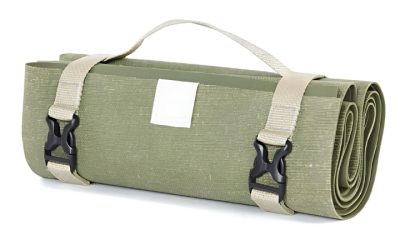
Folds like a bedsheet into a suitcase pocket at 1.5mm and 2.2 pounds. This is a travel layer, not a cushion, so it works over hotel carpet or a gym mat rather than bare tile. Grip on the rubber surface is strong. Fold creases become permanent, though they flatten out within ten minutes of body weight.
9. Alo Yoga Warrior Mat
A matte rubber surface with a slightly plush hand feel and one of the most planted grips in dry conditions. At around seven pounds it does not shift, curl, or ripple, which makes it a favorite for strength-focused and slower alignment work. Genuinely heavy to transport. The matte finish shows chalky marks unless you wipe it down after class.
10. Retrospec Solana
An inch of high-density foam for a completely different purpose: restorative sequences, Pilates, ab work, and stretching on hardwood or tile. Knees, spine, and elbows all thank you. It is unsuitable for standing balance, since the surface compresses unevenly under a single foot. Keep it alongside a proper yoga mat rather than instead of one.
Frequently Asked Questions
Why do my hands still slip on an expensive mat?
Usually one of three things: a factory residue that has not been scrubbed off yet, body lotion transferring from your skin, or a closed-cell surface being asked to handle sweat it was never designed to absorb. Wash the mat with warm water and a drop of dish soap, skip moisturizer before practice, and if slipping persists in heated classes, switch to an open-cell or polyurethane top.
How thick should a mat be for bad knees?
Six millimeters handles most kneeling discomfort without compromising balance. If tabletop and low lunge still hurt, keep the 5–6mm mat for stability and fold a blanket or add a small knee pad for the specific poses that bother you. Jumping straight to a one-inch foam mat solves the knee problem and creates a new wobble problem.
What is the right way to clean a rubber mat?
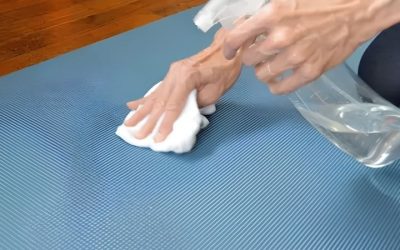
Water with a little white vinegar or mild soap on a cloth, wiped in both directions, then air dried flat or draped over a rail out of direct sun. Avoid alcohol sprays, essential oils, and tea tree cleaners on natural rubber; they break down the surface and make it slick. Never put a rubber mat in a hot car or in the dryer.
Is a rubber mat a problem for latex allergies?
It can be. Natural tree rubber contains the proteins responsible for latex reactions, and mats from Jade, B Yoga, and Manduka’s eKO line all use it. If you have a diagnosed latex sensitivity, choose PVC like the Manduka PRO, TPE, or a polyurethane-topped mat, and check whether the base layer under a PU surface is rubber before ordering.
Final Thoughts
If you want one mat and one decision made for you: the Lululemon Reversible handles the widest span of practices at a reasonable weight, and the Manduka PRO is the better buy if you practice at home and want to stop thinking about mats permanently. Sweat heavily and the Yoga Design Lab Combo saves you a towel. Travel constantly and the eKO Superlite lives in your bag. Whatever you land on, break it in properly, clean it more often than feels necessary, and store it unrolled or loosely rolled rather than cinched tight. A good mat repays that attention for years, and the right one disappears entirely under your hands, which is exactly the point.
Write Your Review
No reviews yet. Be the first to share your experience!