
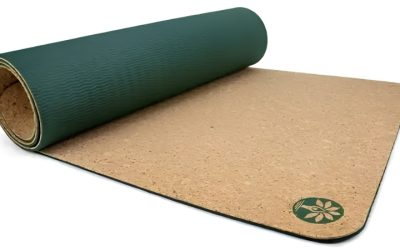
A yoga mat spends about forty minutes a day being a yoga mat and twenty-three hours being an object in your home. That ratio explains why so many of them end up behind a door or under a bed and then stop being used — a mat that is awkward to store is a mat that is awkward to retrieve, and friction at retrieval is what quietly ends home practice.
The physical properties that matter here are rarely mentioned in listings. Rolled diameter determines whether it fits a gap beside a wardrobe. Whether the mat unrolls flat or curls at the corners determines whether your first two minutes are spent wrestling with it. And foam type determines whether it can be stored rolled indefinitely or develops a permanent memory of the roll. Below, each option is assessed on how it lives in a home rather than how it performs in a pose.
Our top picks


As an Amazon Associate we earn from qualifying purchases at no extra cost to you.
Quick Comparison
| Product | Best For | Standout Feature | Watch Out For |
|---|---|---|---|
| CAP Non-Slip Yoga Mat | Slimmest stored profile | Thin build rolls to a compact cylinder | Light mats curl at the corners |
| Gaiam Thick NBR Yoga Mat | Fuss-free carrying and storing | Easy-cinch strap that stays tightened | NBR holds a roll memory if stored long |
| Amazon Basics Extra Thick Exercise Mat | Cupboard storage | Included strap keeps the roll tidy | Thick soft foam makes a wide roll |
| Fitvids 1/2-Inch Extra Thick Mat | Mats that lie flat immediately | Dense build resists curling at the edges | Substantial roll diameter to house |
| CAP Barbell 1/2-Inch High Density Mat | Standing storage against a wall | Firm roll that holds its own shape | Too bulky for a narrow slot |
| KEEP Extra Thick NBR Mat, 10mm | Homes with a dedicated storage spot | Full 72 by 24 inch surface when unrolled | Largest stored volume of the group |
How to Choose
- Measure the gap first: Find where the mat will live, measure it, and shop against that number. Thickness roughly doubles the rolled diameter.
- Test the unroll: A mat that lies flat instantly saves two minutes every session. Persistent corner curl is a daily annoyance, not a one-off.
- Strap quality counts: A cinch strap that slips means a roll that unravels in a cupboard. It is a small part with a disproportionate effect.
- Roll direction matters: Rolling with the top surface outward reduces corner curl on most mats. Storing it the other way encourages the edges to lift.
- Vertical beats horizontal: A mat standing in a corner or hanging on a hook takes no floor area and is far easier to grab than one under furniture.
Top Picks Reviewed
Smallest Stored Size: CAP Non-Slip Yoga Mat
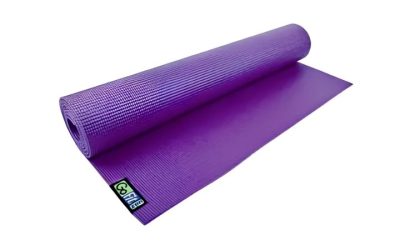
A thin mat rolls to a slim cylinder that fits in places thicker mats cannot — behind a door, along a shelf edge, inside a suitcase. If storage is the binding constraint in your home, nothing else here competes on packed volume.
Lightweight mats are the most prone to corner curl, particularly when stored rolled for long periods. Rolling it with the grip surface outward and unrolling it a few minutes before practice largely resolves it.
Easiest to Store and Carry: Gaiam Thick NBR Yoga Mat
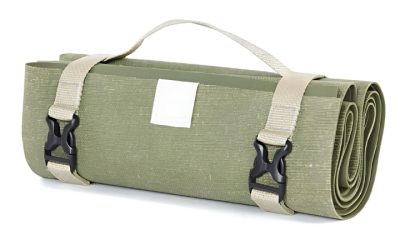
The cinch strap is the underrated feature. A strap that tightens properly and stays tightened keeps the roll compact, stops it unravelling in a cupboard, and makes the mat something you can carry in one hand rather than an armful.
NBR foam does take a set if left rolled for weeks. The mat will still flatten out, but it may take a few minutes and a little weight on the corners after a long period of storage.
Best Flat Unroll: Fitvids 1/2-Inch Extra Thick Mat
Dense foam holds its shape rather than remembering the roll, which means this mat tends to lie flat as soon as it is unrolled. Over hundreds of sessions that difference is worth more than most features people actually shop for.
It is a bulky roll. Half-inch foam does not compress, so you need a genuine storage space rather than a narrow gap, and it will look like a piece of equipment wherever you put it.
Best Standing Storage: CAP Barbell 1/2-Inch High Density Mat
A firm roll stands up on its own in a corner or a cupboard without slumping, which turns storage into a vertical problem instead of a floor-space one. That is often the difference between a mat that is accessible and one that is buried.
The diameter rules out slim gaps entirely. Measure the corner you intend to use, because a half-inch mat rolled up is considerably wider than most people picture.
Frequently Asked Questions
Should I roll or fold my mat?
Roll it. Folding creates permanent creases in foam, and those creases become weak points that eventually split. Rolling distributes the bend evenly.
Which way should the mat face when rolled?
Top surface outward is the usual advice, because it counteracts the tendency of the corners to lift when you unroll it. It also keeps the underside cleaner in storage.
How do I fix a mat that will not lie flat?
Unroll it the opposite way for a few minutes, then leave books or another weight on the corners for an hour. Most curl resolves; a mat that has been folded rather than rolled may not.
Is hanging storage better than rolling?
Hanging a mat over a rail avoids roll memory entirely and keeps it flat, but it needs the space and the mat may stretch slightly at the fold point. For most homes a well-strapped roll is more practical.
Final Thoughts
Storage is what determines whether a mat gets used, so measure the space before shopping. The thin CAP mat wins on stored volume, the Gaiam NBR option makes carrying and cinching effortless, and the dense Fitvids and CAP Barbell mats lie flat immediately at the cost of a wider roll. Roll with the top surface outward, store it somewhere you can reach in one movement, and the mat stays part of the routine.
Write Your Review
No reviews yet. Be the first to share your experience!