Our Top Picks



The short answer: the best plant stands are stable, sized for the pots you actually own, and built from a material that tolerates water and sun. A single-pot riser suits one statement plant. A tiered or ladder stand suits a collection of small pots, and a corner or window stand suits tight spaces. Check the stated load rating against the watered weight of your pots, keep tall or narrow stands from tipping, and confirm every plant is safe for the pets and children who share your home.
This guide does not rank products. It explains the main stand designs, materials, load and stability, placement and light, and how to avoid common mistakes. Use it to shortlist, then read the current specifications and assembly instructions for any stand you buy.
Contents
- What a plant stand does for your plants and room
- The main types of plant stands
- Quick comparison table
- Materials and water protection
- Weight loads, stability and wall anchoring
- Sizing a stand to your pots
- Light, airflow and placement
- Styling a stand
- Buyer checklist
- Mistakes to avoid
- Safety: plants, pets, children and tipping
- Frequently asked questions
- Bottom line
What a plant stand does for your plants and room
A plant stand lifts a pot off the floor, which does several jobs at once. It brings foliage closer to the light, shows off trailing stems, protects floors from moisture and gives a plant a defined place in the room. Grouped on tiers, several small plants read as one display instead of clutter.
A stand also makes a plant easier to live with. Lifted pots are simpler to water, rotate and inspect, and they sit out of the way of vacuum cleaners and some curious pets. The trade-off is that a pot on a stand is heavier at height than a pot on the floor, which raises questions about strength and stability. Soil, water and the pot itself add up quickly, and a stand that wobbles when empty is a poor candidate for a heavy plant.
The main types of plant stands
Single-pot risers
A round or square platform on short or tall legs, made for one plant. Risers suit a statement plant by a sofa or in an entryway. They are simple, and often the most stable choice for a heavy pot.
Tiered and multi-level stands
Several shelves stacked in a frame, sometimes with a staircase layout. They suit collections of small and medium pots and make a display in a bright corner. Each tier has its own limit, and the bottom tier often carries more than the top.
Ladder and leaning shelves
These lean against a wall with a narrow footprint. They look good and use vertical space, but they rely on the wall for stability. Read the section on anchoring carefully before loading one.
Corner stands
Designed to fit into the angle of two walls, corner stands use dead space and suit small rooms. They tend to have a smaller footprint, so mind the weight of what goes on top.
Mid-century and tripod styles
Angled legs and a minimal profile suit modern rooms. The legs splay outward, which helps stability, but the shape can catch toes and paws.
Plant tables and benches
Wider surfaces suit trays of pots, propagation jars and a watering can. They can serve as a side table too, so check whether the surface tolerates water.
Window and sill stands
Narrow stands that sit under a window or on a sill make the most of bright light. Check that the stand sits securely and does not press on blinds or block radiators.
Rolling stands and caddies
Wheeled bases make moving a heavy pot easy. They need locking wheels, a stable platform and a surface that will not scratch. A rolling plant caddy is one option to compare.
Quick comparison table
The table is a general guide only. Individual products differ, so rely on the ratings and instructions in each listing.
| Type | Best for | Footprint | Stability | Main caution |
|---|---|---|---|---|
| Single-pot riser | One statement plant | Small to medium | Generally good | Match platform size to the pot |
| Tiered stand | Collections of small pots | Medium | Depends on frame | Per-tier load limits |
| Ladder shelf | Narrow vertical space | Small | Leans on the wall | Anchor to the wall if allowed |
| Corner stand | Tight rooms | Small | Moderate | Watch top-heavy loading |
| Tripod or mid-century | Modern styling | Small to medium | Good if legs splay | Legs can catch feet and paws |
| Table or bench | Trays, propagation | Large | Good | Surface must handle water |
| Rolling stand | Heavy pots moved often | Varies | Good when locked | Lock wheels, check surface |
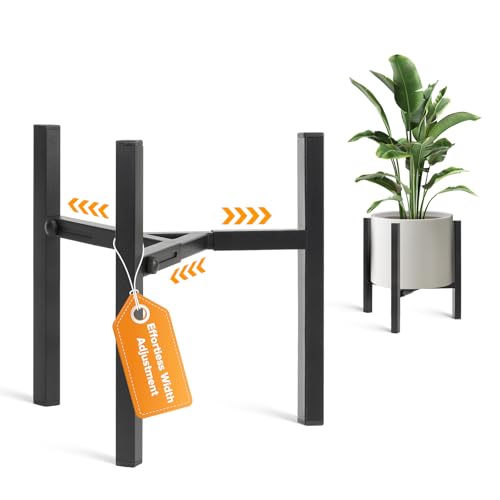
If you are shopping for one big plant, look at a single-pot plant stand and compare its platform size and load rating with your pot.
Materials and water protection
Wood and bamboo
Warm and versatile, wood suits most interiors. Untreated or lightly finished wood can swell, stain or warp when exposed to water, so use saucers and check whether the finish is meant for damp use. Bamboo is often lighter and handles humidity better, though construction quality varies.
Metal
Steel and iron frames are strong and slim, and they suit modern and industrial styles. Check the finish for rust resistance, especially near windows, in bathrooms or outdoors. Metal can scratch floors, so look for protective feet.
Rattan and wicker
Natural and synthetic woven stands bring texture. They are usually lighter and may be better for small pots. Inspect joins and weave for wear.
Plastic and resin
Easy to wipe clean and often water tolerant, but check the load rating, which may be modest.
Glass and acrylic shelves
Transparent tiers let light pass to plants beneath. They can show water marks and scratches, and glass adds weight and breakage risk, so treat them cautiously in homes with children.
Water protection
Always use saucers, trays or liners under pots, whatever the material. Even a sealed stand can suffer when water pools or drips over time. Empty saucers after watering, and lift the pot to wipe the underside occasionally. If you need trays in a range of sizes, a set of plant saucers and drip trays can protect the stand and your floor.
Weight loads, stability and wall anchoring
A plant stand carries more than most people estimate. Moist soil is heavy, a large pot adds more, and a decorative outer pot adds still more. A stand that handles an empty pot easily can sag, bow or tip once everything is watered.
Find the real weight
Weigh a watered, drained plant by standing on a bathroom scale with and without it and subtracting. Use that number, not the pot’s empty weight, when you compare a stand’s rating. Remember that plants grow and that watering adds weight each time.
Read per-shelf and total ratings
Many stands list a limit for each shelf and sometimes a separate limit for the whole unit. Both matter. Place the heaviest pots on the lowest tier, close to the floor, so the center of gravity stays low.
Check the footprint and the legs
A wide base resists tipping. Narrow, tall stands and tiered units loaded at the top are the most likely to fall, particularly if bumped. Make sure each leg touches the floor evenly, and use felt pads or levelers on uneven floors if the maker allows them.
Anchor tall stands and ladder shelves
A ladder shelf or tall, narrow stand leans on or stands near a wall and can tip forward if overloaded or climbed on. If the instructions include a wall anchor or strap, use it, and fix it into a stud or with a wall anchor suited to your wall type and rated for the load. Do not rely on a plain nail or an adhesive strip to hold a loaded stand. Renters should ask whether anchoring is permitted, or choose a wider freestanding option instead.
Assemble carefully
Many stands arrive flat-packed. Tighten every fastener, recheck after a few days of use and again after moving the stand. Wobble usually starts at a loose joint. Follow the manufacturer’s assembly instructions exactly, and do not skip optional braces.
Mind the surface
Soft carpet can make a stand lean, and slippery tile can let it slide. Choose pads, a base plate or a rug gripper as appropriate, and place a stand on level ground whenever you can.
Respect the instructions
Specifications, ratings and care guidance change between product versions. Check current specs and instructions before you buy and again before you load the stand.
For collections of small plants, compare a tiered plant stand and read the per-shelf rating before you load it.
Sizing a stand to your pots
Measure the pot base
The platform should be large enough that the pot sits fully inside the edge. A pot that overhangs is at risk of tipping, while one that is much smaller than the platform looks lost.
Measure the plant as well
Tall plants add height and weight above the stand. A tall plant on a tall stand can reach the ceiling or fall across a room, so add the two heights together, and consider the plant’s width in the corner.
Plan for growth
If a plant is young, leave room for spread and height. A stand that fits today may crowd the plant in a season or two, and repotting adds weight.
Light, airflow and placement
A stand changes how much light a plant receives. Lifting a pot toward a window can help, but proximity to glass can also bring hot afternoon sun or cold drafts at night.
- Match the spot to the plant. Sun lovers suit bright windows, while shade-tolerant plants suit dimmer corners.
- Watch the glass. Leaves touching a cold or hot window can be damaged.
- Keep air moving. A little airflow helps leaves dry, but avoid direct blasts from vents and heaters.
- Rotate occasionally. Turn the pot so that all sides get light.
- Consider the floor. Wood, tile and carpet each react differently to moisture and weight.
- Leave room to work. You need to reach each plant for watering, pruning and checking for pests.
Styling a stand
Vary the heights
Combine tall, medium and short stands in one area to build a layered look. Odd-numbered groupings usually look more natural than pairs.
Use trailing plants on tall stands
Plants that spill over the edge soften the lines of a tall stand, but keep dangling stems out of pets’ reach if the plant is toxic.
Let the pot do some work
A decorative outer pot can lift a simple plant, but keep the inner nursery pot removable for drainage, and weigh the combination before loading the stand.
Buyer checklist
- You know the watered weight of your heaviest pot and the stand’s rating is comfortably above it.
- You have checked both per-shelf and whole-stand limits where listed.
- The platform fits the pot base and saucer with room to spare.
- The footprint is wide enough for the height, and legs sit evenly on your floor.
- Tall or ladder-style stands can be anchored, or you have chosen a wider option.
- The material suits the room, whether damp, sunny or high traffic.
- You have a tray or saucer plan to protect the surface.
- You have checked each plant against the pets and children in your home.
- You have read current specifications and assembly instructions.
Mistakes to avoid
- Judging by dry weight. Watered soil and decorative outer pots add a lot.
- Loading the top tier first. Heavy items belong low, so the stand stays stable.
- Ignoring wobble. A loose joint rarely tightens on its own.
- Skipping saucers. Water damages wood, finishes and floors over time.
- Leaning a loaded ladder shelf unanchored. Tipping is the main hazard.
- Choosing a platform too small. An overhanging pot can slide or fall.
- Placing toxic plants within reach. Low stands put leaves at pet and toddler height.
- Forgetting growth. A plant can outgrow the stand and become top-heavy.
Safety: plants, pets, children and tipping
Check plant toxicity before you buy
Many popular houseplants are listed as toxic to pets and people when chewed or swallowed. Pothos, philodendron, monstera, peace lily, dieffenbachia, snake plant, aloe, jade plant and English ivy are commonly flagged by pet-poison resources, and lilies are especially dangerous to cats. Reported effects range from mouth irritation and drooling to vomiting and, with some plants, more serious problems. A stand does not remove the risk, as leaves drop and curious animals climb.
Verify by botanical name
Common names overlap, and different species can differ in safety. Look up each plant by its botanical name in a reputable pet-poison database from a veterinary or poison-control organization, and ask your veterinarian when in doubt. Plants often described as non-toxic to cats and dogs, such as spider plants and some ferns and palms, should still be checked and kept from chewing, since eating any plant can upset a stomach.
Keep soil, fertilizer and tools out of reach
Soil, plant food and pest treatments can harm children and animals. Store them locked away, wash hands after handling plants and keep sharp pruning tools out of reach. If a pet or child chews a plant, remove any plant from the mouth, note the plant name and contact your doctor, veterinarian or a poison-control service promptly.
Prevent tipping
Children climb and pets jump, and a loaded stand can topple onto them. Keep heavy pots on low shelves and wide stands, secure tall or ladder-style units to the wall using fixings suited to your wall type if the maker allows it, and do not let anyone climb on a stand. Place stands away from cribs, play areas and busy doorways.
Mind glass, sharp edges and hot spots
Glass shelves and metal edges can injure. Keep stands out of walkways and away from radiators and heaters, and check that no pot hangs over an edge. Recheck fasteners periodically and stop using a stand that wobbles, cracks or shows rust at a joint.
Frequently asked questions
What is the best plant stand for a heavy pot?
A wide, low-slung riser or table with a clearly stated load rating is usually the safest start. Match its rating to the watered weight of the pot and use locking wheels if you plan to move it.
How much weight can a plant stand hold?
It depends on the design, material and construction, so read the stated rating in the listing, for each shelf and the whole stand. Check current specs rather than guessing.
Do I need to anchor a plant stand to the wall?
Tall, narrow and ladder-style stands are the ones to consider anchoring, if the instructions allow. Use fixings suited to your wall type and rated for the load.
Are plant stands safe around pets?
They can be, if the stand is stable and every plant is safe for your animals. Confirm toxicity by botanical name with a reputable pet-poison resource or your veterinarian.
Which materials are best for damp rooms?
Finished metal, plastic and some bamboo handle humidity better than untreated wood, though quality varies. Use trays regardless, and check the finish description.
How high should a plant stand be?
It depends on the plant and the light. Keep the plant’s full height in mind, leave room for growth and avoid making a stand so tall that it becomes top-heavy.
Can I put several plants on one tier?
Yes, if the combined watered weight stays within the shelf rating and the pots fit without overhang. Leave space between plants for airflow and watering.
How do I stop a plant stand from wobbling?
Tighten fasteners, check the floor is level, use pads or levelers if allowed and move heavy pots to lower tiers. If it still wobbles, stop loading it and consult the maker.
Bottom line
The best plant stands are stable, correctly sized and honest about their load. Weigh your watered pots, read the ratings, keep heavy items low, anchor tall units where allowed and protect surfaces with trays. Verify every plant for pets and children before it goes on display, and read the current instructions before you buy or assemble.
Disclosure: As an Amazon Associate, we earn from qualifying purchases. Links marked as sponsored may earn us a commission at no extra cost to you.
More from Amazon
Programs that pair well with the guide above. Offers and eligibility are set by Amazon and may change.
Collect the home and kitchen items you want in one registry that guests can shop from.
Create a wedding registrySet up recurring deliveries of everyday items on eligible products. Terms and savings are set by Amazon.
Explore Subscribe & SaveFree shipping on eligible items, Prime Video and more. Eligible new members can start with a free trial.
Start a Prime free trialAudiobooks and podcasts to listen to on the go. Eligible new members can start with a free trial.
Try Audible freeAs an Amazon Associate we earn from qualifying purchases.