Our Top Picks
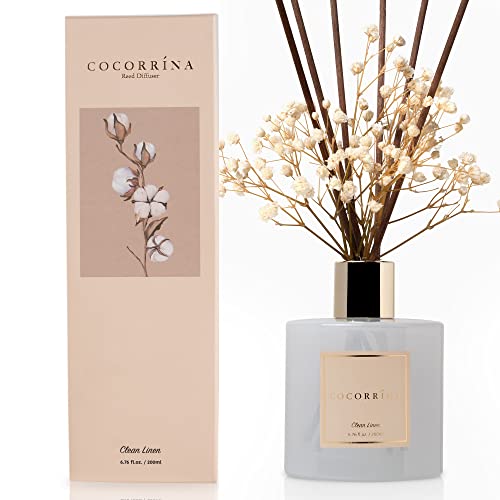
 Cocorrína Reed Diffuser Refill6.7 Fl Oz (Pack of 1)1.77 x 1.77 x 6.6 inches0.5 poundsCheck on Amazon

Best Reed Diffuser Sets: A Practical Guide to Choosing, Placing and Maintaining Them
Short answer: the best reed diffuser sets pair a fragrance liquid you actually enjoy with a bottle that suits the room, reeds that wick steadily, and a refill plan that keeps the cost sensible. For most homes, a medium-neck glass bottle with a set of natural rattan or fiber reeds and a balanced, not overpowering, scent works well. Smaller rooms need fewer reeds and lighter scents; larger or open spaces benefit from wider bottles, more reeds and a second diffuser placed across the room.
Table of Contents
- How Reed Diffusers Work
- Types of Reed Diffuser Sets
- Liquid Bases and Fragrance Styles
- Reeds: Material, Number and Length
- Bottles and Vessels
- How to Choose a Set
- Room Size, Placement and Styling
- Safety, Pets and Sensitivity
- Care, Refills and Troubleshooting
- Common Mistakes
- Who Should Choose What
- Buying Checklist
- Frequently Asked Questions
- Conclusion
How Reed Diffusers Work
A reed diffuser is about as simple as home fragrance gets. A bottle holds a scented liquid, and a bundle of porous sticks stands in it. The liquid climbs the sticks by capillary action, the same effect that draws water up a paper towel, and the fragrance evaporates from the exposed upper portion of each stick into the air. There is no flame, no cord, no battery and no timer, which is why diffusers are popular in places where an open flame or an electrical device is awkward: bathrooms, hallways, shelves, entryways and offices.
That simplicity has trade-offs worth understanding before you buy. A diffuser releases scent continuously and slowly, so it gives a steady background note rather than the burst you get from lighting a candle. The strength depends on the number of reeds, the thickness of the liquid, the temperature of the room and the airflow around the bottle. You cannot switch it off; you can only remove the reeds or move the bottle. That makes the first choice of scent more consequential than it is with a candle, because you will live with it for weeks.
Understanding the pieces of a set, which are the liquid, the reeds and the bottle, helps you compare products without relying on marketing language. Each part affects the experience in a different way, and a weak link in any of them undermines the others. A beautiful bottle with poor reeds will smell faint; excellent liquid in a tiny bottle will run out too quickly to be good value.
Types of Reed Diffuser Sets
Sets are sold in several configurations, and the format you choose shapes how you will use the diffuser over time.
Ready-to-use single sets
These include a filled bottle and a bundle of reeds, sometimes with a decorative box. They are the simplest entry point: open, insert, wait. They suit gifts, first-time users and anyone who wants a finished look immediately.
Multi-packs and duo sets
Two or three smaller bottles in coordinated scents or sizes are common. They make sense when you want to place diffusers in several rooms, or when you want to try a few scent families without committing to one large bottle. Check the volume of each bottle, since small ones can run out quickly in a warm room.
Refill and decanting kits
Some sets pair a decorative vessel with a refill bottle, or sell the liquid on its own so you can top up the vessel you already own. This is usually the more economical route over time and produces less waste, provided the vessel has an opening that accepts the reeds and a neck that is easy to pour into.
Do-it-yourself bases
Unscented diffuser base liquid can be combined with fragrance oils intended for that purpose. This route allows full control but requires care: only use oils labeled as suitable for diffusers, follow the supplier’s ratio guidance, and keep them away from children and animals. It is not the best starting point for most buyers.
Decorative gift sets
These add extras such as a tray, a vase-like bottle, or dried floral reed toppers. They look good, but judge them on the same fundamentals: the amount of liquid, the reed quality and whether the extras fit your home.
Liquid Bases and Fragrance Styles
The liquid is a mixture of a carrier, which is the medium that travels up the reeds, and fragrance, which can be synthetic aroma compounds, natural essential oils, or a blend. Labels vary, and “natural” has no single regulated meaning in home fragrance, so read the ingredient list or product description instead of relying on the word alone.
| Fragrance style | What it usually smells like | Typical strength in a room | Best rooms |
|---|---|---|---|
| Fresh and clean (linen, cotton, citrus) | Bright, airy, light | Moderate, fades quickly in drafts | Bathrooms, kitchens, entryways |
| Floral | Rose, peony, jasmine, lily notes | Moderate to strong | Living rooms, bedrooms, hallways |
| Woody and earthy | Cedar, sandalwood, moss, vetiver | Soft and long-lasting | Studies, living rooms, cozy corners |
| Warm and spiced | Vanilla, amber, cinnamon, clove | Can be heavy in small spaces | Open-plan areas, colder seasons |
| Herbal and green | Eucalyptus, mint, tea, basil | Light to moderate | Bathrooms, offices, kitchens |
| Fruity and gourmand | Pear, fig, berry, sweet notes | Moderate; sweetness can tire quickly | Kitchens, casual living areas |
As a rule, lighter fragrances disappear faster in large rooms, while rich, resinous or woody notes tend to feel stronger in small ones. If you are choosing for a bedroom or a shared workspace, lean toward gentler profiles, because a scent that seems pleasant in a showroom can become tiring in a closed room over hours.
Reeds: Material, Number and Length
The reeds do the mechanical work, and their material makes a real difference in how reliably the liquid rises. Rattan is the traditional choice, with natural channels that run the length of the stick. Fiber reeds, made from bonded synthetic or plant fibers, have more uniform pores and often draw liquid evenly and for longer. Bamboo and wooden sticks exist too, but vary widely in porosity; some are decorative more than functional.
| Reed type | How it wicks | Appearance | Things to know |
|---|---|---|---|
| Natural rattan | Through natural channels; usually good | Warm, organic, slightly irregular | Can clog over time; flip periodically |
| Fiber reeds | Uniform pores; steady and even | Clean, consistent, often white or black | May dry out slowly if bottle is nearly empty |
| Bamboo or wooden skewers | Variable; some barely wick | Rustic, often thicker | Check reviews and testing claims from the seller |
| Dried flowers or decorative toppers | Minimal; mostly visual | Soft, floral, handmade look | Use with real wicking reeds, not instead of them |
More reeds generally means a stronger scent and faster use of the liquid. If a set feels too strong, remove a few reeds; if it feels faint, add some or flip them. Longer reeds expose more surface area and suit tall rooms and open areas, while short reeds fit small bottles and compact spaces. As an approximate starting point, use around half of the supplied reeds in a small bathroom and all of them in a larger living area, then adjust over a few days.
Bottles and Vessels
Glass is the most common material because it does not react with the liquid, can be made in many colors, and looks at home on a shelf. Ceramic vessels give a handmade, matte look and block light, which can help the fragrance stay stable. Wider necks allow more evaporation from the surface and let you fit more reeds, but also let the liquid escape faster if there is no cap. Narrow necks control evaporation better and keep reeds upright. Check that the vessel is stable, since a top-heavy bottle with a tall bundle of reeds tips easily.
Weigh style against practicality. Frosted or dark glass hides the liquid level, which looks tidy but makes it harder to know when to refill. Clear glass lets you watch the level but may display sediment or dust. Vessels with a small decorative collar or stopper cap help during storage, travel and when you want to stop the diffuser temporarily.
How to Choose a Set
- Start with the room. Decide where the diffuser will live. A hallway, a powder room and an open kitchen-living space ask for very different strengths.
- Pick the scent family you already like. If you gravitate toward fresh laundry smells in your clothes or toward woods in your candles, begin there. Unusual blends are more of a gamble.
- Look at the liquid volume. Bigger bottles last longer and usually lower the cost per week, but only if you will use them before the scent fades or you tire of it.
- Check the reeds. Prefer sets that include enough reeds for the bottle and describe the material. Ask whether replacement reeds are available.
- Think about the vessel. Choose a shape that suits the shelf, with a base wide enough to stay put and a neck that supports the reeds.
- Plan the refill. A refill that fits your existing bottle saves money and reduces waste.
Consider also how the scent is likely to travel through your home. In open-plan layouts, a diffuser in the main living area will reach the kitchen and hall at lower intensity; in a closed-door bedroom, even a modest set can saturate the air. If you are unsure, buy a smaller set first.
Room Size, Placement and Styling
| Space | Suggested approach | Placement tip |
|---|---|---|
| Powder room or small bathroom | Few reeds, light fresh or herbal scent | On the counter or shelf, away from water splash |
| Bedroom | Gentle scent, fewer reeds | Across the room from the bed, not on the nightstand |
| Living room | Full set of reeds, medium scent | On a console or shelf with some airflow |
| Entryway or hall | Welcoming floral or woody | On a small table; a draft can carry scent further |
| Home office | Subtle, clean notes | Corner shelf, away from electronics |
| Open-plan space | Two diffusers placed apart | Opposite ends of the room instead of one strong unit |
Scent spreads best where there is gentle air movement and warmth, so a spot near a doorway or on a shelf at chest height tends to work well. A cold corner or an enclosed cabinet will mute the diffuser. Avoid direct sunlight and radiators, which speed evaporation and can degrade fragrance. For styling, treat the bottle like any other object: put it on a tray with a candle and a small plant, or on a bathroom shelf with folded towels, and let the color of the glass echo another accent in the room.
Safety, Pets and Sensitivity
Reed diffusers carry no flame, which removes the main fire concern of candles, but the liquid still needs respect. The fragrance liquid is not a drink or a toy; keep bottles out of reach of toddlers and curious pets, and contact a doctor or poison information service immediately if anyone swallows it. The oil can mark or lift the finish on varnished wood, plastic and some stone, so stand the bottle on a tray, coaster or ceramic dish. Place it where it cannot be knocked over, and wipe spills promptly.
Fragrance is personal. Some people find strong scents trigger headaches or irritation, and homes with infants, asthma sufferers or sensitive individuals may prefer light fragrance or unscented alternatives. Cats and some other pets can be sensitive to certain essential oils and fragrance ingredients; if you share your home with animals, ask a veterinarian about the specific product, keep the diffuser in a room they can leave, and ventilate regularly. No diffuser should be described as treating any illness or condition, and you should be cautious of products that claim otherwise.
Care, Refills and Troubleshooting
Flip the reeds every week or two to refresh the scent, wiping the wet ends gently so they do not drip onto the furniture. If the fragrance weakens, check whether the reeds are dusty or clogged; replacing them often restores performance. Keep the bottle away from direct heat and top it up before it empties, since reeds that dry out can clog. When changing scent, use a new set of reeds, because old ones hold residue of the previous fragrance. Cap the bottle and remove the reeds if you travel or want a break, and store them upright to avoid leaks.
Typical troubleshooting is simple. A faint scent usually means too few reeds, a cold room, or old reeds. A scent that is too strong means too many reeds or too small a room. Oily rings on the shelf mean drips or spills. A diffuser that dries out quickly in warm weather may need fewer reeds or a narrower neck.
Common Mistakes
- Putting every reed in a small room and then finding the smell overwhelming.
- Placing the bottle on unprotected polished wood.
- Reusing old reeds with a new scent.
- Choosing a heavy gourmand fragrance for a space you also cook in.
- Putting a diffuser in a cold, closed cabinet and calling it weak.
- Ignoring pets or family members who are sensitive to strong fragrance.
- Buying on the look of the bottle alone and overlooking how much liquid it holds.
Who Should Choose What
Apartment dwellers will enjoy compact bottles with a light scent that doesn’t carry into neighbors’ spaces. Families with young children or pets should favor lighter fragrance, stable heavy bottles and high placement. People who dislike flame often choose diffusers over candles for bathrooms and bedrooms. Gift buyers can choose a neutral, widely liked scent family in a gift-ready set. Anyone redecorating can pick a bottle color that echoes the room, then use refill liquid for years. You can compare a range of reed diffuser sets, browse replacement diffuser reeds, or look at diffuser refill liquids to keep an existing vessel going.
Buying Checklist
- Identify the room and its approximate size before choosing strength.
- Choose a scent family you already enjoy in other products.
- Check the bottle volume and the number of reeds supplied.
- Confirm the reed material is described.
- Look for a stable base and a neck that holds the reeds upright.
- Plan a tray or coaster to protect the surface.
- Check whether refills or spare reeds are sold.
- Read the ingredient list if you or your household are sensitive.
Frequently Asked Questions
How long does a reed diffuser last?
It depends on the volume, reed count, room temperature and airflow. Many last from a few weeks to a few months, and fewer reeds slow use.
Why can’t I smell my diffuser?
Common causes are too few reeds, clogged or dusty reeds, a cold location, or nose fatigue. Flip the reeds and move the bottle to a warmer, airier spot.
How often should I flip the reeds?
Every one to two weeks is a typical rhythm, or whenever the scent seems to weaken.
Can I add more oil to an existing diffuser?
You can top up with compatible refill liquid, ideally the same fragrance. Replace the reeds when switching scents.
Are reed diffusers safe around pets?
Keep them out of reach and ask a veterinarian about the specific ingredients, because some animals are sensitive to certain oils.
Will a reed diffuser damage furniture?
The liquid can mark certain finishes, so use a tray or dish and wipe drips quickly.
How many reeds should I use?
Start with about half in small rooms and all in larger ones, then adjust over a few days according to the strength you want.
Is a reed diffuser better than a candle?
Neither is better overall. Diffusers are flameless and continuous; candles give a stronger, temporary scent and ambience.
Conclusion
The best reed diffuser sets are matched to the room: a scent you enjoy, enough liquid, reeds that wick reliably and a bottle that sits securely on a protected surface. Start modestly, adjust the reeds, and replace them when the fragrance fades. A thoughtful choice gives a quiet, steady background scent without flame.
Disclosure: As an Amazon Associate, we earn from qualifying purchases. If you buy through links on this page, we may earn a commission at no extra cost to you.
More from Amazon
Programs that pair well with the guide above. Offers and eligibility are set by Amazon and may change.
Collect the home and kitchen items you want in one registry that guests can shop from.
Create a wedding registrySet up recurring deliveries of everyday items on eligible products. Terms and savings are set by Amazon.
Explore Subscribe & SaveFree shipping on eligible items, Prime Video and more. Eligible new members can start with a free trial.
Start a Prime free trialAudiobooks and podcasts to listen to on the go. Eligible new members can start with a free trial.
Try Audible freeAs an Amazon Associate we earn from qualifying purchases.