Key takeaways
- Color Temperature: Measured in Kelvin, this dictates the mood. 2700K bathes your face in a warm, candlelit glow that flatters skin tones in the evening. 4000K sits in a neutral sweet spot that mimics overcast daylight. 5000K approximates bright midday sun and gives you the most honest representation of color — ideal for precise makeup application but potentially clinical for relaxation.
- Color Rendering Index (CRI): A CRI of 85 or above means the bulb reveals colors faithfully. For a vanity, never settle below this threshold; a low-CRI bulb will distort foundation shades and make blush look muddy no matter how good your technique is.
- Lumen Output and Wattage: Lumens measure brightness. Vanity setups generally benefit from 450 to 920 lumens per bulb, depending on how many share the fixture. A 40W-equivalent globe at roughly 500 lumens suits a two- or three-light bar, while higher-output bulbs make sense for single-bulb fixtures or large mirrors.
- Dimmability: Most budget G25 LEDs are non-dimmable, which works fine for task-focused bathrooms. If you want to shift from bright task lighting to a softer evening ambiance, look for explicitly labeled dimmable models — they pair with compatible dimmer switches to give you full control.
- Base and Bulb Shape: G25 globe bulbs with an E26 medium base fit the vast majority of American vanity fixtures. Always confirm your fixture’s socket type and any shade diameter constraints before ordering, since the rounded profile of a G25 is noticeably wider than a standard A19.
Choosing a vanity light bulb sounds simple until you stand under harsh fluorescents at a hotel and realize your skin looks two shades off from what you saw in the mirror. The wrong color temperature can wash out your complexion, exaggerate under-eye shadows, or leave you squinting through a glare that turns a quick morning routine into a headache. As someone who designs residential lighting for a living, I can tell you the globe bulb sitting above your bathroom mirror matters more than most people think.
This guide distills what actually counts when shopping for G25 vanity bulbs in 2026 — color rendering, color temperature, lumen output, and whether dimmability fits your setup. Below you will find our curated picks spanning warm, neutral, and daylight tones, plus a straightforward buying framework so you can match the right bulb to your space without second-guessing.
Our top picks



As an Amazon Associate we earn from qualifying purchases at no extra cost to you. Ratings are shown as listed on Amazon.
🛒 Best Price Today on Amazon
Prime members get fast, free shipping on everything above, plus member-only deals. New members get a 30-day free trial — cancel anytime.
How to Choose a Light Bulb For Vanity (2026)
- Color Temperature: Measured in Kelvin, this dictates the mood. 2700K bathes your face in a warm, candlelit glow that flatters skin tones in the evening. 4000K sits in a neutral sweet spot that mimics overcast daylight. 5000K approximates bright midday sun and gives you the most honest representation of color — ideal for precise makeup application but potentially clinical for relaxation.
- Color Rendering Index (CRI): A CRI of 85 or above means the bulb reveals colors faithfully. For a vanity, never settle below this threshold; a low-CRI bulb will distort foundation shades and make blush look muddy no matter how good your technique is.
- Lumen Output and Wattage: Lumens measure brightness. Vanity setups generally benefit from 450 to 920 lumens per bulb, depending on how many share the fixture. A 40W-equivalent globe at roughly 500 lumens suits a two- or three-light bar, while higher-output bulbs make sense for single-bulb fixtures or large mirrors.
- Dimmability: Most budget G25 LEDs are non-dimmable, which works fine for task-focused bathrooms. If you want to shift from bright task lighting to a softer evening ambiance, look for explicitly labeled dimmable models — they pair with compatible dimmer switches to give you full control.
- Base and Bulb Shape: G25 globe bulbs with an E26 medium base fit the vast majority of American vanity fixtures. Always confirm your fixture’s socket type and any shade diameter constraints before ordering, since the rounded profile of a G25 is noticeably wider than a standard A19.
The Best Light Bulb For Vanity (2026)s Reviewed
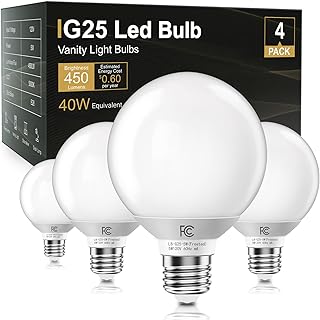
TJOY G25 LED Globe Bulbs (4-Pack, 5000K)
A dependable daylight globe that punches above its price class. The 5000K output delivers crisp, unflattering-but-honest illumination that makeup artists actually prefer, and at 450 lumens per bulb a trio fills a standard vanity bar without creating hot spots. UL-listed and built with a clean frosted finish that avoids the cheap-glass glare some competitors exhibit.
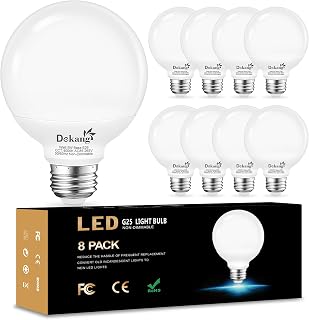
8 Pack LED Vanity Globe Bulbs (4000K Natural Daylight)
The only bulb in this roundup sitting at 4000K, and that difference is significant. Where 5000K can feel sterile and 2700K can mask undertones, this natural daylight middle ground flatters a wider range of skin tones while still providing task-grade clarity. Eight bulbs per order makes it practical for double vanities or anyone who likes to keep spares on hand.
Brtstiun G25 LED Vanity Bulbs (4-Pack, 5000K)
Where the TJOY leans conservative at 450 lumens, the Brtstiun pushes to 600 lumens per globe — a meaningful bump if your vanity fixture uses only two bulbs or sits farther from the mirror. The frosted dome diffuses light evenly without visible LED hotspots, and the slightly higher brightness means fewer shadows under the chin and around the nose, which is exactly where most people struggle.
Vanity Globe Warm White Bulbs (4-Pack, 2700K)
This is the pick for anyone who wants their bathroom to feel like a boutique hotel rather than a clinical studio. The 2700K warmth wraps the room in a soft amber tone that makes tile, wood, and skin glow. At 500 lumens it won’t overpower a small space, and the CRI 85 rating keeps color distortion in check even at the warm end of the spectrum.
G25 Dimmable LED Globe Bulbs (2700K, 920LM)
The standout for versatility. At 920 lumens this is the brightest option reviewed, yet the dimmable design lets you dial it down to a low, warm whisper of light for late-night routines. The 9W draw replacing a 90W incandescent makes it the most energy-efficient choice here, and the smooth dimming range means no flicker at lower settings — a problem that plagues cheaper dimmable LEDs.
Frequently Asked Questions
What color temperature is best for a bathroom vanity?
It depends on what you use the mirror for most. For grooming and makeup application, 4000K to 5000K gives you the truest color representation. For a spa-like atmosphere where the bathroom doubles as a relaxation space, 2700K creates a warmer, more forgiving ambiance. Many designers mix temperatures — brighter and cooler near the mirror, warmer at eye level — but a single consistent temperature reads more cohesive in smaller bathrooms.
Can I use non-dimmable LED bulbs with a dimmer switch?
No. Placing a non-dimmable LED on a dimmer circuit will typically result in flickering, buzzing, or premature burnout. If your fixture is wired to a dimmer, only install bulbs explicitly rated as dimmable and confirm compatibility with your specific dimmer brand.
How many lumens do I need for a vanity mirror?
A general guideline is 1,600 to 2,000 lumens total for a single-sink vanity, which you can achieve with three to four bulbs in the 450–600 lumen range. A double vanity or a large illuminated mirror may benefit from upward of 3,000 lumens combined. Position matters too — bulbs placed at face height on either side of the mirror reduce shadows far more effectively than a single overhead source.
What does CRI 85+ mean for my bathroom lighting?
CRI measures how accurately a light source renders colors compared to natural daylight, on a scale of 0 to 100. A CRI of 85 or higher means colors — including your skin, makeup, and the finish on your bathroom surfaces — appear close to how they would under sunlight. Below 80, you may notice colors shifting toward a dull or slightly greenish cast that makes it hard to judge true shades.
Final Thoughts
If I were lighting my own vanity tomorrow, I would reach for the Brtstiun G25 for its higher lumen output in daylight tasks, the 8-Pack 4000K bulbs for their universally flattering neutral tone, and the G25 Dimmable for anyone who wants a single bulb that transitions from bright morning routine to dim evening wind-down. Every option here outperforms the bargain-bin incandescent globes that still sit in too many American bathrooms, and the upgrade is both visible and immediate.