Key takeaways
- Color Temperature: Stick with 2700K soft warm white for residential chandeliers—it mimics the flattering amber cast of traditional incandescent filaments. Anything above 3000K reads clinical in dining and living spaces.
- CRI (Color Rendering Index): A CRI of 90+ meaningfully improves how fabrics, wood grain, and skin tones appear under the bulb. Standard 80 CRI bulbs are fine for utility areas but fall short in rooms where ambience matters.
- Dimmability: Verify that any LED candelabra bulb is explicitly rated as dimmable and pair it with a compatible dimmer—typically a leading-edge LED-rated model. Non-dimmable LEDs will flicker or buzz on a standard dimmer circuit.
- Base Type and Form Factor: E12 is the standard candelabra base in North America, but the bulb shape—B10, B11, or CA10—affects both light distribution and how the bulb looks inside clear or open-frame fixtures. Match the shape to your fixture’s visual proportions.
- Lumen Output and Wattage: For chandelier use, 400–600 lumens per bulb delivers comfortable ambient light without overpowering the room. A 4W LED replacing a 40W incandescent or a 60W incandescent replacement at 5–6W are the most common sweet spots.
Choosing the right chandelier bulb sounds trivial until you’re standing in a lighting aisle—or scrolling endlessly online—realizing that color temperature, CRI, base type, and dimming compatibility all conspire to either make your fixture glow with gallery-worthy warmth or cast the flat, lifeless glare of a dentist’s office. The wrong E12 candelabra bulb can turn a statement chandelier into a forgettable light source, and most buyers have no idea what separates a quality filament candle bulb from a disposable one.
As a lighting-and-ambience designer, I test dozens of chandelier bulbs each year across residential installations, paying close attention to how each one renders skin tones, interacts with dimmer switches, and sustains color consistency over time. This guide breaks down six top-rated E12 candelabra options in 2026, compares what actually matters when you’re buying in bulk, and helps you match the right bulb to your specific fixture—whether it’s a crystal chandelier, a ceiling fan, or a row of wall sconces.
Our top picks


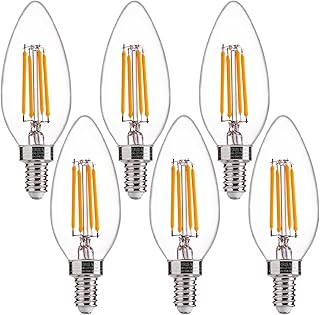


As an Amazon Associate we earn from qualifying purchases at no extra cost to you. Ratings are shown as listed on Amazon.
🛒 Best Price Today on Amazon
Prime members get fast, free shipping on everything above, plus member-only deals. New members get a 30-day free trial — cancel anytime.
How to Choose Chandelier Light Bulbs (2026)
- Color Temperature: Stick with 2700K soft warm white for residential chandeliers—it mimics the flattering amber cast of traditional incandescent filaments. Anything above 3000K reads clinical in dining and living spaces.
- CRI (Color Rendering Index): A CRI of 90+ meaningfully improves how fabrics, wood grain, and skin tones appear under the bulb. Standard 80 CRI bulbs are fine for utility areas but fall short in rooms where ambience matters.
- Dimmability: Verify that any LED candelabra bulb is explicitly rated as dimmable and pair it with a compatible dimmer—typically a leading-edge LED-rated model. Non-dimmable LEDs will flicker or buzz on a standard dimmer circuit.
- Base Type and Form Factor: E12 is the standard candelabra base in North America, but the bulb shape—B10, B11, or CA10—affects both light distribution and how the bulb looks inside clear or open-frame fixtures. Match the shape to your fixture’s visual proportions.
- Lumen Output and Wattage: For chandelier use, 400–600 lumens per bulb delivers comfortable ambient light without overpowering the room. A 4W LED replacing a 40W incandescent or a 60W incandescent replacement at 5–6W are the most common sweet spots.
The Best Chandelier Light Bulbs (2026) Reviewed
Dimmable E12 LED Candelabra Bulbs 40W Equivalent (12-Pack)
These 4W B11 vintage-style filament bulbs deliver a genuinely warm 450 lumens at 2700K with a clear glass envelope that looks authentic inside open chandelier frames. The vintage filament design reads as upscale without the premium price, making them an excellent default pick for rooms that need consistent warmth across multiple fixtures.
60W Incandescent Candelabra Light Bulbs E12 B10 (12-Pack)
If you’re running a high-quality leading-edge dimmer and want the unbeatable smooth dimming curve of true incandescent, these 600-lumen B10 bulbs remain relevant in 2026. They consume far more energy than LED alternatives, but for heritage fixtures where the filament glow is part of the design intent, they still deliver a quality of light that most LEDs approximate rather than replicate.
E12 Flame Tip Candle Bulbs 4W 460LM (12-Pack)
The flame-tip CA10 shape on these 40W-equivalent LEDs gives chandeliers a classic candle silhouette, and at 460 lumens they sit right in the comfortable mid-range for dining and living spaces. At 2700K with smooth dimming, they’re a reliable workhorse option when you need a full dozen for a multi-arm fixture without stretching the budget.
GvvooHome E12 Candelabra LED 40W Equivalent (12-Pack)
The 90+ CRI rating is the headline feature here—colors and textures rendered under these 400-lumen bulbs look noticeably more natural than what standard 80 CRI LEDs produce. At 4W and 2700K with clear glass and a B10 shape, they’re an especially smart choice for chandeliers hung over dining tables where accurate color rendering directly affects how food and tableware appear.
Hizashi 90+ CRI LED Candelabra Bulb 40W Equivalent (12-Pack)
Hizashi pairs UL-listed safety certification with a 90+ CRI and a 450-lumen output that edges out most competitors in its class. The flame-tip CA10 form factor, solid dimming performance, and third-party safety listing make these the strongest all-around pick for buyers who want high color fidelity and verified build quality in a single bulb.
Frequently Asked Questions
Are LED candelabra bulbs really better than incandescent for chandeliers?
For most homeowners, yes—LED candelabra bulbs use roughly 85% less energy, last 15,000–25,000 hours versus roughly 2,000 for incandescent, and stay cool to the touch. The gap in light quality has narrowed dramatically with 90+ CRI LED options, though incandescent still holds a slight edge in ultra-smooth dimming performance below 10% brightness.
How many lumens do I need per bulb for a chandelier?
For ambient chandelier lighting in residential spaces, aim for 400–600 lumens per bulb. A six-arm chandelier with 450-lumen bulbs produces roughly 2,700 lumens total—comparable to a 150W incandescent—which comfortably lights a medium dining room without supplemental lighting.
Will these E12 LED bulbs work with my existing dimmer switch?
Most modern LED-rated dimmers handle 4W–6W candelabra bulbs without issue, but older magnetic low-voltage or standard incandescent dimmers can cause flickering or limited dimming range. If you experience problems, swapping to an LED-compatible dimmer—typically a $15–20 upgrade—almost always resolves it.
What does CRI mean, and should I care?
CRI measures how accurately a light source renders colors compared to natural daylight on a 0–100 scale. For chandeliers in dining rooms, living rooms, or bedrooms, a CRI of 90 or above makes a visible difference in how people, food, and furnishings look. For hallways or closets, standard 80 CRI is perfectly adequate.
Final Thoughts
For most chandelier upgrades in 2026, the Hizashi 90+ CRI bulbs offer the best combination of color quality, safety certification, and dimming performance. The GvvooHome 90+ CRI option is a close runner-up if you prioritize accurate rendering at a slightly lower lumen output. And for buyers who simply want a dependable, affordable warm-white workhorse for large multi-fixture installs, the 4W B11 vintage filament bulbs hit the right balance of aesthetics, output, and value.