Key takeaways
- Higher instructions-per-clock performance than 10th-generation Comet Lake.
- PCI Express 4.0 support from the CPU, but only when the particular Z490 board routes and enables it.
- Useful performance in lightly threaded applications and some games.
- Potentially better performance per core, but not always better value than a discounted 10900K.
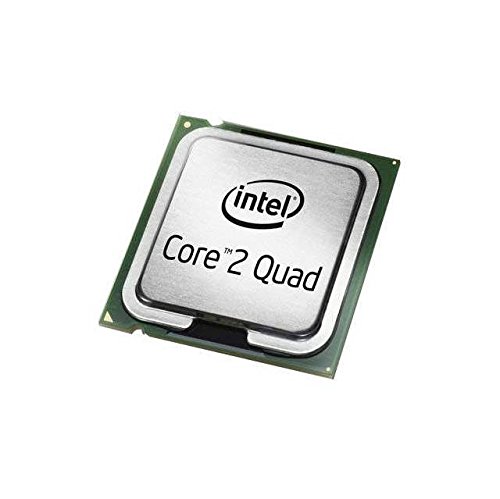
The best CPU for a Z490 motherboard is the Intel Core i9-10900K for maximum all-round performance, while the Core i7-10700K is the better gaming value and the Core i5-10600K is the sensible budget choice.
Quick recommendations
| Processor | Best for | Cores / threads | Typical used-market range | Main caution |
|---|---|---|---|---|
| Intel Core i9-10900K | High-end gaming and heavy productivity | 10 / 20 | Usually $180–$280 | Runs hot and needs strong power delivery and cooling |
| Intel Core i7-10700K | Gaming value and streaming | 8 / 16 | Usually $120–$200 | Needs a capable tower cooler for sustained loads |
| Intel Core i5-10600K | Affordable gaming builds | 6 / 12 | Usually $80–$150 | Less headroom for modern multicore workloads |
| Intel Core i9-10850K | Lower-cost multicore performance | 10 / 20 | Usually $150–$230 | Slightly lower clocks than the 10900K |
| Intel Core i7-11700K | Rocket Lake features on a compatible Z490 board | 8 / 16 | Usually $130–$220 | Requires appropriate BIOS support and can draw substantial power |
Why the Core i9-10900K is the best overall Z490 CPU
The Core i9-10900K is the strongest broadly compatible choice for a Z490 motherboard when you want high frame rates alongside demanding work. Its 10 cores and 20 threads handle gaming, video encoding, software compilation, streaming and large creative applications better than six-core alternatives. It also avoids the compatibility uncertainty associated with upgrading some Z490 boards to 11th-generation processors.
For gaming alone, the 10900K is often more CPU than necessary, particularly when paired with a mid-range graphics card or a 1440p monitor. Its value improves when you also stream, run background applications, use high-refresh-rate gaming at 1080p, or keep the system for several years.
Cooling and power requirements
Although Intel’s advertised processor power figures are much lower, a 10900K can use roughly 200–250 watts during an unrestricted all-core workload, depending on motherboard settings and overclocking. Use a substantial dual-tower air cooler or a 240 mm-or-larger liquid cooler, plus a case with unrestricted front airflow. A 650-watt power supply is a reasonable floor for a balanced system, while 750 watts or more may be appropriate with a high-end graphics card.
Check that the motherboard has a properly cooled VRM heatsink and an 8-pin CPU power connector. Entry-level Z490 boards may technically support the processor but can run hotter or reduce sustained clock speeds under prolonged multicore loads.
Best Z490 processor for gaming: Core i7-10700K
The Core i7-10700K is the best gaming-focused match for most Z490 owners. Its 8 cores and 16 threads are ample for current games, game capture and everyday multitasking, while its high boost clocks keep latency-sensitive gaming performance strong. In many gaming systems, the money saved over a 10900K is better spent on the graphics card, faster storage or a higher-refresh-rate display.
A quality air cooler with a large heatsink is suitable at stock settings, although power limits vary by motherboard. For overclocking, choose a robust tower cooler or a 240 mm liquid cooler and provide at least two front intake fans and one rear exhaust fan.
Best value choice: Core i5-10600K
The Core i5-10600K remains a practical choice for an affordable Z490 gaming build. Its 6 cores and 12 threads are enough for high-refresh-rate gaming, office work and moderate content creation. It is particularly attractive when purchased used with a known-good motherboard and when the system will not be used for frequent video rendering or other heavily threaded work.
Its limitation is upgrade value: newer games and creative applications increasingly benefit from more than six cores. Choose it when the graphics card is the main performance priority, not when you expect the PC to serve as a workstation for many years.
Core i9-10850K versus Core i9-10900K
The Core i9-10850K is often the smarter purchase if it costs noticeably less. Both processors have 10 cores and 20 threads, but the 10850K has slightly lower advertised clock speeds. In real workloads, the difference is usually modest compared with the effect of cooling, motherboard power limits and memory configuration.
Pick the 10850K when the price gap is at least $30–$50. Pick the 10900K when prices are close, when you want the highest stock clocks, or when the system is used for workloads that run continuously.
Should you upgrade a Z490 board to 11th generation?
Rocket Lake processors such as the Core i7-11700K and Core i9-11900K can work in many Z490 motherboards, but compatibility is not automatic. The board must have a BIOS version that adds 11th-generation support, and some manufacturers released separate BIOS branches or removed older CPU support to make room for the update.
Update the BIOS while your existing 10th-generation processor is installed. Do not remove the working CPU before confirming that the required BIOS is available and that the board has a safe update method. If the board does not support BIOS Flashback, an incompatible update can leave you needing a supported processor to recover it.
What Rocket Lake adds
- Higher instructions-per-clock performance than 10th-generation Comet Lake.
- PCI Express 4.0 support from the CPU, but only when the particular Z490 board routes and enables it.
- Useful performance in lightly threaded applications and some games.
- Potentially better performance per core, but not always better value than a discounted 10900K.
The Core i9-11900K is usually difficult to justify as a new purchase for Z490. It has fewer cores than the 10900K, can consume considerable power, and its advantages depend heavily on application and board support. Consider it only when priced well and when the motherboard’s BIOS, VRM and PCIe implementation are confirmed.
Decision matrix for different Z490 owners
| Your situation | Best choice | Reason |
|---|---|---|
| 1080p gaming with a mid-range graphics card | Core i5-10600K | Provides strong gaming performance without diverting budget from the GPU |
| 1440p gaming, streaming and multitasking | Core i7-10700K | Eight cores offer a better balance of frame rates and background workload capacity |
| Video editing, rendering or compiling | Core i9-10900K or 10850K | Ten cores and twenty threads reduce sustained workload times |
| Compact or poorly ventilated case | Core i5-10600K at stock settings | Lower heat output is easier to manage than an unrestricted i9 |
| Existing Z490 board with a weak VRM | Core i5-10600K or Core i7-10700K | Avoids putting prolonged high current through an entry-level power design |
| Already own a 10th-generation CPU | Keep it unless the workload clearly benefits from an upgrade | Changing to 11th generation may offer too little performance for the cost and risk |
Compatibility checks before buying
- Socket: Z490 uses the LGA1200 socket and supports 10th-generation desktop processors. Many boards also support selected 11th-generation CPUs.
- BIOS: Confirm the exact CPU support list and minimum BIOS version on the motherboard manufacturer’s website.
- VRM: Look for substantial heatsinks and avoid pairing a 10-core i9 with a board designed only for basic processors.
- Memory: Two matched DDR4 modules are preferable to one module. DDR4-3200 is a sensible baseline, while faster kits depend on the motherboard and memory controller.
- PCIe 4.0: An 11th-generation CPU alone does not guarantee PCIe 4.0 on Z490; board traces, firmware and the relevant M.2 slot must support it.
- Cooler mounting: LGA1200 coolers generally use the same mounting pattern as LGA115x coolers, but verify the cooler manufacturer’s compatibility list.
Final buying advice
Choose the Core i9-10900K when you need the most dependable high-end performance from a Z490 platform and have strong cooling and power delivery. Choose the Core i7-10700K for the best balance in a gaming PC. Choose the Core i5-10600K for a lower-cost build, and the Core i9-10850K when it is substantially cheaper than the 10900K.
Only choose an 11th-generation upgrade after checking the exact Z490 model’s BIOS support, VRM capability and PCIe layout. For most owners, a well-priced 10th-generation processor is the safer and better-value answer to the question of which is the best CPU for a Z490 motherboard.