Key takeaways
- Light filtration and ambience: Consider how the vine’s leaf shape and density will soften direct sunlight. Broad-leafed varieties like Boston ivy create deep, cool shade, while finer foliage from jasmine or wisteria produces a more delicate, luminous dapple — ideal for string-light settings.
- Growth speed versus control: Fast growers such as Thunbergia grandiflora and wisteria cover a pergola in a single season but may demand aggressive pruning. Slower options like mandevilla offer more manageable coverage at the cost of patience.
- Hardiness zone compatibility: Match the vine to your USDA zone. Mandevilla thrives in zones 9–11 and struggles below frost, whereas Boston ivy tolerates much colder winters and drops its leaves gracefully in autumn.
- Bloom period and color palette: If seasonal color is the goal, prioritize long-blooming species. Wisteria and jasmine both deliver extended floral displays, but their palettes — lavender cascades versus white stars — create very different moods under a pergola.
- Support structure requirements: Not every vine grips a pergola equally. Self-clinging types like Boston ivy attach directly to surfaces, while mandevilla and wisteria need ties, twine, or a trellis layer added to the framework for reliable vertical climbing.
What's inside
Choosing the right climbing vine for a pergola is rarely straightforward. Buyers scroll through hundreds of listings, unsure whether a seed packet or a live plant will actually deliver the dappled canopy and ambient glow they picture for summer evenings outdoors. Growth rate, sun tolerance, bloom color, and even the way foliage filters light all matter — and the wrong pick can leave your pergola bare for seasons or, worse, overwhelmed by an aggressive grower.
This guide cuts through the noise. We evaluated six popular climbing vines available on Amazon through the lens of visual impact, light quality, maintenance demands, and how each performs specifically on a pergola structure. Below you’ll find our curated shortlist, a clear breakdown of what to prioritize in 2026, and honest reviews to help you choose with confidence.
As an Amazon Associate we earn from qualifying purchases.




🛒 Best Price Today on Amazon
Prime members get fast, free shipping on everything above, plus member-only deals. New members get a 30-day free trial — cancel anytime.
How to Choose Climbing Vines for a Pergola (2026)
- Light filtration and ambience: Consider how the vine’s leaf shape and density will soften direct sunlight. Broad-leafed varieties like Boston ivy create deep, cool shade, while finer foliage from jasmine or wisteria produces a more delicate, luminous dapple — ideal for string-light settings.
- Growth speed versus control: Fast growers such as Thunbergia grandiflora and wisteria cover a pergola in a single season but may demand aggressive pruning. Slower options like mandevilla offer more manageable coverage at the cost of patience.
- Hardiness zone compatibility: Match the vine to your USDA zone. Mandevilla thrives in zones 9–11 and struggles below frost, whereas Boston ivy tolerates much colder winters and drops its leaves gracefully in autumn.
- Bloom period and color palette: If seasonal color is the goal, prioritize long-blooming species. Wisteria and jasmine both deliver extended floral displays, but their palettes — lavender cascades versus white stars — create very different moods under a pergola.
- Support structure requirements: Not every vine grips a pergola equally. Self-clinging types like Boston ivy attach directly to surfaces, while mandevilla and wisteria need ties, twine, or a trellis layer added to the framework for reliable vertical climbing.
The Best Climbing Vines for a Pergola (2026) Reviewed
Boston Ivy Vine Seeds
A go-to for anyone after instant atmosphere, Boston ivy clings tenaciously to pergola beams and masonry alike, creating a living curtain that shifts from bright spring green to fiery autumn crimson. The dense, overlapping leaves throw extraordinary dappled shadows across patio furniture — the kind of light that makes golden-hour gatherings feel cinematic. Seeds are forgiving for beginners, and once established, this vine is virtually self-sustaining.
Thunbergia Grandiflora (Blue Trumpet Vine)
If your pergola faces south or west and you want dramatic tropical color, Thunbergia delivers in a big way. Its sky-blue trumpet-shaped blooms open in succession from midsummer through fall, and the vine’s vigorous habit can blanket a standard pergola within two growing seasons. The broad, heart-shaped leaves also create a thick privacy screen — a practical bonus for courtyards exposed to neighbors.
Mandevilla Live Plants (3-Pack)
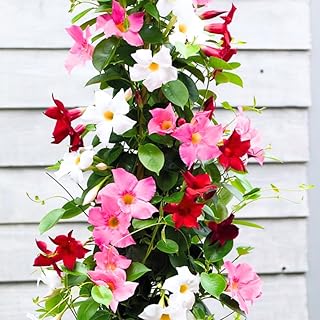
Mandevilla is the choice for warm-climate growers who want flowers that look almost artificial in their vibrancy. Available as rooted live plants rather than seeds, these arrive ready to climb and typically bloom within weeks. The trumpet-shaped blossoms in pink, red, or white catch evening light beautifully, making a pergola feel like an extension of a resort terrace. They do require frost protection in cooler zones.
Wisteria Floribunda Live Plants
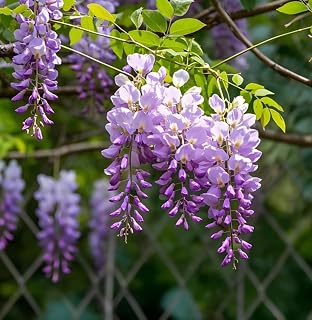
Nothing evokes a storybook pergola quite like cascading wisteria. These live plants arrive at one to two feet tall and establish quickly, sending out vigorous tendrils and, by the second or third season, pendulous racemes of fragrant purple blooms. The filtered light underneath a mature wisteria canopy has a soft, almost lavender-tinged quality that transforms ordinary outdoor dining into something memorable.
Climbing Jasmine Seeds
Jasmine is less about visual spectacle and more about sensory immersion. Its small, star-shaped white flowers are modest in daylight, but at dusk they seem to glow against dark foliage, and the fragrance — sweet, warm, and heady — is unmatched. For pergola spaces designed around evening relaxation and ambient lighting, jasmine delivers an atmosphere no other vine can replicate. The 410-seed pack offers exceptional coverage value.
Frequently Asked Questions
How long does it take a climbing vine to cover a pergola?
Fast growers like Thunbergia grandiflora and wisteria can achieve full coverage in one to two growing seasons, while Boston ivy typically takes two to three years. Slower climbers like mandevilla may need two to three seasons depending on climate and care.
Can climbing vines damage a wooden pergola?
Most climbing vines are harmless to well-maintained wood. Boston ivy attaches with small adhesive pads rather than roots, causing minimal surface impact. Heavy wisteria, however, can become extremely woody over time, so periodic pruning and structural inspection are wise.
Which climbing vine offers the best privacy screening?
Thunbergia grandiflora and Boston ivy both create dense, opaque canopies. Thunbergia grows faster in warm climates, while Boston ivy is better suited to temperate regions and provides year-round screening interest thanks to its colorful autumn foliage.
Do I need to add a trellis to my pergola for vines?
Self-clinging vines like Boston ivy attach directly to beams and slats. Twining and scrambling vines — wisteria, mandevilla, and jasmine — benefit from wire, garden twine, or a secondary trellis layer threaded through the pergola to give tendrils something to grip.
Final Thoughts
For pure atmospheric impact with minimal upkeep, Boston ivy is hard to beat — its seasonal color shifts and light-filtering density are unmatched. Gardeners in warm zones looking for show-stopping blooms should strongly consider Thunbergia grandiflora or mandevilla, while wisteria remains the gold standard for anyone chasing that timeless, romantic pergola aesthetic. Pair your vine choice with warm-toned outdoor lighting, and your pergola becomes the centerpiece of every summer evening.