Key takeaways
- Unmatched Aesthetic Depth: Real brass has a warm, living finish that reflects light with a soft, golden glow. Unlike painted gold finishes, which can look flat or yellow under 3000K LED bulbs, genuine brass interacts beautifully with varying light temperatures.
- Incredible Longevity: Solid brass chandeliers are heirloom-quality pieces. They do not degrade, bend, or corrode. A solid brass fixture bought today can easily last for decades, actually increasing in vintage value over time.
- Corrosion and Rust Resistance: If you are hanging a fixture in a space with moisture—such as a foyer subject to drafty humidity or a dining room near an open kitchen—solid brass will not rust. Plated and painted steel alternatives will eventually rust if the protective lacquer or paint film is compromised.
- Structural Integrity: Heavy-duty brass components hold their shape. Arms do not sag under the weight of glass globes or heavy fabric shades, ensuring the chandelier remains perfectly level and symmetrical.
- Higher Home Resale Appeal: High-end lighting is a key detail that buyers and appraisers notice. Solid brass fixtures signal quality craftsmanship and attention to detail throughout the home.
The Short Answer
Yes, brass chandelier light fixtures are worth the extra money, but only if you are investing in genuine solid brass or high-quality plated brass for a long-term home. If you are decorating a temporary rental, staging a home for a quick sale, or working with a tight budget where the fixture will be hung out of arm’s reach, the premium price of solid brass is not worth it. In those scenarios, a budget-friendly brass-painted or powder-coated alternative will give you the same look for a fraction of the cost.
As we look at the interior design trends of 2026, warm metallics have cemented their place as timeless staples rather than passing fads. However, the market is flooded with “brass” fixtures ranging from $75 to well over $1,500. Understanding what you are actually paying for is the key to deciding whether to save or splurge.
Our top picks
As an Amazon Associate we earn from qualifying purchases at no extra cost to you.
What You Actually Get
When shopping for a brass chandelier, the word “brass” is often used loosely by retailers to describe the color rather than the material. To understand if a fixture is worth the extra money, you must look closely at how it is constructed. There are three primary tiers of brass light fixtures on the market today:
1. Solid Brass
This is the gold standard of lighting. Solid brass is an alloy of copper and zinc. It is incredibly heavy, completely rust-proof, and highly durable. A standard 6-light solid brass chandelier with a 26-inch diameter typically weighs between 15 and 25 pounds. Because it is a non-ferrous metal, it will never rust, making it ideal for high-humidity areas like dining rooms adjacent to kitchens, or even luxury primary bathrooms. Over time, unlacquered solid brass develops a rich, organic patina that many homeowners cherish, though it can also be polished back to a mirror-like shine.
2. Brass-Plated Steel or Iron
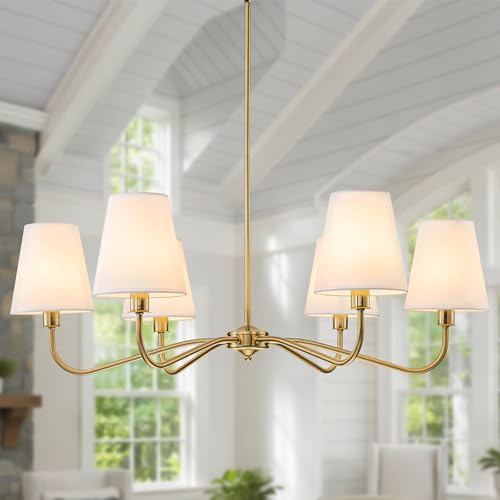
This category represents the mid-range of the market. The core of the chandelier is made of steel or iron, which is then electroplated with a thin layer of real brass. These fixtures offer a highly convincing metallic luster because the outer layer is genuine brass. A 6-light plated chandelier with fabric shades (often measuring around 24 to 28 inches in width) usually retails in the $120 to $250 range and weighs between 8 and 12 pounds. While they look nearly identical to solid brass from a distance, they are magnetic and can rust if the thin plating is scratched or exposed to heavy moisture.
3. Painted or Powder-Coated “Brass Gold”
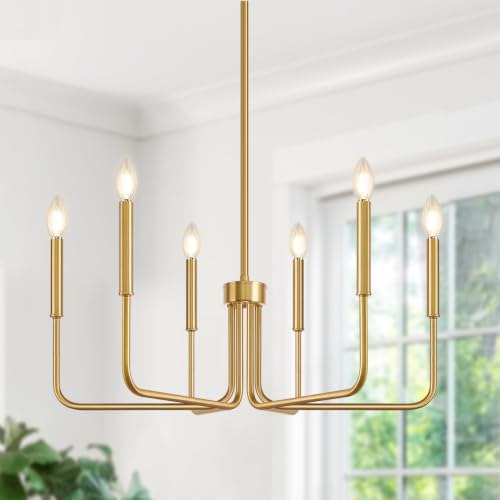
This is the budget-friendly tier. These fixtures are constructed from iron, steel, or aluminum and finished with a gold or brass-colored paint. A classic example is a entry-level 6-light farmhouse candle chandelier, which often retails for around $74.99. These fixtures are incredibly lightweight—usually weighing a mere 5 to 7 pounds for a 26-inch diameter frame—and are easy to install. However, they lack the depth, metallic reflection, and micro-texture of real brass. Up close, the finish can look flat, and the paint is susceptible to chipping or scratching during assembly or cleaning.
Pros
- Unmatched Aesthetic Depth: Real brass has a warm, living finish that reflects light with a soft, golden glow. Unlike painted gold finishes, which can look flat or yellow under 3000K LED bulbs, genuine brass interacts beautifully with varying light temperatures.
- Incredible Longevity: Solid brass chandeliers are heirloom-quality pieces. They do not degrade, bend, or corrode. A solid brass fixture bought today can easily last for decades, actually increasing in vintage value over time.
- Corrosion and Rust Resistance: If you are hanging a fixture in a space with moisture—such as a foyer subject to drafty humidity or a dining room near an open kitchen—solid brass will not rust. Plated and painted steel alternatives will eventually rust if the protective lacquer or paint film is compromised.
- Structural Integrity: Heavy-duty brass components hold their shape. Arms do not sag under the weight of glass globes or heavy fabric shades, ensuring the chandelier remains perfectly level and symmetrical.
- Higher Home Resale Appeal: High-end lighting is a key detail that buyers and appraisers notice. Solid brass fixtures signal quality craftsmanship and attention to detail throughout the home.
Cons
- High Upfront Cost: True solid brass chandeliers are a major investment, often starting at $400 and climbing into the thousands. Even mid-range plated options (like a $139.99 shaded brass chandelier) are significantly more expensive than basic painted steel models.
- Heavy Weight and Installation Hurdles: Solid brass fixtures require heavy-duty ceiling junction boxes. While a standard plastic box can support a light 6-pound painted iron fixture, a 20-pound solid brass chandelier may require a reinforced metal box rated for up to 50 pounds, increasing installation complexity and electrician costs.
- Maintenance Requirements: Unlacquered brass requires regular maintenance if you want to keep it shiny. It must be polished with specialized cleaners every few months. Conversely, if you prefer the patina, you have to tolerate the transitional “spotty” phase as it oxidizes unevenly.
- Finish Matching Difficulties: “Brass” is not a standardized color. If you buy an expensive brass chandelier, matching it to your existing curtain rods, cabinet hardware, or wall sconces can be incredibly frustrating, as finishes range from pale satin gold to dark antique brass.
Who Should Buy It
You should spend the extra money on a high-quality brass chandelier if you are a homeowner planning to stay in your property for five or more years. It is also highly recommended for historic home renovations, where cheap, painted modern metals look glaringly out of place. If you are placing the fixture in a highly visible, high-traffic area—such as directly over a central dining room table or in a double-height entryway where it serves as the room’s primary focal point—the visual depth of real brass is worth every penny.
Who Should Skip It
You should skip the expensive solid brass and opt for a budget-friendly alternative if you are renting, staging a home for sale, or if you like to update your interior decor every few years to keep up with changing trends. Additionally, if the chandelier is going to be hung on a very high ceiling (12 feet or higher) where no one will ever see it up close, a $75 painted farmhouse candle chandelier will look virtually identical to a $500 solid brass one from that distance. In those cases, save your money for items you touch and see up close, like hardware or faucets.
Cheaper Alternatives
If you love the look of brass but cannot justify the high price tag of solid brass, there are highly convincing alternatives available. The table below outlines your options, typical costs, and what you sacrifice by choosing them:
| Option | Typical Cost Range | Trade-off |
|---|---|---|
| Brass-Plated Iron | $120 – $250 | Looks very authentic, but can rust if scratched or exposed to high humidity; cannot be aggressively polished. |
| Gold-Anodized Aluminum | $80 – $180 | Extremely lightweight and completely rust-proof, but has a modern, slightly colder metallic look that lacks vintage charm. |
| Painted/Powder-Coated Steel | $50 – $100 | Very affordable and lightweight (often under 6 lbs), but lacks metallic luster, can look yellow or flat, and paint can chip easily. |
FAQ
How can I tell if a chandelier is solid brass or just brass-plated?
The easiest way to tell is the magnet test. Grab a simple kitchen magnet and place it on one of the chandelier’s arms or the canopy. Real, solid brass is non-magnetic, so the magnet will not stick. If the magnet sticks firmly, the fixture is made of steel or iron with a thin brass plating or paint finish. Additionally, solid brass is significantly heavier than plated steel.
Does real brass rust over time?
No, real solid brass does not rust because it contains no iron. However, it does tarnish and oxidize when exposed to air and moisture, developing a dark greenish-brown patina over time. Plated brass, on the other hand, can rust if the thin brass coating wears away or scratches, exposing the underlying iron or steel to moisture.
What is the difference between brushed brass, satin brass, and antique brass?
These terms refer to the surface treatment of the metal. Brushed brass has visible brush strokes or texture lines on the surface, offering a modern, matte appearance. Satin brass is smooth to the touch but has a duller, non-reflective luster that hides fingerprints well. Antique brass is chemically treated to look aged, featuring dark, darkened undertones that mimic decades of natural oxidation.
Does a heavy brass chandelier require a special ceiling box?
According to standard building codes, a standard ceiling junction box can support fixtures weighing up to 50 pounds. However, older plastic boxes may degrade over time. If your solid brass chandelier weighs over 15 pounds, it is highly recommended to have an electrician verify that your junction box is securely braced to the ceiling joists with a metal hanger bar to prevent sagging or collapse.