The Short Answer
Yes, dimmable LED recessed lights are absolutely worth buying—but only if you pair them with a modern, LED-compatible dimmer switch. If you try to run these highly efficient fixtures on an older dimmer designed for incandescent bulbs, you will likely experience annoying buzzing, persistent flickering, and a severely shortened lifespan for your lights.
As we look at home design trends heading into 2026, integrated, low-profile lighting has transitioned from a premium luxury to an essential standard for modern homes. They offer a clean, minimalist aesthetic, slash energy consumption by up to 85%, and allow you to shift a room’s atmosphere from bright, task-oriented workspace to warm, cozy evening retreat at the slide of a switch.
Our top picks
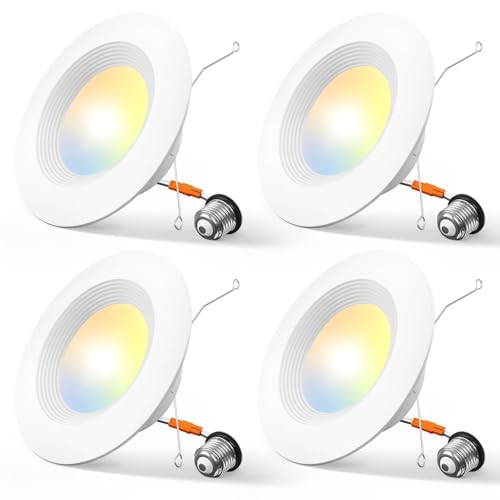
 Amico Recessed Lighting 5/6 Inch
- Increased diameter: The enlarged 7.2-inch diameter, fits 5/6-inch…
- Selectable Colors: Amico can lights have 5 color…
- Simple Installation: Saves you time and electrician costs
As an Amazon Associate we earn from qualifying purchases at no extra cost to you.
What You Actually Get
When you purchase dimmable LED recessed lights today, you are typically choosing between two form factors: retrofit kits and ultra-thin flat canless lights. Retrofit kits are designed to slide directly into existing 5-inch or 6-inch metal “can” housings, screwing into the old bulb socket via a simple medium-base (E26) adapter. Canless LED lights, on the other hand, are ultra-thin disks (often only 0.5 inches thick) that connect to a small, dedicated metal junction box and clip directly into your drywall ceiling using spring-loaded clips.
Most modern fixtures feature a built-in Color Temperature (CCT) switch on the driver box. This allows you to select your preferred light warmth before installation, typically ranging from a warm 2700K (resembling traditional incandescent light) to a crisp 5000K (cool daylight). In terms of output, a standard 12-Watt to 15-Watt LED recessed light generates roughly 800 to 1100 lumens, successfully replacing an old 75-Watt to 85-Watt incandescent bulb while consuming a fraction of the electricity.
The financial barrier to entry has also plummeted. While high-end architectural fixtures still exist, highly reliable consumer-grade multipacks are incredibly budget-friendly. For example, a 12-pack of 5/6-inch flat LED can lights averages around $49.99 (roughly $4.16 per fixture), while smaller 4-pack retrofit kits retail for about $22.99. This makes whole-home upgrades incredibly cost-effective.
Pros
- Exceptional Energy Efficiency: Operating at just 9W to 15W per fixture, these lights draw minimal power. Swapping out eight 75W incandescent bulbs for 12W LEDs in a frequently used living room can save you over $100 annually on your utility bill.
- Unmatched Longevity: High-quality LED recessed lights are rated to last between 25,000 and 50,000 hours. If used for five hours a day, these fixtures can easily last 15 to 25 years without requiring a single replacement.
- Versatile Color Control (5CCT): No more guessing which bulb color looks best in your kitchen. Most modern kits feature a physical switch on the unit allowing you to choose between five color temperatures (2700K, 3000K, 3500K, 4000K, and 5000K) during installation.
- Low-Profile and Space-Saving: Canless ultra-thin models require as little as 2 inches of ceiling clearance. This allows you to install recessed lighting in tight spaces, directly under ceiling joists, or in basements with low clearance.
- Cooler Operating Temperatures: Unlike halogen bulbs, which can reach scorching surface temperatures of over 300°F, LEDs run cool to the touch. This reduces fire hazards and lowers the load on your home’s air conditioning system during hot summer months.
Cons
- Dimmer Compatibility Challenges: This is the single biggest headache for buyers. Legacy slide dimmers rely on leading-edge technology designed for high-wattage loads. Low-wattage LEDs require trailing-edge (ELV) or specialized C-L dimmers. Using the wrong switch results in flickering, buzzing, or a limited dimming range (often dropping out completely below 20%).
- Integrated Designs Mean Whole-Unit Replacement: Many flat-panel recessed lights do not have replaceable bulbs. If the internal LED driver or diode fails after a few years, you cannot simply screw in a new bulb; you must pull down the entire fixture and wire in a new one.
- Upfront Installation Costs: While the fixtures themselves are inexpensive, installing them in a ceiling without pre-existing wiring is labor-intensive. Hiring an electrician to run wires, install junction boxes, and mount the lights typically costs between $75 and $150 per fixture in labor.
- Directional Light Limitations: Recessed lights cast light downward in a cone shape (usually with a 110-degree beam angle). If positioned incorrectly, they can create harsh shadows on faces or leave the upper portions of your walls in darkness, requiring supplementary floor or table lamps.
Who Should Buy It
You should invest in dimmable LED recessed lights if you are building a new home, remodeling a kitchen or living space, or trying to make a room with low ceilings feel larger and more open. They are also perfect for homeowners who want to control the mood of their space—bright and clear for cooking or cleaning, but dim and relaxed for movie nights. If you already have existing recessed cans in your ceiling, purchasing a retrofit kit is an incredibly easy, 10-minute DIY project that pays for itself in energy savings within the first year.
Who Should Skip It
You should skip these fixtures if you live in a rental property where you cannot alter the ceilings or electrical wiring. Additionally, if you are unwilling to replace your existing wall dimmer switches, you should avoid dimmable LEDs; the performance on old switches is almost guaranteed to frustrate you. Finally, if you prefer the unique, warm-amber glow of vintage filament bulbs for your home design aesthetic, standard recessed LEDs may feel too sterile or modern for your taste.
Cheaper Alternatives
If you want the look of recessed lighting or need to upgrade your current fixtures but are on a strict budget, consider these alternatives:
| Option | Estimated Cost | Trade-offs |
|---|---|---|
| Non-Dimmable LED Recessed Lights | $30 – $40 per 12-pack | Saves a few dollars upfront, but you lose all control over ambiance. The lights will remain at 100% brightness at all times. |
| Standard LED Bulbs in Existing Cans | $10 – $15 per 6-pack | Extremely cheap and requires zero electrical work, but you lose the clean, seamless look of flat trim rings, and dust/bugs can collect inside the open cans. |
| Dimmable Smart Bulbs in Existing Cans | $15 – $30 per bulb | No wall dimmer upgrade required (dimming is handled via app or smart home hub), but the upfront cost per bulb is much higher than integrated LED fixtures. |
| Flush Mount Ceiling Fixtures | $15 – $30 per fixture | Easier to install in a single center junction box, but does not provide the even, modern, edge-to-edge light distribution of multiple recessed lights. |
FAQ
Do I need a special dimmer switch for dimmable LED recessed lights?
Yes, in almost all cases. Standard incandescent dimmers struggle to register the incredibly low wattage drawn by LEDs, which causes the lights to flicker, buzz, or shut off unexpectedly. To get smooth dimming down to 5% or 10%, you must install a modern dimmer rated specifically for LED bulbs (often labeled as a C-L or ELV dimmer).
Can I install dimmable LED lights on a standard non-dimming switch?
Yes, you can. If you hook a dimmable LED fixture to a standard on/off light switch, it will operate perfectly at 100% brightness. It will not damage the fixture. However, you will not be able to adjust the light levels until you swap that switch out for a compatible dimmer.
What is the difference between “canless” and “retrofit” LED recessed lights?
Retrofit lights are designed to upgrade existing, older recessed fixtures. They feature an E26 screw base that goes into the old socket and metal spring clips that slide into the existing 5-inch or 6-inch metal housing. Canless lights do not require a metal housing at all; they connect to a tiny, remote junction box and clip directly into a hole cut into your drywall ceiling, making them ideal for spaces without pre-existing cans.
Why do my LED recessed lights buzz when I dim them?
Buzzing is almost always caused by an incompatibility between the LED driver inside the light fixture and the wall dimmer switch. This occurs because old dimmers rapidly chop the electrical current to reduce brightness, which causes the electronic components in the LED driver to vibrate physically. Upgrading to a brand-approved LED dimmer switch will resolve this issue.