Key takeaways
- Base and shape: Most chandelier sockets use an E12 candelabra base. Check the fixture’s clearance and choose B10, B11, CA10, or flame-tip glass to suit the silhouette.
- Color temperature: Around 2500K creates an amber, candlelit mood, while 2700K offers a balanced soft white that works well in dining rooms, bedrooms, and entryways.
- Brightness: A 40-watt-equivalent LED is usually sufficient for decorative illumination. Choose a 60-watt-equivalent option when the chandelier is the room’s primary light source.
- Dimming: Confirm that the bulb is dimmable and compatible with your dimmer. Smooth low-level dimming is especially important for exposed chandelier bulbs.
- Glass and filament: Clear glass and visible filaments preserve a classic chandelier appearance, while frosted finishes soften glare and make the fixture more comfortable at eye level.
What's inside
A chandelier can look beautifully proportioned yet still feel wrong when its bulbs are too harsh, too dim, or visually bulky. The exposed lamp shape, color temperature, brightness, and dimming behavior all affect whether the fixture reads as elegant centerpiece or glaring overhead light.
This guide evaluates chandelier bulbs from a lighting-and-ambience perspective, focusing on filament appearance, warmth, lumen output, base compatibility, and everyday flexibility. The selections cover soft decorative LED options, brighter task-friendly bulbs, and a traditional incandescent choice for fixtures where warmth matters more than efficiency.
As an Amazon Associate we earn from qualifying purchases at no extra cost to you. Product prices and availability are accurate as of the date shown and are subject to change.


🛒 Best Price Today on Amazon
Prime members get fast, free shipping on everything above, plus member-only deals. New members get a 30-day free trial — cancel anytime.
How to Choose a Bulb For Chandelier (2026)
- Base and shape: Most chandelier sockets use an E12 candelabra base. Check the fixture’s clearance and choose B10, B11, CA10, or flame-tip glass to suit the silhouette.
- Color temperature: Around 2500K creates an amber, candlelit mood, while 2700K offers a balanced soft white that works well in dining rooms, bedrooms, and entryways.
- Brightness: A 40-watt-equivalent LED is usually sufficient for decorative illumination. Choose a 60-watt-equivalent option when the chandelier is the room’s primary light source.
- Dimming: Confirm that the bulb is dimmable and compatible with your dimmer. Smooth low-level dimming is especially important for exposed chandelier bulbs.
- Glass and filament: Clear glass and visible filaments preserve a classic chandelier appearance, while frosted finishes soften glare and make the fixture more comfortable at eye level.
The Best Bulb For Chandelier (2026)s Reviewed
60W Equivalent LED Chandelier Light Bulbs
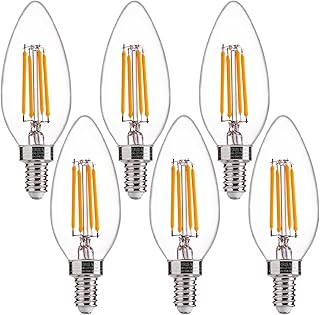
These dimmable E12 B11 bulbs are a strong all-purpose choice when a chandelier needs noticeable illumination without losing its decorative character. Their clear glass and filament styling suit open-arm fixtures, while the 2700K soft white tone keeps the atmosphere inviting rather than clinical.
E12 Flame Tip Candle Bulbs, 12-Pack
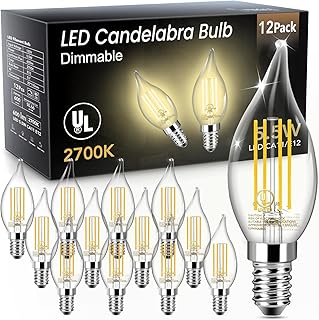
The flame-tip profile gives this 4-watt LED a particularly traditional chandelier look, making it a natural fit for ornate arms and candle-style sockets. At 2700K, it delivers a warm presentation, and the larger pack is practical when a fixture uses many bulbs or when you want matching replacements on hand.
COLWATT 40W Warm White Candelabra Bulbs
With a notably warm 2500K color temperature, the COLWATT bulbs are designed for rooms where ambience takes priority: dining areas, entertaining spaces, and relaxed living rooms. The CA10 clear form has a vintage presence, although buyers should make sure the fixture’s shape and socket spacing accommodate it.
12-Pack 40W Equivalent B11 Vintage Chandelier Bulbs
This B11 LED filament option strikes a useful middle ground between decorative styling and practical output. Its clear glass keeps the chandelier visually crisp, while the 2700K light is warm enough for evening use without making the room appear overly amber.
E12 40W Equivalent B10 Edison Bulbs
The compact B10 profile works well in smaller chandeliers or fixtures with limited space between sockets. These dimmable 2700K bulbs offer a vintage clear-glass appearance and a slightly brighter specification than many basic decorative candelabra LEDs, making them versatile for both mood lighting and general illumination.
Frequently Asked Questions
Are LED bulbs suitable for chandeliers?
Yes. LED candelabra bulbs run cooler, use less energy, and are available in convincing filament designs. They are particularly helpful in chandeliers with many sockets, where replacing incandescent bulbs frequently can become expensive.
Is 2500K or 2700K better for a chandelier?
Choose 2500K for a candlelike, amber atmosphere and 2700K for a softer, more neutral warm white. In a dining room or formal sitting room, 2500K can feel especially intimate; 2700K is generally more adaptable throughout the home.
Can I use incandescent chandelier bulbs?
Yes, provided the fixture and dimmer are rated for them. The MEQIQTEK E12 60 Watt Incandescent Candle Light Bulbs produce a familiar 2500K glow and strong brightness, but they consume more energy and generate more heat than LED alternatives.
Why does my chandelier bulb flicker when dimmed?
Flicker can result from a dimmer that is incompatible with LED technology, an overloaded or aging control, or inconsistent bulb electronics. Verify LED compatibility, stay within the dimmer’s load range, and replace bulbs with a matched set if necessary.
Final Thoughts
For the best balance of brightness and classic styling, the 60W Equivalent LED Chandelier Light Bulbs are an excellent starting point. Choose the E12 Flame Tip Candle Bulbs for a more traditional silhouette, or the COLWATT 2500K bulbs when a deeper candlelit mood is the priority.