
Key takeaways
- Grip when damp: Budget mats grip well dry and poorly wet. If your hands sweat at all, this is the first thing you will give up.
- Foam density over thickness: A dense quarter-inch mat outlasts a soft half-inch one. Density determines whether dents recover; thickness only determines initial comfort.
- Surface durability: Printed and coated surfaces wear where hands and feet land repeatedly. Expect visible patches within months of frequent use.
- Where you practise: On carpet, thickness barely matters and grip does. On hard floors it reverses. Buy for your actual floor.
- Realistic replacement cycle: Treat an inexpensive mat as a one to two year item. Budgeting for that is more useful than expecting it to last a decade.
What's inside
Cheap yoga mats are not worse versions of expensive ones. They are different objects that happen to be the same shape, and the differences show up in three specific places: how much grip you get when your palms are damp, how long the surface survives being knelt on, and whether the foam bounces back or stays permanently dented under your heels. Everything else — length, colour, the strap it ships with — is essentially the same across every price point.
That makes this an honest tradeoff rather than a compromise. If your practice is a few sessions a week of gentle flow and floor stretching on carpet, none of those three weaknesses will bother you, and paying more buys nothing you will notice. If you sweat, hold long standing poses, or do a hundred sessions a year, they will all bother you within months. The options below are compared by what specifically you give up in exchange for the low price.
As an Amazon Associate we earn from qualifying purchases at no extra cost to you. Product prices and availability are accurate as of the date shown and are subject to change.



Quick Comparison
| Product | Best For | Standout Feature | Watch Out For |
|---|---|---|---|
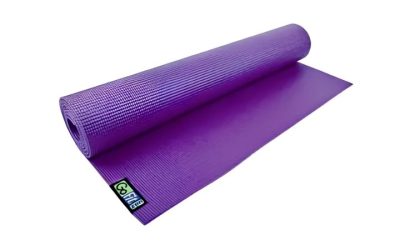
| CAP Non-Slip Yoga Mat | Light home practice | Textured grip surface at a low price | Thin cushioning under knees and elbows |
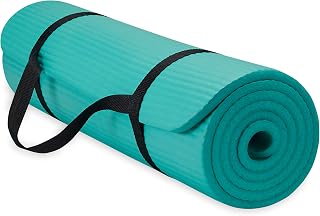
| Amazon Basics Extra Thick Exercise Mat | Joint comfort on a budget | Extra thickness plus a carrying strap | Soft foam compresses in balance poses |
| Gaiam Premium 6mm Print Mat | The best surface at this level | 6mm cushioning with a printed grip pattern | Print surface wears at high-contact points |
| Fitvids 1/4-Inch High Density Mat | Resisting dents and tears | Denser foam that recovers its shape | Firmer feel than plush budget mats |
| Gaiam Thick NBR Foam Mat | Floor exercises beyond yoga | NBR foam with an easy-cinch strap | Thickness undermines standing stability |
| Sunny Health & Fitness Exercise Mat | General home workouts | Supportive cushioning for mixed training | Grip is adequate rather than exceptional |
How to Choose
- Grip when damp: Budget mats grip well dry and poorly wet. If your hands sweat at all, this is the first thing you will give up.
- Foam density over thickness: A dense quarter-inch mat outlasts a soft half-inch one. Density determines whether dents recover; thickness only determines initial comfort.
- Surface durability: Printed and coated surfaces wear where hands and feet land repeatedly. Expect visible patches within months of frequent use.
- Where you practise: On carpet, thickness barely matters and grip does. On hard floors it reverses. Buy for your actual floor.
- Realistic replacement cycle: Treat an inexpensive mat as a one to two year item. Budgeting for that is more useful than expecting it to last a decade.
Top Picks Reviewed
Best Grip for the Price: CAP Non-Slip Yoga Mat
The textured surface here does the important job well: hands stay put in downward dog and feet do not creep in warrior poses, at least while things are dry. For a lightweight mat aimed at home practice and pilates, that is the specification that matters most and it delivers.
What you give up is padding. This is a thin mat, and on a hard floor kneeling poses, forearm work and any pose that puts a hip or elbow on the ground will be uncomfortable. Doubling a towel under the contact point is the standard workaround.
Best Cushioning for the Price: Amazon Basics Extra Thick Exercise Mat
Extra thickness makes an immediate difference on hard flooring, and for anyone whose main complaint is knee or spine discomfort during floor work, it is the most direct fix available at this price. The included strap also solves storage for a mat that is bulkier than average.
Soft, thick foam is unstable underfoot. In tree pose or warrior three you will feel your standing foot sink and search, which is a genuine drawback for balance-focused practice. It is a floor-work mat first and a yoga mat second.
Best Overall Surface: Gaiam Premium 6mm Print Mat
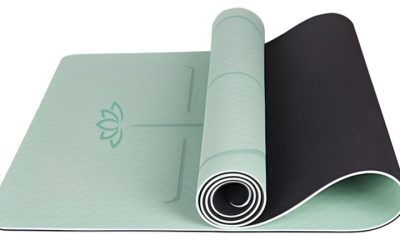
At 6mm this hits a sensible middle — enough cushioning that knees are comfortable, not so much that standing poses become wobbly — and the printed surface pattern provides more reliable traction than a plain smooth face.
Printed surfaces wear. The areas under your hands and the balls of your feet will smooth out first, and once that pattern polishes away the grip there declines noticeably even though the rest of the mat looks new.
Best Durability: Fitvids 1/4-Inch High Density Mat
High density is the specification that most affects lifespan. A dense quarter-inch mat resists the permanent heel dents and edge curling that retire cheap mats, and anti-tear construction means the corners survive being rolled and unrolled hundreds of times.
Denser foam feels firmer, and people expecting plush cushioning often find it harder than they wanted. That firmness is the reason it lasts, but it is worth knowing before you unroll it expecting softness.
Best for Mixed Training: Gaiam Thick NBR Foam Mat
NBR foam and generous thickness make this the most comfortable option here for core work, stretching, physiotherapy exercises and anything else that involves lying on the floor for extended periods. The cinch strap makes storing a bulky mat straightforward.
The same thickness that helps on your back hurts in standing poses, where the surface compresses unevenly under a single foot. If your practice is mostly standing sequences, a thinner mat will serve you better.
Frequently Asked Questions
What exactly am I giving up by buying cheap?
Chiefly wet grip, surface durability and foam recovery. Length, width and basic cushioning are broadly comparable across price points; those three properties are where the money goes.
How long should an inexpensive mat last?
With two or three sessions a week, roughly one to two years before dents become permanent or the surface polishes smooth. Frequent hot practice shortens that significantly.
Can I improve grip on a budget mat?
A cotton yoga towel laid over the mat solves damp-hand slipping completely and costs a fraction of a premium mat. It is the single most effective upgrade available.
Is thicker always more comfortable?
For floor work, mostly yes. For standing balance, no — thick soft foam makes it harder to feel the ground and stabilise, which is why many experienced practitioners prefer thinner mats.
Final Thoughts
The right budget mat depends entirely on which compromise you can live with. The CAP mat keeps grip and gives up padding, the Amazon Basics and Gaiam NBR options do the reverse, the Fitvids high-density mat trades softness for a longer life, and the Gaiam 6mm print mat is the most balanced surface of the group. Decide whether your practice is mostly standing or mostly on the floor, and the choice narrows to one or two immediately.
Write Your Review
No reviews yet. Be the first to share your experience!