Key takeaways
- Light placement beats light quantity: Two sources at eye level on either side of the mirror will always outperform one brighter source overhead. Side lighting fills the hollows instead of deepening them. If you can only mount above, choose a wide bar rather than a compact fixture so the beam spreads across the whole face.
- Color temperature you can change: A fixed 6500K strip renders skin cold and clinical; a fixed 2700K flatters but hides flaws you needed to see. Look for selectable CCT — typically 3000K, 4000K, and 6500K — so you can match the light you’ll actually be seen in, whether that’s an office, daylight, or a dim restaurant.
- Real dimming, not two settings: Multi-level or stepless dimming lets you scale from full task brightness down to a low ambient glow for evenings. Touch dimmers on strip kits are convenient; hardwired bars usually need a compatible wall dimmer, so confirm compatibility before you buy.
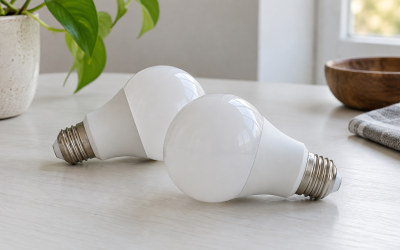
- Diffusion is what makes light kind: Frosted or milky glass shades and matte-covered LED modules scatter the beam and soften edge shadows. Bare bulbs and clear glass create hard, sparkling highlights — striking as decor, harsher on the face. Match the shade to how you’ll use the mirror.
- Installation reality check: Adhesive USB kits install in fifteen minutes and suit renters, dorms, and existing mirrors. Hardwired fixtures deliver higher output and a finished look but need a junction box and, ideally, an electrician. Also verify ETL or UL listing on anything going into a bathroom.
What's inside
Most vanity lighting problems aren’t about brightness at all. They’re about direction. A single ceiling fixture drops light straight down onto your forehead and nose, carving shadows under the eyes, jaw, and cheekbones — exactly the areas you’re trying to see clearly. Then you step outside, catch your reflection in a car window, and the blending you spent ten minutes on has vanished. The fixture wasn’t underpowered. It was in the wrong place, aimed the wrong way, and probably running a color temperature that had nothing to do with the light you actually live in.
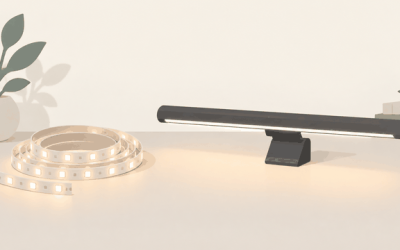
Good vanity lighting works on three axes: where the light originates, how wide it spreads, and what color it renders. Get those right and almost any mirror becomes usable. This guide breaks down the two approaches worth your money — flanking bulb arrays that wrap light around the face from both sides, and horizontal bars mounted above the mirror that wash downward with soft, even fill — plus the specs that separate a fixture you’ll keep from one you’ll quietly unplug. Below are the picks I’d put in a real room.
As an Amazon Associate we earn from qualifying purchases at no extra cost to you. Product prices and availability are accurate as of the date shown and are subject to change.


🛒 Best Price Today on Amazon
Prime members get fast, free shipping on everything above, plus member-only deals. New members get a 30-day free trial — cancel anytime.
How to Choose a Light For Vanity (2026)
- Light placement beats light quantity: Two sources at eye level on either side of the mirror will always outperform one brighter source overhead. Side lighting fills the hollows instead of deepening them. If you can only mount above, choose a wide bar rather than a compact fixture so the beam spreads across the whole face.
- Color temperature you can change: A fixed 6500K strip renders skin cold and clinical; a fixed 2700K flatters but hides flaws you needed to see. Look for selectable CCT — typically 3000K, 4000K, and 6500K — so you can match the light you’ll actually be seen in, whether that’s an office, daylight, or a dim restaurant.
- Real dimming, not two settings: Multi-level or stepless dimming lets you scale from full task brightness down to a low ambient glow for evenings. Touch dimmers on strip kits are convenient; hardwired bars usually need a compatible wall dimmer, so confirm compatibility before you buy.
- Diffusion is what makes light kind: Frosted or milky glass shades and matte-covered LED modules scatter the beam and soften edge shadows. Bare bulbs and clear glass create hard, sparkling highlights — striking as decor, harsher on the face. Match the shade to how you’ll use the mirror.
- Installation reality check: Adhesive USB kits install in fifteen minutes and suit renters, dorms, and existing mirrors. Hardwired fixtures deliver higher output and a finished look but need a junction box and, ideally, an electrician. Also verify ETL or UL listing on anything going into a bathroom.
The Best Light For Vanity (2026)s Reviewed
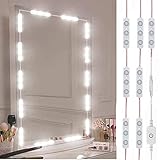
Hollywood Style 10ft LED Vanity Mirror Light Strip
A continuous 10-foot run of ultra-bright white LED gives you total freedom over layout — frame a mirror on three sides, or split it into two vertical columns for proper side lighting. The touch dimmer is responsive and the adhesive backing holds well on clean glass, though the fixed white tone means you’re committing to one rendering.
Consciot LED Vanity Lights, 10 Dimmable Bulbs
This is the most complete strip-mounted bulb kit here: ten diffused globes with adjustable color and brightness, running off USB so there’s no electrical work at all. The bulb spacing produces that even, wrapping fill you want for makeup, and the tone control is genuinely useful rather than a token feature.
LED Vanity Lights with 10 Bulbs, 3000K/4000K/6500K
Three defined color temperatures plus ten brightness steps make this the pick for anyone who switches between warm evening light and daylight-accurate detail work. The stick-on installation is forgiving, and the discrete presets are easier to return to than a sliding gradient.
VOLISUN Modern 31.5″ Bathroom Vanity Light
At 31.5 inches with a rotatable head, this black bar throws a wide, even wash rather than a narrow stripe — which is exactly what an above-mirror fixture needs to do. Eighteen watts, five selectable CCTs, dimmable, and ETL certified; it’s the strongest hardwired option here for a modern bathroom.
Ascher 4-Light Vanity Light, Brushed Nickel
Frosted milky glass on four sockets produces beautifully diffused light with almost no glare, and brushed nickel sits comfortably in transitional and traditional spaces. Bulbs aren’t included, which is actually an advantage — you choose the wattage and color temperature.
Frequently Asked Questions
What color temperature is best for a vanity?
Around 4000K is the most reliable single choice — neutral enough to render skin accurately without the blue cast of 6500K. If your fixture offers selectable CCT, use 4000K for daily work and drop to 3000K for a warmer evening mood.
How bright should vanity lighting be?
Aim for roughly 1,500 to 2,500 lumens total across the fixture for a standard vanity. Distribution matters more than the raw number, so prioritize spreading that output across two side sources or one wide bar.
Can I use stick-on LED lights in a bathroom?
Yes, provided they’re mounted away from direct water contact and the adhesive is applied to a clean, dry, non-porous surface. Steam can weaken adhesive over time, so many people reinforce with clear mounting tape.
Should lights go above or beside the mirror?
Beside, if the wall allows it — side lighting at eye level eliminates under-eye and jaw shadows. Above-mirror bars are the practical fallback and work well when they’re wide and heavily diffused.
Final Thoughts
For renters or anyone working with an existing mirror, the Consciot 10-bulb kit is the most flexible pick, with real color and brightness control and no wiring. If you’re upgrading a bathroom properly, the VOLISUN 31.5-inch rotatable bar delivers the widest, most controllable wash of any hardwired fixture here, while the Ascher 4-light in brushed nickel is the softer, more classic choice when glare-free diffusion is the priority.