
Our Top Picks
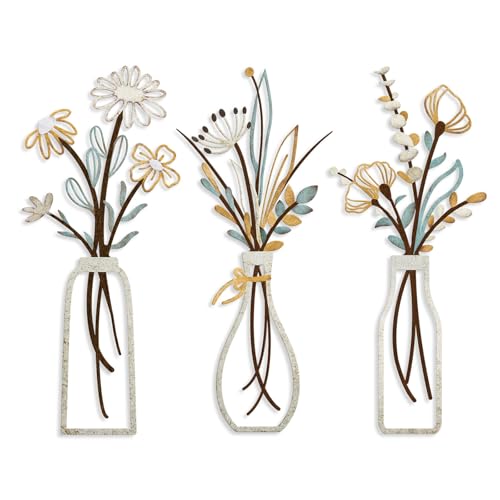 Pigort 3 Pieces Metal Flowers Wall Art- Rustic6 x 13.7 inches13.7 x 6.1 x 0.2 inches0.4 poundsCheck on Amazon
 Six Petal Mandala Multi Layered Wooden Mandala Wall18"L x 18"W18 x 18 x 0.2 inches2.8 poundsCheck on Amazon
 TOMBABY Enlarge Thickened Wind Resistant Metal Agave Garden12 x 4 x 4 inches2.5 poundsCheck on Amazon
 TOGGLER SNAPTOGGLE Drywall Anchors with 1/4-20 Bolts20 Pack w/ Round Head Bolts0.25 x 0.25 x 6.5 inches1 poundsCheck on Amazon

The Short Answer
The best metal wall art is the piece whose metal, finish and weight suit the wall and room it will hang in. For most indoor living spaces, powder-coated or sealed steel and lightweight aluminum give the widest range of shapes at manageable weight, while hand-finished iron, copper and brass-look pieces add warmth and a handmade feel but are usually heavier and need more care. Cover roughly half to two thirds of the width of the furniture below, hang the center near eye level, and mount anything heavy into studs or with anchors rated well above its weight. Only use a piece outdoors if it is made and finished for that purpose, because untreated metal rusts and tarnishes.
The sections below explain the types of metal art, how the metals and finishes compare, how to choose and size a piece, how to hang it, how to care for it, and what to watch for with sharp edges and heavy loads.
Table of Contents
- Why metal works on a wall
- Types of metal wall art
- Metals and finishes compared
- How to choose
- Sizing and placement
- Hanging heavy art step by step
- Styling and lighting
- Care and rust prevention
- Safety notes
- Common mistakes
- Who should choose what
- Buying checklist
- Frequently asked questions
Why Metal Works on a Wall
Metal brings qualities that paper, canvas and wood do not. It catches light and changes through the day, so a brushed or hammered surface looks different in morning sun and under a lamp at night. It can be cut into open shapes that cast shadows on the wall behind, which adds depth without color. And it is durable: a well-finished metal piece does not fade like a print or warp like thin wood.
Those same qualities explain why metal art can go wrong. A large steel piece is heavy, so it needs real mounting. Cut edges can be sharp. A mirror-bright finish in the wrong spot throws glare. Thinking through weight, finish and edges before you buy keeps the attractive part of metal art and avoids the problems.
Types of Metal Wall Art
Laser-cut panels are flat sheets cut with patterns such as trees, geometric lattices, maps or words. They are relatively light, hang flat, and cast detailed shadows, particularly when mounted a little off the wall on spacers.
Layered or dimensional pieces stack several cut shapes at different depths to create relief, as in leaf clusters, waves or abstract forms. They have more visual depth but need a sturdy back structure and usually have more than one hanging point.
Sculptural wall pieces are three-dimensional works such as welded abstract forms, sunbursts and large rings. They are often heavier and stand out from the wall by several inches, so they suit generous spaces with ample clearance.
Framed metal prints put an image on aluminum sheets. The metal is a printing surface rather than a sculptural element, and the result is similar to a modern photographic print with a glossy or matte finish.
Metal wall panels and tiles are modular pieces that you arrange as a grid or a pattern, which lets you fit awkward walls and adjust the size.
Small decorative accents such as mirrors with metal frames, wall hooks, floating shelves and word signs add metal in light touches.
Outdoor garden and fence art is usually made from weather-resistant steel or coated metal and meant for patios, fences and garden walls.
Metals and Finishes Compared
Understanding the base metal tells you about weight, durability and how the piece will age.
| Metal | Weight | Look | Weather behavior | Best use |
|---|---|---|---|---|
| Steel (painted or powder coated) | Heavy | Solid, matte or satin color | Rusts if coating is chipped | Indoor statement pieces |
| Weathering steel | Heavy | Orange-brown rust surface | Develops a rust layer by design; can stain nearby surfaces | Outdoor walls, rustic interiors |
| Iron (wrought or cast) | Very heavy | Dark, handcrafted | Rusts without sealing | Traditional and rustic rooms |
| Aluminum | Light | Brushed, anodized or painted | Does not rust, may oxidize or dent | Large pieces, humid rooms |
| Stainless steel | Heavy | Cool, reflective or brushed | Resists rust, can show water marks | Modern interiors, kitchens |
| Copper | Moderate | Warm orange, can develop green patina | Patina develops over time | Accents and warm palettes |
| Brass or brass-look finish | Moderate | Warm gold | Tarnishes unless lacquered | Traditional and glam rooms |
Finishes
The finish matters as much as the metal. Powder coating is a baked-on colored layer that resists chipping better than ordinary paint but can still scratch. Brushed finishes show fine parallel lines and hide fingerprints. Polished finishes look mirror-like and show every mark. Hammered finishes scatter light and hide scratches well. Patinas are deliberate chemical or natural aging, and they continue to change slowly. Clear lacquers slow tarnish on brass and copper but can yellow or wear.
| Finish | Look | Shows marks | Maintenance |
|---|---|---|---|
| Powder coat | Even color, matte to gloss | Chips show bare metal | Wipe, touch up chips |
| Brushed | Satin, directional lines | Low | Wipe with the grain |
| Polished | Mirror-like | High | Frequent wiping |
| Hammered | Dimpled, sparkly | Low | Dust and wipe |
| Natural patina or rust | Aged, variable color | Changes by design | Seal if you want to stop change |
How to Choose
Start with the wall and the weight, then the style.
Check the wall. Drywall over studs can carry a heavy piece if you screw into the studs. Hollow doors, thin paneling and plaster over lath are tricky. Brick and concrete need masonry fasteners. Know what is behind the surface before you pick a heavy sculptural piece.
Match the room’s temperature. Warm metals such as copper and brass suit wood, cream and earth tones. Cool metals such as black steel, nickel and stainless suit gray, white and modern palettes. Mixing a few metals can work if one dominates and the others repeat in small amounts, for example lamp bases or cabinet pulls.
Think about the pattern. Open cutouts feel light and let the wall color show, so painted walls change the piece. Solid shapes feel bold. Fine lattice patterns are best in rooms that can handle detail. A single dramatic piece suits a quiet wall, and a group suits a larger wall with a mix of shapes.
Mind the theme. Nature motifs such as branches, birds and leaves are easy to live with. Geometric forms feel modern. Words and quotes date more quickly and are a taste decision.
Read the details. A listing should state the metal, the finish, the weight and the dimensions. If the weight is missing for a large piece, treat that as a reason to ask or choose another item. Check how it hangs: sturdy keyholes, welded brackets or a wire.
Sizing and Placement
Metal reads as bold, so scale matters.
- Above a sofa or bed: Aim for about half to two thirds of the furniture width, with a gap of several inches above the back. A narrower piece can float in the middle, while a wide panel or a set of three can fill the space.
- Entryways and halls: Choose slim vertical or round pieces that do not protrude far into walking space. Keep dimensional art out of narrow hallways where people brush the wall.
- Dining rooms: Large circular or horizontal pieces work above a sideboard. Avoid placing sharp-edged art close to chair backs.
- Kitchens: Stainless and aluminum cope with moisture, but keep any art away from the stove, where grease and heat will damage finishes.
- Bathrooms: Use aluminum or sealed stainless and keep it away from direct splashes. Iron and brass can spot with humidity.
- Eye level: Hang the center of the piece at roughly eye level, around 57 inches from the floor in many galleries, adjusting for tall ceilings and furniture.
For groups, lay out the pieces on the floor first, keep gaps consistent, and photograph the layout before you drill. Trace the shapes on paper, tape the templates to the wall, and move them until the arrangement looks right.
Hanging Heavy Art Step by Step
Metal art can weigh far more than a framed print, so the hanging method deserves attention.
- Find the weight. If the listing does not state it, ask the seller before buying.
- Look at the hanging points on the back. Sturdy keyhole slots, welded tabs or two or more heavy brackets are better than a single thin wire.
- Locate wall studs with a stud finder and mark them. A screw into a stud holds far more than a hollow-wall anchor.
- Choose fasteners whose stated load rating is well above the weight, and use more than one hanging point to share the load.
- If studs are not available, use anchors designed for the wall type and follow their stated limits. Do not rely on light adhesive hooks for heavy metal.
- Use a level and mark the screw positions, then drill pilot holes.
- Hang the piece, check that it sits firmly in each keyhole, and give it a gentle tug before letting go.
- Add rubber bumpers to the bottom corners so the piece does not scratch the wall and stays level.
For very large or very heavy sculptures, consider a French cleat, which is a pair of interlocking angled rails that spreads weight along the width. Mount the wall rail into studs. If you are unsure, hire a handyperson, because a falling metal piece can injure someone and damage floors.
Styling and Lighting
Metal art responds strongly to light. A picture light or a small adjustable spotlight rakes across texture and emphasizes depth. Mounting laser-cut panels on short standoffs lets the shadows play on the wall behind. Avoid pointing a bright light directly at a polished piece, which can cause glare.
Repeat the metal in smaller details. If you hang a brass-toned sunburst, echo it with a lamp base or a picture frame. Balance heavy metal with soft textures, like a woven throw or a linen sofa, so the room does not feel hard.
Wall color matters too. Black metal looks crisp on white, cream and pale gray walls. Gold and copper tones glow against deep blue, green and charcoal. Open cut patterns look best on a plain, contrasting wall.
Odd numbers help in groupings. Three related shapes hung with consistent spacing look intentional, while two oddly spaced pieces look accidental. Mix sizes within a limited palette, and let one piece lead.
Care and Rust Prevention
- Dust every few weeks with a dry microfiber cloth. Dust on textured pieces can be lifted with a soft brush or a hair dryer on a cool setting.
- Wipe painted and powder-coated surfaces with a barely damp cloth and dry them. Avoid abrasive pads that scratch coating.
- Wipe brushed metal along the grain.
- Keep polished brass and copper away from harsh chemical cleaners unless the finish instructions allow them. If tarnish is part of the look, leave it alone.
- If you spot rust on a chipped coated piece, lightly sand the area, clean it, and apply a matching touch-up paint or clear sealer made for metal.
- Keep indoor-only pieces away from rain, spray and standing damp.
- For outdoor art, check the manufacturer’s note on weather resistance, and move pieces under cover in harsh seasons.
- Weathering steel can drip rust-colored water onto light surfaces, so protect surrounding walls and floors.
Safety Notes
Weight and falling hazards. A heavy piece can cause serious injury or damage. Use studs or well-rated anchors, spread the load over multiple points, and avoid hanging heavy metal art above beds, cribs, sofas or doorways unless the mounting is thoroughly secure. Recheck fasteners periodically, particularly after moving furniture or if the wall vibrates.
Sharp edges and points. Laser-cut and fabricated metal can have sharp corners, burrs and points. Handle with cut-resistant gloves during unpacking and hanging, and run a gloved hand along the edges to find any rough spots. Do not hang sharp pieces at child height or in narrow passages. A fine file or sanding block can smooth a burr, but wear eye protection and do not alter structural parts.
Children and pets. Mount dimensional or pointed art high enough to be out of reach, and avoid pieces with small removable parts.
Heat and electricity. Keep metal art away from open flames and hot surfaces. Metal conducts heat and electricity, so do not hang it directly over outlets, behind switches, or where it could touch wiring, and check for hidden wires before drilling.
Handling and lifting. Ask for help with large pieces, lift with your legs, and clear the area below while hanging.
Cleaning products. Do not mix cleaning chemicals, and ventilate the room when you use them.
Common Mistakes
- Hanging heavy metal with adhesive hooks or a single small nail.
- Ignoring the weight in the listing, or buying without one stated.
- Choosing a piece too small for the wall.
- Skipping stud location and relying on drywall alone.
- Putting steel or iron in a damp bathroom or on a covered porch without checking its finish.
- Placing sharp, protruding art in a hallway.
- Pointing a bright light at a polished surface.
- Mixing too many metal tones with no repeating accent.
- Cleaning a lacquered or patinated finish with harsh cleaners.
Who Should Choose What
Renters are best served by lightweight aluminum or thin laser-cut panels that hang from one or two small screws, or by pieces that lean on a ledge. Homeowners with a feature wall can consider heavier steel or layered sculptures mounted into studs. Families with small children should favor smooth-edged, flat pieces hung high. Outdoor spaces call for weathering steel or coated aluminum designed for exterior use. Traditional rooms often suit iron scrolls and brass tones, while modern rooms suit black steel geometry and brushed finishes.
When you are ready to compare, you can look at metal wall art by metal and finish, browse laser-cut metal panels for lighter weights, or choose outdoor metal garden art for patios. For installation, a stud finder and heavy-duty wall anchors and screws are worth having on hand.
Buying Checklist
- Measure the wall and the furniture beneath it.
- Confirm the wall type and locate studs.
- Check the listed weight and hanging hardware.
- Identify the metal and the finish.
- Choose a metal tone that suits the room’s palette.
- Check that the listing gives accurate dimensions and depth.
- Confirm the piece is made for indoor or outdoor use as needed.
- Plan the lighting for the piece.
- Look for deburred, smooth edges in photos or reviews.
- Check the return and damage policy for heavy shipments.
- Gather a level, stud finder, drill and rated fasteners before hanging.
Frequently Asked Questions
What is the lightest type of metal wall art?
Thin aluminum and flat laser-cut panels are generally the lightest, though weights vary by size and thickness, so check the listing.
Can I hang metal wall art on drywall?
Yes, if you use studs or anchors rated for the weight. Heavier pieces should go into studs.
Will metal wall art rust?
Bare steel and iron can rust, especially in damp places. Coated or sealed pieces resist it until the coating chips. Aluminum and stainless steel resist rust better.
Is metal art suitable for bathrooms?
Choose aluminum or sealed stainless and keep it away from direct splashes. Iron and some brass finishes may spot in humidity.
How do I clean metal wall art?
Dust it with a dry microfiber cloth and wipe gently with a barely damp one if needed, following the grain on brushed finishes. Avoid abrasives and harsh chemicals on coatings.
How high should I hang it?
Center it around eye level, and adjust for furniture and ceiling height. Above furniture, leave a gap of several inches.
Can metal wall art be used outdoors?
Only if it is made for outdoor use. Even then, expect weathering, and secure it firmly against wind.
How do I avoid cutting myself on metal art?
Wear gloves when handling it, check the edges, and hang sharp pieces out of reach. Smooth minor burrs only with proper tools and eye protection.
Conclusion
Metal wall art rewards a little planning. Choose a metal and finish that suit the room and the weather, size it generously to the wall, and treat the weight seriously by locating studs and using rated hardware. With edges checked and the lighting thought through, a metal piece can anchor a wall for years.
Disclosure: As an Amazon Associate, we earn from qualifying purchases. If you click a link marked as sponsored and buy, we may receive a small commission at no extra cost to you.
More from Amazon
Programs that pair well with the guide above. Offers and eligibility are set by Amazon and may change.
Collect the home and kitchen items you want in one registry that guests can shop from.
Create a wedding registrySet up recurring deliveries of everyday items on eligible products. Terms and savings are set by Amazon.
Explore Subscribe & SaveFree shipping on eligible items, Prime Video and more. Eligible new members can start with a free trial.
Start a Prime free trialAudiobooks and podcasts to listen to on the go. Eligible new members can start with a free trial.
Try Audible freeAs an Amazon Associate we earn from qualifying purchases.









