Key takeaways
- 0.4–1 inch: Best for reducing sharp reflections, keyboard noise, and some high-frequency echo. Use more coverage for a noticeable result.
- 2 inches: The best general-purpose thickness for home offices, bedrooms, dining rooms, and media rooms. It handles speech and many midrange reflections effectively.
- 3–4 inches: Better for music rooms, voice recording, and rooms with persistent low-midrange buildup. Leave an air gap behind the panel when possible.
- 6 inches or more: Usually reserved for bass traps, corners, or specialized studios rather than ordinary wall decoration.
The best acoustic panels depend on whether you need to reduce echo, improve speech clarity, or block sound from entering or leaving a room: for most homes, start with 2-inch-thick fabric-wrapped fiberglass or PET-felt panels covering roughly 15–30% of the wall or ceiling area.
Quick picks by room and noise problem
| Situation | Best panel type | Useful thickness and coverage | Mounting choice |
|---|---|---|---|
| Small apartment or bedroom | Decorative PET felt or fabric-wrapped mineral wool | 1–2 inches; 15–25% of wall area | Removable strips, cleats, or lightweight rails |
| Home office with speech echo | Fabric-wrapped fiberglass or mineral wool | 2 inches; 20–30% of wall area | Adhesive, Z-clips, or picture-frame hardware |
| Music or home theater room | Broadband absorbers plus thicker bass traps | 2–4 inches; 25–50% of wall area | French cleats, impaling clips, or freestanding frames |
| Kids’ room or pet-friendly home | Dense PET felt with tightly bonded edges | 1–2 inches; 15–25% of wall area | Secure mechanical fasteners or high-strength removable mounts |
| Noise from neighbors or traffic | Absorption panels combined with sealing and added mass | 2–4 inches; target reflection points first | Permanent cleats or a secondary wall system |
One important distinction: acoustic panels absorb reflections inside your room; they usually do not soundproof a wall. If voices, bass, or traffic are passing through a partition, you may also need sealed gaps, heavier construction, resilient channels, or additional insulation.
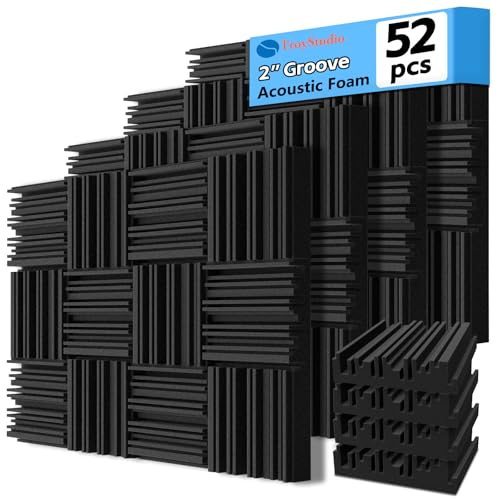
TroyStudio Thick Acoustic Foam Panels, 12 X 12 X 2 Inch 52 Pcs Broadband Sound Absorbing Foam, Dense Soundproof Padding Tile, Recording Studio Foam Absorber, Groove Decorative 3D Wall Ceiling Panel
Included for 'Best Acoustic Panels for Every Room' because the listing specifies 12 X 12 X 2 Inch 52 Pcs Broadband Sound Absorbing Foam and Dense Soundproof Padding Tile, details this guide uses to compare options.
View on Amazon![Ekkogo Acoustic Panels 12-Pack Soundproof Wall Panels 12"X10.4"X0.4" Sound Panels High Density Sound Dampening Panels - [Light Turquoise Hexagon]](https://m.media-amazon.com/images/I/51fcGFHNliL._SL500_.jpg)
Ekkogo Acoustic Panels 12-Pack Soundproof Wall Panels 12"X10.4"X0.4" Sound Panels High Density Sound Dampening Panels - [Light Turquoise Hexagon]
Included for 'Best Acoustic Panels for Every Room' because the listing specifies [Light Turquoise Hexagon], details this guide uses to compare options.
View on Amazon
NeatiEase Wood Panels for Wall, 4-Piece 96" x 12.6" Soundproof Wood Slat Wall Panel for Interior Wall Decor Noise Cancelling, Acoustic Wall Panels, Sound Absorbing Panel (Teak)
Included for 'Best Acoustic Panels for Every Room' because the listing specifies Acoustic Wall Panels and Sound Absorbing Panel (Teak), details this guide uses to compare options.
View on Amazon
AudioSilk Acoustic Panels, 4 Pack ROOM KIT, Large, 46" x 23", Natural
Included for 'Best Acoustic Panels for Every Room' because the listing specifies 4 Pack ROOM KIT and Large, details this guide uses to compare options.
View on AmazonWhich acoustic panel material is best?
Fabric-wrapped fiberglass or mineral wool
This is the strongest all-purpose choice for echo control. A rigid fiberglass or mineral-wool core absorbs a broad range of speech, television, and music frequencies, while the fabric provides a finished appearance. At 2 inches thick, many panels achieve a noise reduction coefficient, or NRC, around 0.80–1.00 when tested under standard laboratory conditions. Actual performance depends on the air gap, frequency, installation, and room.
These panels are particularly effective when mounted with a 1–2 inch gap behind them. The gap allows air to move behind the absorber and improves low-frequency performance without making the panel itself thicker. Choose tightly woven, acoustically transparent fabric rather than vinyl or heavily coated textiles, which can reflect sound.
PET felt
PET felt is made from compressed polyester fibers and is available in geometric tiles, slats, clouds, screens, and large decorative panels. It is lightweight, easy to cut, and available in many colors, making it a practical option for renters, children’s spaces, and rooms where appearance matters as much as performance.
Thin 0.4–0.8-inch felt tiles mainly reduce high-frequency flutter and brightness. For fuller speech absorption, choose 1–2-inch PET panels or a layered slat-and-felt system. PET is durable, but its acoustic performance varies widely by density and thickness; do not assume that a visually thick-looking decorative tile performs like a 2-inch fiber absorber.
Acoustic foam
Open-cell polyurethane foam is inexpensive and light, and wedge or pyramid patterns can reduce high-frequency reflections. It is less effective at absorbing lower speech frequencies, bass, and room modes unless it is unusually thick. Foam can work for a small recording or streaming setup, but covering every wall with thin foam often creates a dull-sounding room without solving bass problems.
Check fire-safety documentation before using foam, especially near lighting, heaters, or electrical equipment. For a living room or bedroom, fabric-wrapped fiber or PET felt generally offers a more durable and furniture-friendly finish.
Wood slat panels
Wood slat products combine a decorative wood face with an absorbent felt backing. They can make a large wall look like an intentional design feature and are useful behind a desk, sofa, or television. Their open slat pattern exposes only part of the absorber, so they may provide less broadband absorption per square foot than a fully fabric-wrapped panel.
Use them when appearance is a priority, then add thicker absorbers at side-wall reflection points if speech or music still sounds harsh. Solid wood is heavier and more expensive; engineered wood or veneer is lighter and usually more stable indoors.
How much coverage does a room need?
For a typical 10-by-12-foot bedroom with an 8-foot ceiling, the wall and ceiling area is about 592 square feet. You do not need to cover all of it. A starting treatment of 90–150 square feet—roughly 6 to 10 panels measuring 2 by 4 feet—can noticeably improve speech and reduce flutter echo. Place the panels where sound first reflects rather than spreading small tiles randomly.
| Room size | Light treatment | Balanced treatment | High-echo or music use |
|---|---|---|---|
| Small room, up to 100 sq. ft. | 20–35 sq. ft. | 35–60 sq. ft. | 60–90 sq. ft. |
| 10 × 12 ft room, 120 sq. ft. | 30–50 sq. ft. | 50–90 sq. ft. | 90–150 sq. ft. |
| 15 × 20 ft room, 300 sq. ft. | 60–90 sq. ft. | 90–180 sq. ft. | 180–300 sq. ft. |
These are planning ranges, not guarantees. A furnished room with rugs, curtains, upholstered seating, and bookshelves needs fewer panels than a room with hard flooring, glass, plaster, and bare furniture.
Choose thickness by the sound you hear
- 0.4–1 inch: Best for reducing sharp reflections, keyboard noise, and some high-frequency echo. Use more coverage for a noticeable result.
- 2 inches: The best general-purpose thickness for home offices, bedrooms, dining rooms, and media rooms. It handles speech and many midrange reflections effectively.
- 3–4 inches: Better for music rooms, voice recording, and rooms with persistent low-midrange buildup. Leave an air gap behind the panel when possible.
- 6 inches or more: Usually reserved for bass traps, corners, or specialized studios rather than ordinary wall decoration.
For a balanced sound, avoid treating only the upper walls with thin material. A room can become less lively while still retaining a boomy low end. In a music or theater room, use thick corner absorbers or broadband panels across corners in addition to wall treatment.
Appearance, placement, and clearance
Large panels often look calmer than a grid of small tiles. A pair of 2-by-4-foot panels can create a symmetrical feature behind a desk or sofa, while 12-by-12-inch felt tiles are easier to arrange around outlets and doors. Keep at least 2–3 inches clear of door swings, window trim, thermostats, and ventilation grilles.
At side-wall reflection points, center panels roughly at seated ear height. For a desk, that usually means the middle of the panel is about 42–52 inches above the floor. For a sofa or dining chair, a panel center around 40–48 inches is a useful starting point. Leave about 2–4 inches between an absorber and a sofa or chair so fabric does not rub against the panel; allow more clearance in high-traffic walkways.
Do not place every panel behind the television or desk. Treat the wall beside the listening position, the opposite wall, and—where practical—the ceiling above the conversation or listening area. A rug beneath a table and curtains across glass can provide additional absorption at lower cost.
Mounting options and moving realities
- Adhesive strips: Suitable for lightweight PET felt and small fabric panels on smooth, painted walls. Test a hidden area first; removal can lift paint.
- Picture-frame hardware: Works for lighter panels and allows relatively simple removal, but check the manufacturer’s weight limit.
- French cleats or Z-clips: The most secure choice for large, heavy panels. They distribute weight and make panels removable, but require wall anchors or studs.
- Impalement clips: Useful for rigid fabric-wrapped panels and provide a close-to-wall installation. They leave small holes when removed.
- Freestanding frames: Best for renters or flexible rooms. They can double as privacy screens, but need a broad base or anti-tip attachment.
A 2-by-4-foot fabric-wrapped mineral-wool panel may weigh approximately 10–25 pounds, depending on its core, frame, and thickness. Four such panels can exceed 80 pounds before packaging, so confirm the wall type and anchor rating rather than relying on a single drywall screw. Large cartons may also be difficult to turn through a doorway narrower than 30 inches.
Best choice for common household priorities
For renters
Choose lightweight PET felt or framed panels with removable mounting hardware. Prioritize several strategically placed panels over a full wall of adhesive tiles, and photograph the wall before installation so repairs are easier at move-out.
For children and pets
Select dense felt or tightly fabric-wrapped panels with reinforced edges and secure mechanical mounting. Avoid low-mounted panels with exposed sharp corners, loose foam, or easily pulled-off decorative pieces. Position treatment above furniture where possible.
For a home office
Use 2-inch panels on the wall behind or beside the speaker, plus a rug and a soft window treatment. If video calls sound boxy, treat early reflection points rather than covering the entire background wall.
For a home theater or music room
Combine 2–4-inch broadband absorbers with corner bass traps. Keep some reflective surfaces so the room does not sound unnaturally dead, and use thicker panels with an air gap where low-midrange buildup is noticeable.
Bottom line
The best acoustic panels for most rooms are 2-inch fabric-wrapped fiberglass or mineral-wool absorbers, installed with a small air gap and covering about 20–30% of the room’s hard surfaces. Choose PET felt when low weight, color, or renter-friendly installation matters; choose thicker broadband panels and bass traps when the room is large, loud, or used for music. Treat reflection points first, secure heavy panels properly, and remember that absorbing indoor echo is different from soundproofing a wall.