Key takeaways
- Table of Contents 4 sections 10 min read 1 Quick Verdict 2 How to Do It 2.1 Start with structure, not plants 2.2 Define the edges 2.3 Mulch everything, in bulk 2.4 Buy small plants and let them grow 2.5…
Most backyard landscaping budgets get eaten by two things: hardscape and instant size. A patio, a retaining wall, or a row of mature shrubs will absorb thousands of dollars before a single design decision has been made. The projects that transform a yard for a few hundred dollars almost all work the opposite way — they change the shape and structure of the space, then let plants fill in over two or three growing seasons rather than buying that fill-in up front.
This is a breakdown of where money actually goes in a backyard, which changes deliver the most visible difference per dollar, and how to sequence the work so you are not redoing it later. Because planting timing in the US depends entirely on where you are, every recommendation here is framed around your USDA hardiness zone and your local frost dates rather than calendar months. A shrub planted in March is a good idea in Zone 8 and a dead shrub in Zone 4. If you do not know your zone, the USDA plant hardiness zone map takes about thirty seconds to check by ZIP code, and your county extension office publishes average first and last frost dates for your area.
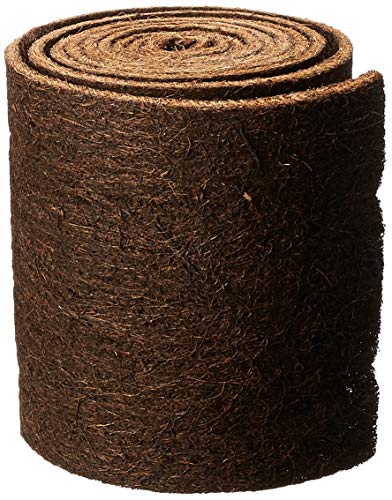
Bosmere Border Protection Edging Weed Mat, 10' x 9" Wide – Brown Landscape Fabric for Garden Beds, Pathways & Borders
Selected for "backyard landscaping ideas on a budget": this listing is a general product (Bosmere Border Protection Edging Weed Mat, 10' x 9" Wide – Brown Landscape Fabri), matching the product category this article compares.
View on Amazon
Nuanchu 5.5 in x 40 ft Recycled Rubber Walkway, Black Rubber Mulch Mat Roll
Selected for "backyard landscaping ideas on a budget": this listing is a general product (Nuanchu 5.5 in x 40 ft Recycled Rubber Walkway, Black Rubber Mulch Mat Roll), matching the product category this article compares.
View on Amazon
Adnee 140'' x 5.5" Double Sided Rubber Mulch Roll, Black Recycled Rubber Mulch Walkway,Permanent Garden Edging Barrier Mat for Landscaping,Plants,Vegetables and Flowers
Selected for "backyard landscaping ideas on a budget": this listing is a general product (Adnee 140'' x 5.5" Double Sided Rubber Mulch Roll, Black Recycled Rubber Mulch W), matching the product category this article compares.
View on Amazon
Grenebo 4FT x 50FT Non-Woven Weed Barrier Landscape Fabric
Selected for "backyard landscaping ideas on a budget": this listing is a general product (Grenebo 4FT x 50FT Non-Woven Weed Barrier Landscape Fabric), matching the product category this article compares.
View on AmazonQuick Verdict
Bed edging is the highest-impact cheap change. A crisp, defined line between lawn and planting bed makes an unremarkable yard look maintained. A cut edge made with a spade costs nothing; physical edging runs roughly $16 to $44 depending on length and style, with EasyFlex No-Dig Landscape Edging with Anchoring Spikes ($16.13) and the 33-foot AggFencer no-dig edging ($20.99) at the affordable end, and 100-foot runs like the MIXC Garden Edging Border ($43.98) covering an entire yard.
Mulch is the second. It unifies disconnected beds visually, suppresses weeds, holds moisture, and costs a fraction of anything else per square foot — especially if you source it in bulk by the cubic yard rather than in bags.
Buy plants small and buy perennials. A one-gallon shrub costs a fraction of a five-gallon and usually catches up within two to three seasons. Perennials and self-seeding annuals cost once; bedding annuals cost every year.
Do not spend money on a patio until the layout is settled. Live with gravel or stepping stones for a season first. Hardscape in the wrong place is the most expensive mistake in a backyard, because moving it costs more than installing it did.
| Project | Relative Cost | Visual Impact | DIY Difficulty | Best Timing |
|---|---|---|---|---|
| Spade-cut bed edge | Free (labor only) | High | Easy | Any non-frozen ground |
| Installed edging ($16-$44) | Low | High | Easy | Any non-frozen ground |
| Bulk mulch, by the yard | Low | High | Easy, labor-heavy | After soil warms in spring |
| Gravel path or seating pad | Low-medium | High | Moderate | Any dry period |
| Perennial bed from small pots | Medium | Builds over 2-3 years | Easy | After last frost, or early fall |
| Seed-grown annual border | Very low | High, first year | Easy | Soil above 60°F |
| Dividing and transplanting existing plants | Free | Medium | Easy | Spring or fall, not peak heat |
| Raised bed from a kit ($20-$80) | Low-medium | Medium-high | Easy | Any time; plant by frost date |
| Solar or low-voltage lighting | Low-medium | High at night | Easy | Any time |
| Poured or paver patio | High | High | Hard | Only after layout is settled |
| Mature trees and large shrubs | Very high | High, immediate | Moderate | Dormant season in most zones |
How to Do It
Start with structure, not plants
Before buying anything, decide where the beds end and the lawn begins, where you will walk, and where you will sit. Lay a garden hose on the ground to trace curves and live with the shape for a few days. Gentle, sweeping bed lines read as deliberate; tight wiggles read as accidental. This step costs nothing and determines whether every subsequent dollar lands well.
Define the edges
A defined edge does more for perceived maintenance than almost any other single change. A spade-cut trench edge — a vertical cut on the bed side, sloping back to the lawn — is free and looks excellent, but needs recutting once or twice a season. Installed edging holds its line with less upkeep. No-dig options that anchor with spikes, such as the EasyFlex No-Dig Landscape Edging ($16.13) or the 4-inch AggFencer 33-foot run ($20.99), go in without trenching. For a whole-yard job, longer coils like the Gardzen 40-foot border ($28.43) or MIXC 100-foot ($43.98) reduce the per-foot cost.
Mulch everything, in bulk
Two to three inches of mulch over every planting bed does four jobs at once: suppresses weeds, retains moisture, moderates soil temperature, and visually ties disconnected beds into one design. The cost difference between bagged and bulk is dramatic — a cubic yard delivered typically costs less than the equivalent in bags. Keep mulch pulled back a few inches from tree trunks and shrub stems rather than piling it against them.
Buy small plants and let them grow
The premium for size in nursery stock is steep and often not worth it. A one-gallon shrub frequently establishes faster than a five-gallon of the same species, because a smaller root ball recovers from transplant shock more quickly, and it usually reaches similar size within two to three seasons. The same logic applies to perennials: a quart-size plant divided in year three gives you three plants for free. Plan the bed for the plant’s mature size and accept that it will look sparse for a year or two, filling the gaps with annuals grown from seed.
Time planting by frost dates and soil temperature, not the calendar
This is where budget gardens are most often lost. Warm-season annuals and most vegetables go in after your average last spring frost date and once soil has warmed — roughly 60°F or above for most direct-sown annual flowers. Perennials, shrubs and trees establish best when the soil is workable but the air is cool, which in cold zones (roughly Zones 3 to 6) means spring after the ground thaws or early fall at least six weeks before the first expected frost, and in hot zones (roughly Zones 8 to 10) often means fall or even winter, since summer planting means fighting heat stress. Cool-season plants can go in before the last frost in most zones. Look up your own dates rather than copying a schedule written for someone else’s region.
Use free and low-cost plant sources
Dividing existing perennials, taking cuttings, local plant swaps, end-of-season nursery clearance, and county extension or conservation district seedling sales are all significantly cheaper than retail. Clearance stock in late season is genuinely good value in mild zones where fall planting works well; it is riskier in cold zones where a late-planted perennial may not root in before the ground freezes.
Add light last, and add it low
Lighting is the cheapest way to make a yard feel finished after dark. Low, warm, downward-facing light along a path or washing a wall does more than a scattering of bright solar stakes. Because it is surface-mounted and easy to move, lighting is one of the few things safe to install before the rest of the layout is final.
Plant Choices, Invasiveness and the Costly Mistakes
Budget landscaping has a specific failure mode: reaching for whatever is cheap, fast-growing and widely available, which is frequently a description of an invasive species. Several plants sold routinely at big-box garden centers are genuinely problematic in parts of the US and are worth avoiding or checking against your state’s noxious weed list before buying.
Butterfly bush (Buddleja davidii) is a common cheap-screening recommendation and is classified as a noxious weed in Oregon and regulated in Washington, where it escapes into riparian areas. English ivy, still sold as an inexpensive groundcover, is invasive across the Pacific Northwest and much of the Southeast and is banned from sale in Oregon. Callery or Bradford pear, long planted as a cheap fast-growing ornamental tree, has been banned from sale in Ohio, Pennsylvania and South Carolina. Japanese barberry is prohibited or restricted in several Northeastern and Midwestern states. Running bamboo, occasionally suggested as a low-cost privacy screen, is regulated in some states and is extremely expensive to remove once established — the single most costly “budget” plant decision available. Periwinkle (Vinca minor and major) escapes into woodlands in many regions.
Wildflower seed mixes deserve particular scrutiny, because inexpensive generic mixes sometimes contain species that are invasive somewhere in the country. Dame’s rocket is a frequent offender in mixes sold in the Midwest and Northeast, where it is a listed invasive, and oxeye daisy is a noxious weed in several western states. Buying a regionally appropriate mix, or a mix with a full species list you can check, avoids the problem entirely. Native plant recommendations from your state’s native plant society tend to be both regionally appropriate and cheap, since natives suited to your conditions need less water, less amendment, and less replacement.
The other expensive mistakes are structural rather than botanical. Installing hardscape before you know how you actually use the space is the biggest — it is common to build a patio in the one corner that turns out to get afternoon sun in July. Planting for the size a plant is in the pot rather than the size it reaches at maturity leads to either a crowded bed or years of corrective pruning. Skipping soil preparation to save money usually costs more in replaced plants than the amendment would have. And ignoring drainage — planting in a spot where water stands after rain — will kill plants regardless of how carefully they were chosen.
If money is tight, the sequence that wastes the least is: shape the beds, edge them, mulch them, plant the largest structural elements (trees and anchor shrubs) small, fill with perennials over two or three seasons, and defer all hardscape until you have lived through a full year of seasons in the space.
Related guides: best beginner flowers for a cutting garden, flower garden ideas for beginners, raised flower bed layout ideas, best at home gel nail kits, french tip variations for 2026
FAQ
What single change makes the biggest difference for under $100?
Edging and mulch, done together. Defining bed lines and covering the beds in fresh mulch changes how maintained a yard looks more than any planting at that budget. Edging runs $16 to $44 for most yards, and bulk mulch for a few beds usually fits in the remainder.
Is it cheaper to seed a lawn or reduce the lawn?
Reducing it, over any timeframe longer than a couple of years. Lawn is one of the more expensive surfaces to maintain once water, fertilizer, fuel and equipment are counted. Converting a section to mulched planting bed or a gravel seating area has a modest one-time cost and then costs almost nothing annually.
When should I plant to avoid losing plants?
Work from your USDA zone and local frost dates rather than the calendar. Woody plants and perennials establish best in cool soil with mild air — spring after thaw or early fall in cold zones, fall through winter in hot southern zones. Warm-season annuals go in after your last spring frost date and once soil reaches roughly 60°F. Your county extension office publishes local frost dates.
Are raised beds worth it on a budget?
They are if your native soil is poor, compacted, or badly drained, since a raised bed lets you sidestep the soil problem instead of amending it for years. Galvanized kits start around $19.99 for a small 4×2 and run to roughly $64 to $80 for large 8×4 beds. If your existing soil is decent, in-ground beds cost less and dry out more slowly.
How do I check whether a plant is invasive where I live?
Search your state department of agriculture’s noxious weed list, or your state’s invasive plant council. Invasiveness is regional — a plant that is entirely well-behaved in one part of the country can be a listed problem a few states away — so national advice is less useful here than state-level lists.