Featured image: AI-generated editorial illustration. It does not show a tested product or document a real-world example.
Key takeaways
- The micro-French is the most versatile variation and the easiest to wear. A hairline tip — under a millimeter — in white, cream, or a soft color reads as modern rather than retro, works on any nail length including very short, and is forgiving because…
The French manicure stopped being one thing several years ago. What used to mean a stark white tip on a pink bed now covers at least a dozen recognizably different techniques, most of which share only the underlying idea: a contrasting band at the free edge over a neutral base. The variations that have held up are the ones that change the line’s width, color, angle, or placement rather than the ones that pile embellishment on top of a standard tip.
This is a working breakdown of the French tip variations worth trying, sorted by how difficult they are to execute on yourself and which nail shapes and lengths they actually suit. It also covers the practical side: which lines can be freehanded, which need guide stickers or tape, how tip width should scale to nail length, and the difference between doing these in regular lacquer versus gel. A micro-French on a short nail and a deep V-French on a long almond are entirely different projects, and treating them the same is why so many home attempts look off.

BlingKingdom 576 PCS 12 Sheets French Tip Nail Stickers - Moon Shape Design
Selected for "french tip variations for 2026": this listing is a general product (BlingKingdom 576 PCS 12 Sheets French Tip Nail Stickers - Moon Shape Design), matching the product category this article compares.
View on Amazon
Fcozpjk French Tip Nail Stickers 6 Sheets French Tips Guides Tool
Selected for "french tip variations for 2026": this listing is a general product (Fcozpjk French Tip Nail Stickers 6 Sheets French Tips Guides Tool), matching the product category this article compares.
View on Amazon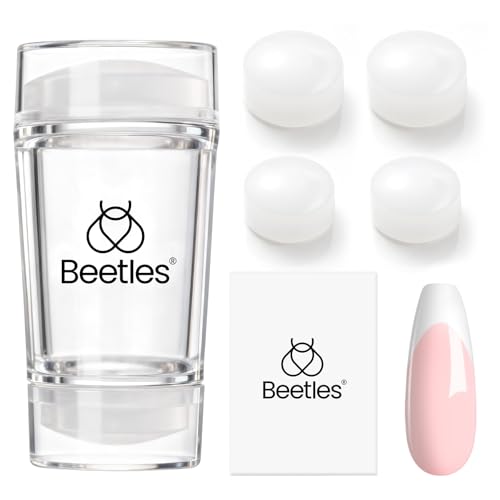
Beetles French Tip Tool Nail Stamp 6Pcs Silicone French Tips Stamp Set
Selected for "french tip variations for 2026": this listing is a general product (Beetles French Tip Tool Nail Stamp 6Pcs Silicone French Tips Stamp Set), matching the product category this article compares.
View on Amazon
French Tip Nail Stamper Kit,Silicone Jelly Nail Art Stamper with Scraper
Selected for "french tip variations for 2026": this listing is a coffee gear product (French Tip Nail Stamper Kit,Silicone Jelly Nail Art Stamper with Scraper), matching the product category this article compares.
View on AmazonQuick Verdict
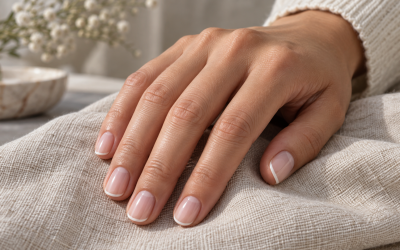
The micro-French is the most versatile variation and the easiest to wear. A hairline tip — under a millimeter — in white, cream, or a soft color reads as modern rather than retro, works on any nail length including very short, and is forgiving because a thin line hides small wobbles better than a thick one.
The colored French is the easiest upgrade with zero added skill. Swapping white for red, black, chocolate, or a chrome tip changes the entire character of the manicure while the technique stays identical to a classic French.
The hardest variations are the ones that change the line’s geometry: deep V, diagonal, double-line, and reverse French at the cuticle. These need guide stickers or tape and a base that is fully dry or cured, and they look best on medium-to-long nails with enough surface area for the angle to read.
| Variation | Line Description | Best Nail Length | Tool Needed | Difficulty |
|---|---|---|---|---|
| Micro-French | Hairline tip, under 1mm | Any, including very short | Thin liner brush | Beginner |
| Colored French | Standard width, non-white color | Short to long | Guide stickers | Beginner |
| Outline French | Thin line around entire nail edge | Medium to long | Thin liner brush | Intermediate |
| Deep or extended French | Tip covering a third of the nail | Medium to long | Guide stickers | Intermediate |
| Diagonal / slanted French | Angled line across the tip | Medium to long | Striping tape | Intermediate |
| V-French / chevron | Two lines meeting at a point | Long, almond or stiletto | Striping tape | Advanced |
| Double French | Two parallel tip lines, two colors | Medium to long | Guide stickers x2 | Advanced |
| Reverse French | Band at the cuticle instead of tip | Medium to long | Curved guides | Advanced |
| Chrome or glazed tip | Standard tip, chrome powder finish | Any | Powder + applicator, gel base | Intermediate |
| Aura / halo French | Diffused glow at tip, no hard line | Short to medium | Sponge or airbrush | Intermediate |
How to Do It
Scale the tip width to the nail, not to a tutorial
The single most common error is using the same tip width on every nail length. A good working rule is that the tip should occupy no more than about a fifth of the visible nail plate. On a short nail, that means a genuinely thin line — often less than a millimeter, which is why the micro-French suits short nails so well. On a long almond, a fifth is a substantial band and can be pushed further into a deep French. Copying a long-nail tip width onto a short nail visually shortens the nail and is why so many DIY Frenches look heavy.
Build the base properly before the line goes anywhere near it
Every French variation is only as good as what is underneath. Use a ridge-filling base coat, then a sheer or milky neutral over it, applied in two or three thin coats. The base must be completely dry (lacquer) or fully cured (gel) before the tip goes on, or the tip color will drag and blur into it. With gel this is non-negotiable — a base that looks hard on the surface can still be soft underneath if the coat was too thick for the lamp to cure through.
Choose your line-making method honestly
Freehanding a French line takes real practice and a long, flexible striper brush. Guide stickers are faster and more consistent, and they are the right choice for straight tips and deep Frenches. Striping tape is the only sane way to get diagonals and chevrons straight. One technique worth knowing: instead of drawing the line, load a thin brush and use the nail’s own tip as a track — rest the brush against the free edge and pull it along in one motion, letting the edge guide you rather than trying to control the whole stroke.
Paint the line in one direction, then meet it
Draw from the center of the tip out to one sidewall, then from the center out to the other. Two short confident strokes are far more controllable than one long stroke across the entire nail. If the two halves meet slightly unevenly, a tiny brush dipped in remover (for lacquer) or a clean brush (for uncured gel) fixes it in seconds. With gel, all corrections have to happen before the lamp.
Use chrome and aura effects to skip the line entirely
The aura or halo French has no hard edge at all — it is a diffused glow of color concentrated at the tip, applied with a sponge or by sheer layering, fading into the base. Because there is no line, there is nothing to draw crooked, which makes it one of the more accessible “advanced-looking” variations. Chrome tips work similarly in terms of impact: a standard tip shape with chrome powder buffed over a cured gel top coat, which requires gel specifically since chrome powder needs a no-wipe gel surface to adhere to.
Consider color pairings that are not white
White on pink still works, but the more interesting 2026-adjacent combinations swap one or both elements: a chocolate or espresso tip on a milky base, a chrome silver tip on greige, a cherry red tip on sheer pink, or a base and tip only one shade apart for a tonal, almost invisible French. Black tips read as sharp and graphic but are the least forgiving of all, because black shows every imperfection in the line.
Formula, Wear and Removal
The choice between lacquer and gel changes what is realistic. Regular polish air dries, which means each layer of a multi-step French adds waiting time, and a tip line drawn over a base that is only touch-dry will smear. For anything beyond a simple colored tip, that waiting adds up. Gel polish does not air dry at all — it stays liquid until it cures under a UV or LED lamp — so each stage sets hard in 30 to 60 seconds and you can build layers back to back. That makes gel the practical choice for double Frenches, chevrons, and chrome finishes, all of which involve three or more sequential layers.
Gel also holds a crisp line for two to three weeks where lacquer typically starts wearing at the tip within a few days, and the tip is exactly where a French manicure cannot afford wear. The tradeoff is removal. Gel comes off by buffing away the shiny top layer with a fine file, then soaking in acetone for roughly ten to fifteen minutes until the product softens and lifts away with gentle pressure from an orange stick. It should never be peeled. Peeling gel takes layers of the nail plate with it, leaving the surface thin and rough, and on a nail that has just been peeled, the next French will look worse because the base will not lay flat.
Dip powder and acrylic are not interchangeable with gel here. Dip powder sets with a resin activator rather than a lamp, is generally harder, and usually needs a longer acetone soak. Acrylic is a hard enhancement and is typically filed down substantially before any soaking. French tips are commonly done in all three systems, but the removal process is specific to whichever one is actually on the nail, so match the method to the product rather than assuming one approach covers everything.
Whichever system you use, two habits extend wear noticeably. Cap the free edge on every coat, including the tip color and the top coat, by running the brush along the very edge of the nail. And keep all product off the skin and cuticle — a line of color touching skin creates a seal that breaks within a day and starts the lift that leads to chipping. On a French specifically, chipping at the tip is immediately visible, so this matters more than it does on a solid color.
Related guides: best at home gel nail kits, nude pink nail ideas for short nails, red and pink nail design ideas, backyard landscaping ideas on a budget, best beginner flowers for a cutting garden
FAQ
Which French variation works best on very short nails?
Micro-French, by a wide margin. A hairline tip does not consume the limited nail plate, and because the line is so thin, small irregularities are much harder to see. Aura and chrome-tip Frenches also work well on short nails because neither depends on a wide band of color. Deep Frenches, chevrons and double lines need length to read properly and will look crowded on a short nail.
Do I need gel to do a French manicure?
No. A classic or colored French is entirely doable in regular lacquer, which air dries and needs no equipment. Gel is genuinely necessary only for chrome tips, which require a no-wipe gel surface for the powder to adhere to, and it is strongly preferable for multi-layer variations where drying time between steps becomes the bottleneck.
How do I get both hands to match?
Do one nail on each hand alternately rather than finishing an entire hand first. Matching a fresh line to one drawn five minutes ago is far easier than matching to one drawn twenty minutes ago on a hand you have stopped looking at. Guide stickers also improve hand-to-hand consistency more than they improve individual line quality.
What causes the tip color to look thicker than the base?
Usually overloading the brush. A tip line should be applied with a nearly dry brush — wipe most of the product off on the bottle neck before drawing. Two thin passes over the same line produce a cleaner, flatter result than one loaded pass, and a generous top coat afterward levels any remaining ridge between base and tip.
Is white-tip French dated?
Not inherently — it has cycled back repeatedly. What reads as dated is the specific combination of a thick, stark, chalky-white tip with a strongly opaque pink base and a square shape, which is the 1990s salon formula. A soft cream-white tip, thinner than the classic width, over a milky or sheer base on a squoval or almond shape reads as current rather than retro.