Key takeaways
- Bevel range and direction: A single-bevel saw handles straightforward trim work, but dual-bevel models let you flip between left and right compound angles without repositioning the workpiece — critical when you’re cutting matching pairs for door casings or picture frames.
- Sliding vs. fixed head: Sliding rails extend crosscut capacity well beyond the blade diameter, which matters when you’re trimming wide boards for tabletop breadboard ends or face frames. If you mostly cut narrow stock, a fixed-head saw saves bench space and weight.
- Laser or shadow-line guide: Shadow-line systems project an actual blade-shadow onto the material, which stays accurate even after blade changes. Lasers can drift out of alignment over time. For precision furniture work, a reliable cut-line indicator saves hours of test cuts.
- Motor amperage and blade type: A 15-amp motor paired with a quality TCT (tungsten carbide tipped) blade handles hardwoods without bogging down. Lower-amperage or universal-motor saws may struggle with dense species like maple or white oak, producing burn marks that telegraph through a finish.
- Positive detent stops: Indexed stops at the most common angles — 0°, 15°, 22.5°, 31.6°, and 45° — let you snap to the setting with confidence. More stops translate to less fiddling with the angle scale, which matters when you’re cutting a batch of identical joints.
What's inside
When a miter joint on a cabinet face catches afternoon light, even a hairline gap glows like a flaw under a magnifying glass. Furniture builders and home renovators know that the quality of a miter cut directly determines whether a piece looks handcrafted or hastily assembled. Yet shopping for the saw that delivers those seamless corners is its own headache — specs pile up, brands clash, and it becomes difficult to tell whether you’re paying for power you need or features you’ll never touch.
This guide cuts through the noise. We evaluated each miter saw through the lens of joinery precision — how cleanly it slices compound angles, whether the blade holds alignment across repeated cuts, and how reliably it helps you dial in the tight tolerances that make furniture joints vanish. Every recommendation below earned its place by delivering results you can see under harsh overhead lighting.
As an Amazon Associate we earn from qualifying purchases.



🛒 Best Price Today on Amazon
Prime members get fast, free shipping on everything above, plus member-only deals. New members get a 30-day free trial — cancel anytime.
How to Choose the Best Saw for Cutting Miter Joints in 2026
- Bevel range and direction: A single-bevel saw handles straightforward trim work, but dual-bevel models let you flip between left and right compound angles without repositioning the workpiece — critical when you’re cutting matching pairs for door casings or picture frames.
- Sliding vs. fixed head: Sliding rails extend crosscut capacity well beyond the blade diameter, which matters when you’re trimming wide boards for tabletop breadboard ends or face frames. If you mostly cut narrow stock, a fixed-head saw saves bench space and weight.
- Laser or shadow-line guide: Shadow-line systems project an actual blade-shadow onto the material, which stays accurate even after blade changes. Lasers can drift out of alignment over time. For precision furniture work, a reliable cut-line indicator saves hours of test cuts.
- Motor amperage and blade type: A 15-amp motor paired with a quality TCT (tungsten carbide tipped) blade handles hardwoods without bogging down. Lower-amperage or universal-motor saws may struggle with dense species like maple or white oak, producing burn marks that telegraph through a finish.
- Positive detent stops: Indexed stops at the most common angles — 0°, 15°, 22.5°, 31.6°, and 45° — let you snap to the setting with confidence. More stops translate to less fiddling with the angle scale, which matters when you’re cutting a batch of identical joints.
The Best Saws for Cutting Miter Joints in 2026, Reviewed
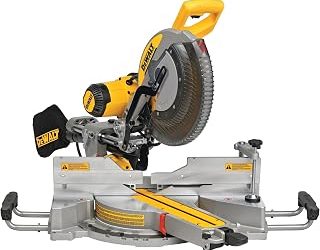
DEWALT DWS780 12-Inch Double Bevel Sliding Compound Miter Saw
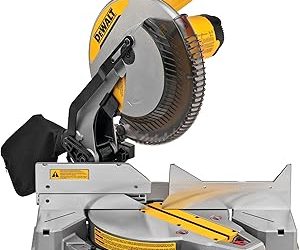
The DWS780 has been the benchmark for professional miter work for years, and it still earns that reputation. The XPS LED shadow-line system casts a precise kerf-width shadow that requires zero calibration after a blade swap, and the double-bevel sliding design swings through 60° of miter range with detents that lock in solidly. Its 12-inch blade capacity and generous crosscut depth handle everything from crown molding to wide furniture rails without strain.
DOVAMAN 12-Inch Dual-Bevel Compound Sliding Miter Saw
DOVAMAN’s 12-inch offering punches well above its price bracket. The ambidextrous controls feel natural from either side, and the 3800 RPM motor paired with a laser guide produces clean, burn-free miters on both softwood and engineered materials. Its 4.2 by 13-inch cutting envelope gives you room to work with wider boards, making it a strong choice for furniture builders who need versatility without a premium price tag.
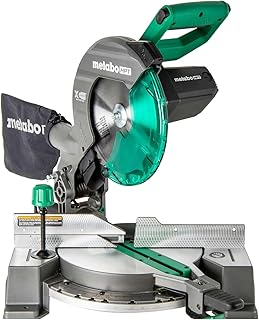
Metabo HPT C10FCG2 10-Inch Single Bevel Compound Miter Saw
Weight matters when your miter saw lives on a portable stand that gets moved between a garage and a job site. The C10FCG2 weighs roughly half what some 12-inch models do, yet its 15-amp motor and Xact Cut shadow line deliver surprisingly accurate cuts. For furniture projects centered on narrower stock — drawer faces, small frames, and shelving units — this saw strikes a practical balance between portability and precision.
DEWALT DWS715 12-Inch Single Bevel Compound Miter Saw
The DWS715 strips away the sliding mechanism and double bevel of its pricier sibling while retaining the solid fence alignment and smooth miter detent plate DEWALT is known for. It is an excellent choice for woodworkers who cut primarily straight compound miters and want a reliable, no-frills workhorse that stays accurate season after season.
DOVAMAN Updated 10-Inch Sliding Miter Saw
DOVAMAN’s updated 10-inch sliding saw ships with three TCT blades optimized for different materials, which is a rare inclusion at this price point. The 5000 RPM motor drives clean cuts through wood, plastic, and even non-ferrous metal, while nine positive stops cover the angles furniture makers use most often. If your projects range across mixed materials — say, building a frame that combines wood legs with metal connectors — this saw adapts without requiring blade changes between tasks.
Frequently Asked Questions
What miter angle do furniture joints typically require?
Most furniture miter joints use a 45° angle on each piece, creating a 90° corner when joined. Picture frames, cabinet face frames, and angled shelf supports also call for 45° cuts, though some designs use 22.5° for octagonal shapes. A saw with reliable positive stops at these angles will cover the vast majority of furniture joinery needs.
Is a sliding miter saw necessary for furniture making?
A sliding mechanism becomes essential once your crosscut width exceeds roughly six inches — which happens quickly with tabletop aprons, wide rail stiles, and face frame components. If every piece you cut is narrow trim stock, a fixed-head saw works fine, but most furniture builders eventually want the extra reach that sliding rails provide.
Can a miter saw produce joints tight enough to skip wood filler?
Yes, when the saw maintains accurate blade alignment, the fence stays square, and the blade itself is sharp and appropriate for the wood species. Pair a well-calibrated miter saw with proper workpiece clamping and slow feed rates on hardwoods, and you can produce joints that close up with nothing more than a thin bead of glue.
Do I need a 12-inch blade for furniture projects?
A 10-inch blade handles most furniture-scale cuts comfortably, and the smaller blade diameter often means less tearout on the exit side of the cut. The advantage of a 12-inch blade shows up when you need deeper crosscuts or wider crosscut capacity in a single pass. For cabinetry and large table construction, the extra inch matters; for smaller pieces, it is optional.
Final Thoughts
For most furniture builders seeking the cleanest miter joints, the DEWALT DWS780 remains the top-tier pick thanks to its shadow-line system and double-bevel versatility. The DOVAMAN 12-inch dual-bevel model delivers comparable cutting capacity at a significantly lower investment, making it the value standout. And for those working in tighter spaces or with narrower stock, the Metabo HPT C10FCG2 offers lightweight precision that travels well. Any of these three saws will give you the tight, gap-free miters that make the difference between furniture that looks built and furniture that looks finished.