Key takeaways
- Tooth count: Choose roughly 80 to 120 teeth for clean moulding cuts, especially on painted, veneered, or brittle stock. Lower tooth counts are faster but generally leave more tear-out.
- Blade diameter: Match the blade to your saw’s specification. A 10-inch blade cannot replace a 12-inch model, and the wrong diameter can affect both cutting capacity and safe operation.
- Kerf and stability: A thin-kerf blade can reduce waste and motor strain, while a robust plate may track more steadily through wide trim. Prioritize controlled cuts over maximum speed.
- Carbide geometry: Fine-finish carbide teeth with an appropriate hook angle help produce crisp shoulders and fewer splinters. This matters when joints will be viewed under directional sconces or ceiling lighting.
- Project range: If you also cut dimensional lumber, consider a versatile pack or a two-blade setup. Keep a rough-cut blade for sizing and reserve the fine-finish blade for visible edges and final mitres.
What's inside
Moulding is unforgiving work: a slightly ragged cut, a chipped profile, or a fuzzy edge can become highly visible once daylight or warm accent lighting washes across the finished trim. The blade that performs well on framing lumber is not always the right choice for crown moulding, casing, baseboard, or delicate furniture trim.
This guide focuses on tooth count, carbide quality, cut smoothness, and practical versatility. The selections below cover fine-finish blades for polished joins, balanced options for general trim work, and multi-blade packs for workshops that move between rough sizing and presentation-ready cuts.
As an Amazon Associate we earn from qualifying purchases.


🛒 Best Price Today on Amazon
Prime members get fast, free shipping on everything above, plus member-only deals. New members get a 30-day free trial — cancel anytime.
How to Choose a Miter Saw Blade For Moulding (2026)
- Tooth count: Choose roughly 80 to 120 teeth for clean moulding cuts, especially on painted, veneered, or brittle stock. Lower tooth counts are faster but generally leave more tear-out.
- Blade diameter: Match the blade to your saw’s specification. A 10-inch blade cannot replace a 12-inch model, and the wrong diameter can affect both cutting capacity and safe operation.
- Kerf and stability: A thin-kerf blade can reduce waste and motor strain, while a robust plate may track more steadily through wide trim. Prioritize controlled cuts over maximum speed.
- Carbide geometry: Fine-finish carbide teeth with an appropriate hook angle help produce crisp shoulders and fewer splinters. This matters when joints will be viewed under directional sconces or ceiling lighting.
- Project range: If you also cut dimensional lumber, consider a versatile pack or a two-blade setup. Keep a rough-cut blade for sizing and reserve the fine-finish blade for visible edges and final mitres.
The Best Miter Saw Blade For Moulding (2026)s Reviewed
DEWALT DWA112100 12-Inch 100-Tooth Blade
The DEWALT DWA112100 is a strong choice for installers who want a dedicated fine-finish blade for 12-inch miter saws. Its 100 carbide teeth are well suited to clean crosscuts in moulding, helping mitred corners meet neatly without distracting fuzz along the profile.
10-Inch 120-Tooth Fine-Finish Professional Blade
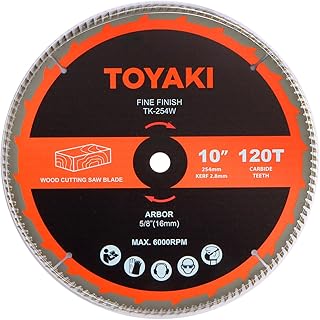
This 120-tooth blade is aimed squarely at detail work, making it appealing for narrow casing, decorative trim, and furniture moulding where the cut surface remains visible. It uses a 5/8-inch arbor and is compatible with miter, table, and circular saws that accept the specified size and configuration.
LM6300 12-Inch 100T Miter Joint Blade
The LM6300 combines a 12-inch format with 100 teeth and a 1-inch bore, giving larger saw users a fine-tooth option for architectural trim. It is particularly attractive when consistent mitre joints matter more than rapid stock removal, though buyers should verify bore compatibility before ordering.
ANGELSWORD 10-Inch 40T/60T Two-Pack
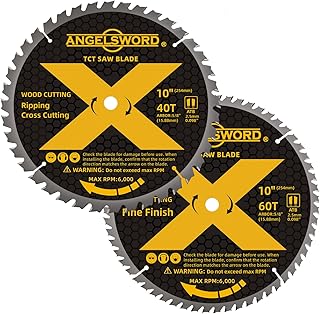
This ANGELSWORD two-pack pairs a 40-tooth blade for ripping and crosscutting with a 60-tooth blade for finer wood cuts. It is a practical workshop setup for sizing moulding efficiently, then switching to a cleaner blade for visible finishing cuts—useful when one room calls for both structural work and polished trim.
ANGELSWORD 10-Inch Three-Pack
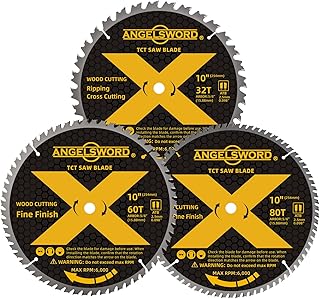
The ANGELSWORD three-pack expands the range with 32T, 60T, and 80T blades for framing, fine finishing, and ultra-fine finishing. The 80-tooth option is the most relevant for moulding, while the additional blades make this set useful for broader renovation work where a single specialized blade would be limiting.
Frequently Asked Questions
What tooth count is best for cutting moulding?
For most moulding, an 80-tooth blade is a sensible starting point on a 10-inch saw, while 100 to 120 teeth can provide an even smoother finish. The ideal choice also depends on the material, blade geometry, and whether the moulding is painted or veneered.
Can I use a framing blade for trim work?
You can, but it is rarely the best choice for exposed moulding. A low-tooth framing blade cuts quickly but may leave chips and rough shoulders that become obvious after installation, caulking, and decorative lighting are added.
Is a 12-inch blade better than a 10-inch blade?
Not automatically. A 12-inch blade offers greater cutting capacity when the saw is designed for it, but a well-made 10-inch fine-finish blade can produce excellent results on ordinary casing and baseboard. Always match the blade to the saw rather than choosing solely by diameter.
How can I reduce splintering on moulding?
Use a sharp, fine-tooth blade, support the workpiece firmly, and let the saw reach full speed before entering the material. Cutting with the finished face oriented appropriately for your saw, plus using painter’s tape on fragile surfaces, can further reduce tear-out.
Final Thoughts
For dedicated 12-inch trim work, the DEWALT DWA112100 is the most reassuring all-around fine-finish pick, while the 120-tooth 10-inch blade suits especially delicate visible edges. For greater flexibility, the ANGELSWORD 40T/60T two-pack offers the most practical balance between workshop speed and presentation-ready moulding cuts.