Key takeaways
- Tooth count: For trim, 80 to 120 teeth generally gives a smoother finish than a coarse framing blade, although the ideal choice depends on material thickness and feed rate.
- Tooth geometry: Alternate-top-bevel (ATB) teeth are a versatile choice for wood. Triple-chip-grind (TCG) designs can be useful for harder materials, composites, and aluminum-sensitive applications.
- Kerf and stability: A balanced blade with a suitable kerf can make the cut feel more controlled and help reduce vibration, which is especially visible along long, painted profiles.
- Material compatibility: Confirm that the blade is intended for your stock. Solid wood, MDF, plastic, composite, and aluminum can each call for different tooth designs and cutting practices.
- Arbor fit: Check both diameter and arbor size before ordering. A 10-inch blade and a 12-inch blade are not interchangeable, and the arbor must match your saw or its approved adapter system.
What's inside
Trim work can look flawless in daylight and still reveal fuzzy corners, chipped laminates, or uneven shadow lines once a room’s lighting comes on. The culprit is often not the saw itself but a blade whose tooth count, grind, or material is mismatched to the molding, casing, or furniture stock.
This guide focuses on blades that help produce clean, presentation-ready cuts for trim and fine woodworking. Alongside tooth count and carbide construction, we consider the details that matter in finished rooms: reduced tear-out, calmer cut surfaces, crisp miters, and edges that remain attractive under grazing light from sconces, pendants, and windows.
As an Amazon Associate we earn from qualifying purchases.



🛒 Best Price Today on Amazon
Prime members get fast, free shipping on everything above, plus member-only deals. New members get a 30-day free trial — cancel anytime.
How to Choose a Miter Saw Blade For Trim (2026)
- Tooth count: For trim, 80 to 120 teeth generally gives a smoother finish than a coarse framing blade, although the ideal choice depends on material thickness and feed rate.
- Tooth geometry: Alternate-top-bevel (ATB) teeth are a versatile choice for wood. Triple-chip-grind (TCG) designs can be useful for harder materials, composites, and aluminum-sensitive applications.
- Kerf and stability: A balanced blade with a suitable kerf can make the cut feel more controlled and help reduce vibration, which is especially visible along long, painted profiles.
- Material compatibility: Confirm that the blade is intended for your stock. Solid wood, MDF, plastic, composite, and aluminum can each call for different tooth designs and cutting practices.
- Arbor fit: Check both diameter and arbor size before ordering. A 10-inch blade and a 12-inch blade are not interchangeable, and the arbor must match your saw or its approved adapter system.
The Best Miter Saw Blade For Trim (2026)s Reviewed
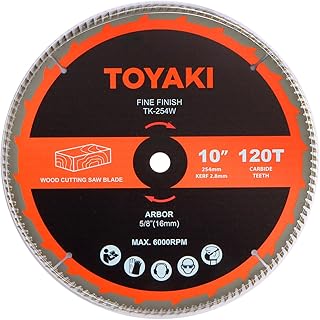
10-Inch 120-Tooth Fine-Finish Blade
This high-tooth-count blade is aimed squarely at delicate finish work where a clean edge matters more than rapid stock removal. It is a strong candidate for narrow casing, picture-frame components, and furniture trim that will be examined under bright, low-angle lighting, provided your saw accepts its 5/8-inch arbor.
WEN BL1080 10-Inch 80-Tooth Blade
The WEN BL1080 offers a practical balance between smooth cuts and everyday versatility. Its carbide-tipped 80-tooth layout suits homeowners who want refined results on wood trim without moving all the way to an ultra-high tooth count, which can feel slower in thicker material.
10-Inch 120-Tooth TCG Aluminum-Working Blade
With a TCG design and 120 teeth, this blade is the most specialized-looking option in the group. It is worth considering when projects include composite materials or aluminum-related cutting, but verify the manufacturer’s compatibility guidance and use the correct technique rather than treating it as a universal wood blade.
DEWALT DWA112100 12-Inch 100-Tooth Blade
The DEWALT DWA112100 is a sensible pick for larger saws and broad trim profiles requiring a fine finish. Its 100-tooth configuration is designed for smooth wood cuts, making it well suited to crown molding, built-ins, and furniture parts where a ragged edge can catch and scatter light.
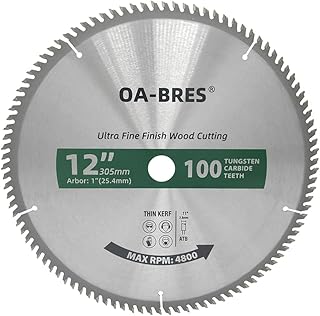
12-Inch 100-Tooth ATB TCT Blade
This 12-inch ATB TCT blade targets ultra-fine wood cutting and uses a 1-inch arbor. It may appeal to users who want a dedicated finishing blade for a full-size miter or table saw, though arbor fit and the saw’s recommended blade specifications should be checked carefully before purchase.
Frequently Asked Questions
Is a higher tooth count always better for trim?
Not always. More teeth can produce a smoother edge, but they may cut more slowly and can perform poorly if pushed aggressively through thick stock. Choose based on the trim material, thickness, and finish standard you need.
What blade is best for painted molding?
A sharp fine-finish blade with an appropriate tooth geometry is usually the safest starting point. Make test cuts on scrap, support the molding firmly, and let the blade do the work to limit chipped paint and compressed fibers.
Can I use a trim blade on MDF or composite material?
Some can, but compatibility varies. MDF and composites may dull teeth faster or create more dust than solid wood, so follow the blade maker’s material guidance and use effective dust collection and respiratory protection.
Why do my miter cuts still show gaps after changing blades?
Blade quality is only one factor. Check the saw’s fence alignment, bevel accuracy, workpiece support, and whether the molding is sitting in the same orientation used during installation. Small setup errors become highly visible where two bright trim faces meet.
Final Thoughts
For delicate, light-sensitive finish work, the 10-Inch 120-Tooth Fine-Finish Blade is an appealing choice; the WEN BL1080 is the more balanced everyday option; and owners of 12-inch saws should look closely at the DEWALT DWA112100. Whichever blade you choose, accurate setup, steady support, and a measured feed rate will do as much for a clean, quiet-looking trim line as tooth count alone.